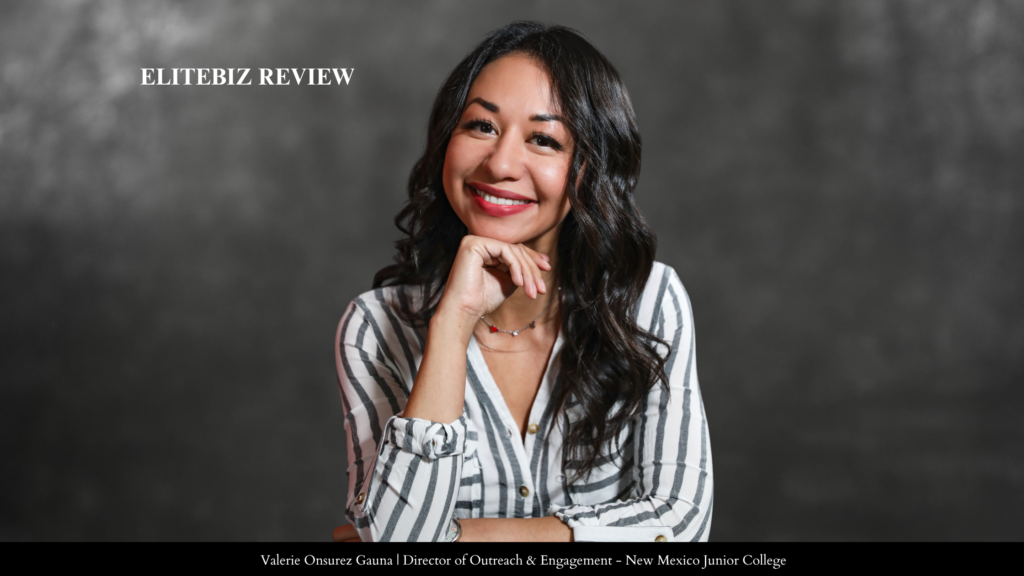
Long before enrollment metrics, recruitment campaigns, and institutional strategies enter the conversation, Valerie Onsurez Gauna believes education begins with something far more human: making people feel seen.
As Director of Outreach & Engagement at New Mexico Junior College, Valerie has shaped her leadership philosophy around an idea that feels increasingly important in modern education: genuine connection can change the course of a student’s life. In a landscape where institutions are often challenged to balance accessibility, innovation, and community trust, her work stands out because it never loses sight of the individual behind the numbers.
For Valerie, outreach is not simply about attracting students to a campus. It is about creating spaces where students and families feel welcomed long before applications are submitted or classes begin. It is about helping people recognize possibilities they may never have imagined for themselves and building environments where they feel confident enough to pursue them.
That philosophy has become central to her work across community engagement initiatives, educational partnerships, student programs, and outreach strategies designed to make higher education feel approachable rather than intimidating. Through every initiative, collaboration, and conversation, Valerie continues to champion an educational experience rooted in trust, inclusion, accessibility, and genuine care.
At a time when educational institutions across the world are rethinking how they engage students and communities, her leadership offers a powerful reminder that meaningful impact often begins with something simple: listening.
Leading With Authenticity and Service
At the center of Valerie’s approach are four guiding principles: authenticity, accessibility, collaboration, and service. Those values influence not only how she leads, but also how she interacts with students, colleagues, schools, and the wider community.
She believes meaningful engagement begins with understanding people first. Every student enters higher education carrying different experiences, responsibilities, uncertainties, and aspirations. Creating effective outreach therefore requires empathy as much as strategy.
“In higher education, especially within junior colleges, relationships matter deeply,” Valerie explains. “I strive to create connections that are not transactional, but transformational.”
That perspective has shaped the culture she works to foster at New Mexico Junior College. Rather than focusing solely on enrollment outcomes, she prioritizes creating experiences where students feel heard, supported, and encouraged to believe in their own potential.
Her leadership style is grounded in accessibility and trust. Whether engaging with students, community organizations, or local schools, Valerie approaches each interaction with sincerity and openness. She understands that for many students, especially those navigating higher education for the first time, a welcoming conversation or a supportive environment can have lasting impact.
Just as importantly, she believes institutions must reflect integrity and inclusivity in the way they serve their communities. Representation alone is not enough. Students must feel that their stories, backgrounds, and ambitions genuinely matter.
That commitment to authenticity has helped Valerie build meaningful relationships throughout the region while strengthening the connection between the college and the communities it serves.
Inspired by the Transformative Power of Education
Valerie’s passion for outreach and educational engagement is deeply connected to her belief in the life changing potential of higher education and training. Long before stepping into leadership roles, she was driven by a desire to help people recognize opportunities capable of transforming their future.
“I’ve always been passionate about helping people recognize their potential and connecting them with opportunities or experiences that can change their lives,” she says.
That belief continues to guide her work today. To Valerie, education extends far beyond academics or career preparation. It can influence confidence, economic mobility, family stability, and personal growth across generations.
Working within outreach and engagement has allowed her to bridge important gaps between institutions and the communities they serve. For students who may feel uncertain about college, disconnected from educational systems, or unaware of available opportunities, those connections can become transformational.
What continues to inspire her most is watching students recognize possibilities they once believed were unattainable. Whether it is enrolling in college, discovering a new career path, joining campus activities, or simply building confidence in themselves, those milestones reinforce the importance of the work she does every day.
Her perspective reflects a broader understanding of education as a catalyst for community impact. When students gain access to opportunities, entire families and communities often benefit alongside them. That ripple effect is one of the reasons Valerie remains deeply committed to outreach efforts that prioritize accessibility and inclusion.
Building Outreach Around Relationships, Not Recruitment
As higher education evolves, Valerie believes outreach must evolve alongside it. Traditional recruitment models alone are no longer enough to engage students navigating increasingly complex academic, financial, and personal realities.
For Valerie, effective outreach is rooted in relationship building, trust, and long term engagement.
“Students are looking for institutions that understand their experiences and can provide clear pathways to success,” she explains.
That understanding has influenced the way outreach initiatives are approached at New Mexico Junior College. Rather than focusing purely on promotional messaging, Valerie believes institutions should create meaningful opportunities for students to feel connected before they ever arrive on campus.
Students want to know they belong. They want to feel understood, welcomed, and supported in environments that recognize their individual experiences. Outreach therefore becomes far more than sharing information. It becomes an opportunity to create confidence and belonging early in a student’s journey.
“If a student feels like we care about them, they will be that much more successful and have a long relationship with our college,” Valerie says.
This philosophy has become especially important for first generation students within the local area served by the college. Many students and families may not have prior experience navigating higher education systems, which can create uncertainty or hesitation around pursuing educational opportunities.
Valerie and her team have made consistent face time with local schools and communities a major priority. Through school visits, community engagement, events, and ongoing communication, they work to ensure students feel informed and supported throughout the process.
She believes outreach must remain proactive, adaptable, and personal. Institutions can no longer expect students to navigate educational pathways alone. Instead, they must actively create welcoming spaces that encourage participation and connection.
Expanding Opportunities Through Community Partnerships
One of the strongest examples of Valerie’s collaborative approach is the NMJC STEAM Enrichment Program, also known as NSEP. Originally developed during the summer of 2022 through a partnership with Chevron, the program was designed to provide local youth with greater exposure to STEAM education and enrichment opportunities.
The initiative reflected a shared commitment between industry and education to invest in the future of the surrounding community. According to Valerie, Chevron recognized a need to support educational development for young people in the region and viewed New Mexico Junior College as the ideal environment to build that vision.
What began as a program focused primarily on high school juniors and seniors has since grown into a much larger initiative reaching multiple age groups. By 2026, NSEP entered its fifth year with expanded programming that now includes NSEP Minis for children ages six through twelve and NSEP Rising Stars for students between thirteen and fifteen years old.
The program’s growth reflects Valerie’s belief that educational engagement should begin early and remain community centered. Creating opportunities for younger students to explore innovation, creativity, and hands on learning experiences helps build confidence and curiosity long before they begin making decisions about college or career pathways.
Equally important are the partnerships that make initiatives like this possible. Valerie emphasizes that strong relationships with schools, community organizations, and local leaders are essential for building trust and expanding educational opportunities.
“We may not be able to be of direct service to each group, but our county knows that we are here to support them,” she says.
That support is demonstrated not only through programming, but through presence. Valerie believes showing up consistently for community events and inviting the public onto campus helps strengthen relationships and make educational spaces feel more accessible.
One example is the T Bird Block Party, an event that collaborates with the college’s Cosmetology Department and Entertainment and Music Technology Department while welcoming the community to celebrate students and campus life together.
Experiences like these help students and families view the campus not as an intimidating institution, but as a place where they are welcomed and valued.
Addressing Barriers With Inclusion and Understanding
Throughout her work, Valerie has remained deeply aware of the barriers many students face when pursuing education. Financial limitations, transportation challenges, family obligations, and lack of information can all influence whether students feel higher education is realistically within reach.
“Addressing barriers begins with acknowledging that they exist,” she explains.
That awareness has shaped her approach to outreach and engagement. Rather than assuming all students share the same experiences or access to resources, Valerie believes institutions must actively listen and respond to the unique realities different communities face.
Inclusivity, in her view, involves far more than representation. It means creating environments where students genuinely feel capable of succeeding regardless of their background.
Many students within the region are first generation students, making early engagement and communication especially important. Valerie believes students and families should have opportunities to ask questions, explore resources, and interact with educational spaces in ways that feel approachable and supportive.
She has also found that students respond most positively when outreach efforts feel personal and relatable rather than overly formal or institutional. Storytelling, student ambassadors, community centered events, and hands on experiences often help students envision themselves within higher education environments more clearly.
Those moments of connection can have tremendous impact, particularly for students who may not have previously viewed college as part of their future.
Balancing Technology With Human Connection
Like many educational leaders, Valerie has witnessed the growing influence of digital communication within outreach and engagement. Social media, virtual events, online storytelling, and digital communication platforms have transformed the way institutions interact with students and communities.
These tools have expanded accessibility and allowed colleges to engage audiences more efficiently across multiple channels. Valerie credits much of that success at New Mexico Junior College to the talented team she works alongside, describing them as committed individuals passionate about sharing the stories of both the college and its students. Still, she believes technology should enhance connection rather than replace it.
“The challenge is balancing innovation with authenticity so students still feel personally connected to the institution,” she says.
That balance has become increasingly important in a world where communication can sometimes feel fast paced and impersonal. Valerie understands students may first encounter institutions online, but lasting trust is built through sincerity, responsiveness, and genuine care.
No matter how advanced communication tools become, she believes the heart of engagement will always remain human connection.
Measuring Success One Student at a Time
While metrics such as enrollment growth, event participation, and partnerships remain important indicators of outreach success, Valerie measures impact through a much more personal lens. “Even one student success story is enough success to keep going,” she says.
That philosophy reflects her belief that education should never be viewed purely through business outcomes. Every student journey matters, whether it involves graduating, discovering confidence, joining a club, securing a new opportunity, or simply continuing forward during difficult moments.
To Valerie, those stories carry enormous value because they represent growth, resilience, and possibility. She pays close attention not only to data, but also to the relationships being built and the feedback shared by students and community members. If students feel informed, encouraged, and motivated to pursue opportunities they once considered out of reach, then the outreach has achieved something meaningful.
Her perspective highlights an increasingly important conversation within education: success cannot always be measured solely through statistics. Human impact matters just as much.
Leading With Inclusion, Empathy, and Presence
Valerie’s leadership style is rooted in empathy and intentional listening. Rather than positioning herself as someone who has all the answers, she approaches leadership through openness, support, and presence. “My goal is to lead by example,” she says. “I am here to lend an ear, a shoulder, a safe space.”
Students and colleagues alike, she explains, should feel seen and heard when they are around her. That emotional accessibility has become one of the defining qualities of her leadership approach.
One quote has remained especially meaningful to her over the years: “Diversity is being invited to the party, inclusion is being asked to dance.”
For Valerie, that distinction matters deeply. Inclusion means ensuring people feel welcomed, valued, and empowered to contribute. It means creating environments where perspectives are respected and where individuals understand that their voices matter. “I try to listen to listen, instead of listening to respond,” she explains.
That mindset has helped her foster trust among students, colleagues, and community members alike. By encouraging people to bring forward new ideas and perspectives, she creates space for meaningful collaboration and growth.
When people feel valued, she believes, they become more invested in creating positive change within their communities and educational environments.
Designing a More Accessible Future
Looking ahead, Valerie envisions a future where education becomes increasingly collaborative, accessible, and community centered. Institutions, she believes, must continue adapting to meet students where they are academically, technologically, and personally.
Partnerships between schools, colleges, industries, and organizations will play an even greater role in supporting student success and workforce development in the years ahead. At the same time, she believes accessibility must remain a constant priority, not only financially, but through representation, support systems, and opportunities that allow students from all backgrounds to thrive.
“Education should empower individuals from all backgrounds to thrive and contribute meaningfully to their communities and the world,” she says. That vision continues to shape her work at New Mexico Junior College, where outreach is approached not simply as an institutional responsibility, but as a meaningful investment in people and communities.
Most importantly, Valerie hopes education continues producing compassionate individuals committed to helping others. “We need to push out into this world great citizens, people who want to help other people,” she says. Then, with the warmth and energy that define her leadership style, she adds a reminder that reflects her belief in creating joyful and welcoming educational experiences:
“College, training, the next chapter is also supposed to be fun. Let’s work together to make our time here FUN!”
In a world increasingly focused on systems, performance, and technology, Valerie Onsurez Gauna continues to remind higher education of something foundational: students succeed most powerfully when they first feel they belong. And perhaps that is the future of educational leadership itself, not simply opening doors, but ensuring people feel welcome enough to walk through them.