Leading Business Magazine | EliteBiz Review

Author name: elitebizreview@gmail.com

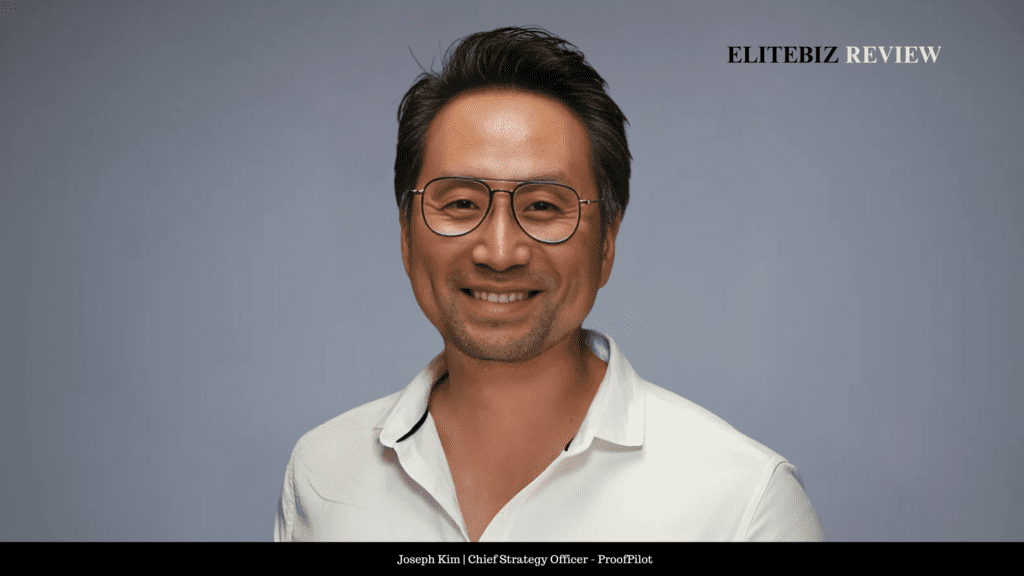
Joseph Kim | Chief Strategy Officer - ProofPilot

Joseph Kim: Driving Operational Excellence and Strategic Innovation in Clinical Research

Digital Version In the ever-evolving world of clinical research, visionary leadership is critical to transforming complex systems and streamlining the path from molecule to medicine. One leader who has consistently stood at the forefront of operational excellence is Joseph Kim, the Chief Strategy Officer at ProofPilot. With a career spanning over two decades and a reputation for candid insights and practical innovation, Joseph has become a respected voice in the industry, challenging conventions while guiding organizations toward smarter, more efficient trial execution. Where science meets strategy – streamlining complexity into meaningful progress in clinical research From Frustration to Transformation: A Strategic Career Pivot Joseph Kim’s journey into a leadership role in clinical research was born out of professional frustration and a deep desire to improve the status quo. After spending twenty-two years in the pharmaceutical industry, culminating in senior roles at Eli Lilly and Company, Joseph became disillusioned with the traditional approaches to clinical trial execution. The inefficiencies he encountered were not only costly and time-consuming but also error-prone and lacking in scalability. “I was frustrated with the conventional offerings to execute research,” he recalls. “They were high-priced, laborious, mistake-liable and took a very long time.” During his tenure at Lilly, he discovered ProofPilot, a digital clinical trial platform that dramatically changed his outlook. Impressed by the company’s streamlined operations and agile development capabilities, Joseph saw firsthand the impact that technology could have when deployed effectively in clinical trials. When ProofPilot secured its Series B funding, the decision to join the company as Chief Strategy Officer was a natural next step. It was an opportunity to drive the change he had long envisioned. Innovation and Efficiency: The Twin Pillars of Strategy As a strategic leader at a nimble and fast-paced start-up, Joseph is clear about the balancing act between innovation and operational efficiency. He recognizes that every moment and every decision matters in an environment where resources must be deployed wisely. “The pressure is too great to not be operationally efficient,” he notes. “There is simply no room to mess around with skunk works. Every moment counts.” Yet, ProofPilot’s agility also provides a platform for constant innovation. The company has carved a competitive advantage by responding to client needs faster than others in the market. This responsiveness is not just a hallmark of good customer service; it is a core component of ProofPilot’s value proposition. “We have had customers come back to us because competitors simply took too long to respond to a development request,” he shares. “Our speed and elasticity have enhanced strategic differentiators.” Navigating Complexity: Redefining Success in Trial Optimization One of the most persistent challenges in clinical research, according to Joseph, is the pursuit of perfection. Many stakeholders strive for idealistic, all-encompassing technological solutions that can deliver everything at once. While such ambitions are understandable, Joseph argues that this mindset often leads to unnecessary complexity and unrealistic expectations. “Too many stakeholders seek perfection, instead of realizing that good can be an enormous benefit,” he explains. He believes the real value lies in comparing proposed solutions not against an ideal but against the current state. This practical approach can help illuminate incremental improvements that generate significant impact over time. “Redirecting folks to compare a new idea to the current state can effectively demonstrate potential value,” he adds. The pressure is too great to not be operationally efficient — there is simply no room to mess around. Every moment counts A Defining Moment: Learning from the Data Throughout his career, Joseph has remained committed to evidence-based decision-making. One of the most defining moments in his professional journey came during the early wave of decentralized clinical trials (DCTs). A strong advocate of the model, he launched an experiment to directly compare virtual sites with traditional brick-and-mortar sites within the same study. The outcome was unexpected. “The brick-and-mortar sites enrolled more and delivered better data, at a lower cost,” he reveals. Rather than doubling down on his original belief, Joseph allowed the data to challenge his assumptions. The experience prompted deeper reflection and a more nuanced understanding of the limitations and strengths of both models. It was a humbling but enlightening moment that shaped his current approach to strategy and operations. Listening to the Root Cause: Fostering a Culture of Innovation At the core of ProofPilot’s culture is an unwavering commitment to listening. For Joseph, fostering innovation is less about implementing the latest technology and more about understanding the root causes behind challenges in clinical trials. He encourages his team to continually dig deeper and question assumptions. “It is always about listening intently to the customers and users and digging deeply into the true root causes and wider context,” he emphasizes. “Keep asking why after you think you have gotten the answer. You will be surprised at what lies underneath the symptoms.” This culture of curiosity and inquiry helps ProofPilot stay closely aligned with the real-world needs of its users and ensures that its solutions are grounded in practical value. Fall in love with a problem, not a piece of tech. At the heart of every great solution is an even better question. Leadership by Design: Clarity, Trust, and Autonomy Joseph’s leadership philosophy is grounded in simplicity and trust. He believes that once the company’s direction is clear, leaders must focus on building capable teams and empowering them to act independently. “If the north star of the company is clear and well understood, all that is left to do is hire great people, set measurable goals, and let them go,” he says. This principle-based approach not only fosters accountability but also encourages innovation at all levels of the organization. It is a strategy that aligns well with ProofPilot’s agile and collaborative ethos. Staying Grounded: Avoiding the Allure of Trends In an industry awash with buzzwords and emerging technologies, Joseph is deliberate about maintaining focus. While terms like blockchain, artificial intelligence, and decentralized trials dominate discussions, he cautions against being swayed by hype. “We do not chase trends and buzzwords,” he says.

AI, Metaverse, and Digital Twins: Transforming the Future of Business and Technology

AI, Metaverse, and Digital Twins: Transforming the Future of Business and Technology

In the ever-evolving digital landscape, three transformative technologies are leading the charge: Artificial Intelligence (AI), the Metaverse, and Digital Twins. These innovations are not only reshaping industries but also creating a future where businesses can achieve unprecedented efficiency, creativity, and customer engagement. Let’s delve deeper into how these groundbreaking technologies are redefining the future of business and technology. Understanding Digital Twins and Their Industry Applications A Digital Twin is a virtual replica of a physical object, system, or process that uses real-time data to mirror its counterpart’s behavior. This technology provides businesses with the ability to simulate scenarios, predict outcomes, and optimize performance before taking action in the real world. Key Applications Across Industries Manufacturing: Manufacturers use digital twins to monitor and predict equipment performance, reducing downtime and enhancing productivity. For instance, factory machinery equipped with IoT sensors can feed data to a digital twin, allowing operators to detect potential issues before they escalate. Healthcare: In healthcare, digital twins are revolutionizing patient care. Virtual models of organs enable doctors to plan surgeries with precision, while digital replicas of medical facilities improve resource allocation and workflow optimization. Real Estate: Digital twins are transforming real estate by allowing architects and developers to visualize buildings before construction begins. City planners use this technology to design smarter urban infrastructure and ensure sustainable development. By offering actionable insights and real-time data, digital twins are empowering industries to innovate faster and operate smarter. The Metaverse: Unlocking New Business Opportunities The Metaverse represents a virtual world where individuals can interact, work, and shop using avatars in immersive environments. While once a concept limited to science fiction, the metaverse is now a reality, opening doors to a new era of business opportunities. How Businesses Can Leverage the Metaverse Marketing and Branding: Brands are creating virtual stores and hosting digital events within the metaverse to engage with audiences in unique and interactive ways. This new medium offers an unparalleled opportunity to stand out in a crowded market. Customer Experience: Imagine giving customers the ability to try on clothes virtually or explore a hotel room before booking—all from the comfort of their homes. Businesses in retail, travel, and real estate are leveraging the metaverse to create these experiences. Remote Collaboration: The metaverse is revolutionizing team collaboration by offering immersive workspaces where employees can interact in virtual offices, brainstorm ideas, and build stronger connections. With its limitless possibilities, the metaverse is poised to become a cornerstone of digital transformation strategies for businesses worldwide. AI in Business: Driving Innovation and Growth Artificial Intelligence has emerged as a game-changer, driving innovation and efficiency across industries. Its ability to process massive datasets and generate actionable insights is helping businesses operate smarter and stay ahead of the competition. AI Applications Transforming Businesses Customer Service: AI chatbots like ChatGPT provide instant, personalized responses to customer queries, enhancing satisfaction and reducing wait times. Predictive Analytics: By analyzing past trends, AI enables businesses to predict market demands, optimize inventory, and make informed decisions. Process Automation: From automating repetitive tasks to managing complex workflows, AI helps businesses save time and resources while minimizing errors. By embracing AI, companies are unlocking new levels of productivity, innovation, and profitability. AI and Personalization: Elevating Customer Engagement In today’s customer-centric world, personalization is key to building meaningful connections, and AI plays a pivotal role in making it possible. By analyzing vast amounts of data, AI helps businesses deliver highly tailored experiences that resonate with their audiences. How AI Is Personalizing Experiences Chatbots: Intelligent chatbots engage users with relevant, context-aware responses, providing seamless customer support. Product Recommendations: E-commerce platforms like Amazon use AI to analyze user behavior and recommend products that align with their preferences, boosting sales and engagement. Tailored Content: AI algorithms on platforms like Spotify and Netflix curate personalized playlists and recommendations based on individual preferences, creating a unique user experience. AI-driven personalization is not just a trend—it’s the future of customer engagement, helping businesses foster loyalty and drive long-term success. Addressing Ethical Challenges in AI While AI offers incredible opportunities, it also raises ethical concerns that businesses must address. From data privacy issues to algorithmic bias, navigating these challenges is essential to ensure responsible AI adoption. Key Ethical Considerations Data Privacy: With the increasing use of customer data, businesses must implement robust security measures to protect sensitive information. Transparent data usage policies build trust with customers. Bias and Fairness: AI models trained on biased datasets can perpetuate discrimination. Businesses must regularly audit their algorithms and use diverse datasets to mitigate bias. Transparency: Customers deserve to know how AI systems make decisions. By being transparent about AI processes, companies can build credibility and trust. Businesses that prioritize ethical AI practices not only mitigate risks but also position themselves as trustworthy leaders in their industries. Integrating Digital Twins, the Metaverse, and AI for Synergistic Growth While each of these technologies is transformative on its own, their combined potential is even greater. Imagine using AI to analyze data from digital twins, then deploying insights within the metaverse to create immersive, data-driven customer experiences. Future Possibilities Smart Cities: Digital twins combined with AI can optimize urban planning, while the metaverse offers virtual representations of these cities for residents and stakeholders. Healthcare Innovation: AI-driven insights from digital twins can guide personalized treatments, while the metaverse enables virtual consultations and training for medical professionals. Enhanced Retail: Businesses can integrate AI-driven personalization with metaverse experiences to offer customers virtual shopping in stores designed using digital twins. The convergence of these technologies is paving the way for a smarter, more interconnected future. Conclusion As we look ahead, AI, the Metaverse, and Digital Twins are not just buzzwords—they are transformative forces that will shape the future of business and technology. These innovations offer opportunities to enhance efficiency, create immersive experiences, and tackle complex challenges. For businesses, embracing these technologies is no longer optional—it’s essential for staying competitive in an increasingly digital world. By leveraging their combined power, companies can not only drive growth but also lead the way in

Raza Jafri

Raza Jafri: Innovating the Future with MetaWorldX’s Visionary Digital Twins​

Digital Version In a world of rapid technological advancements and mounting societal challenges, many leaders struggle to blend innovation with purpose. However, as the Chief Executive Officer of MetaWorldX, Raza Jafri stands out as a visionary who has successfully charted this path. From an early interest in the interaction of systems and environments, Jafri has developed into a true visionary for digital twin technology and its applications to the metaverse, bringing AI to revolutionize the ways we interface and design our world. From the diverse cultural melting pot of Montreal, Jafri has made his journey to leading one of the most innovative companies in AI-driven metaverse space, as a story of passion, persistence, and purpose. Rooted at the core of MetaWorldX is his vision of a more intelligent, sustainable, and interconnected future-one that empowers the individual, business, and governments to make informed decisions and have profound societal impact. Let’s explore the journey of MetaWorldX and its revolutionary CEO, Raza Jafri. Redefining Reality: The Birth of MetaWorldX MetaWorldX started off as more than just a venture but was the result of a lifetime vision. Taking inspiration from the complexities in urban planning and the scope for virtual simulations, Jafri started building the platform to reflect the nuances of the real world. MetaWorldX today forms the digital twin hub for sectors where clients can predict and tackle the potential problems. MetaWorldX isn’t just about building virtual environments,” says Jafri. “It’s about translating data into decisions, unlocking new dimensions of problem-solving. This ethos places MetaWorldX as a leader in bridging the divide between physical and digital realities and offers solutions that are innovative but transformative. Pioneering digital twins for smarter decisions At the heart of MetaWorldX is cutting-edge digital twin technology that transforms real-world environments into digital formats. The twins are then powered by AI and the real-time data from buildings, infrastructure, and IoT devices. By creating these hyper-accurate virtual models, Jafri and his team empower clients to explore scenarios, predict outcomes, and make data-driven decisions that would be impossible in traditional systems. From urban planning to emergency response, the applications of MetaWorldX’s technology are both profound and practical. “One exciting aspect is how we can preempt disasters and optimize resource use, save time, money, even lives,” Jafri shares. A Metaverse Beyond Entertainment For many, the word “metaverse” evokes visions of virtual gaming and social hubs. But for Jafri, it’s a canvas for innovation that stretches far beyond recreation. He has envisioned the metaverse under his leadership as an instrument for real-world problem-solving for MetaWorldX. “Think of the metaverse as this experimental space where we can try out urban systems, build sustainable solutions, and prepare even for extraterrestrial challenges,” Jafri says. MetaWorldX leads the way in using metaverse environments for educational, construction, and cultural preservation domains, creating experiences that will yield tangible value. Sustainability as a Guiding Principle The approach of Jafri towards the leadership is very deep-rooted responsibility, and sustainability forms a backbone of the mission of MetaWorldX. The company reduces the carbon footprint while increasing the impact by integrating renewable energy solutions along with optimizing operational efficiency. “Our goal is to support not only technological progress but also the well-being of our planet,” Jafri asserts. MetaWorldX’s solutions include energy-efficient building management dashboards and environment-friendly digital twin applications that prove commitment to a greener, more sustainable future. Collaboration and Ecosystem of Innovation For MetaWorldX, collaboration is not just a strategy; it’s the foundation of its success. It has partnered with giants like AWS and IBM to amplify its impact and accelerate innovation.True progress happens when diverse minds come together,” says Jafri. “At MetaWorldX, we thrive on partnerships that challenge us to push boundaries.”These partnerships extend beyond the private sector to include governments and municipalities, ensuring that MetaWorldX’s solutions are tailored to real-world needs and challenges. Empowering a Team, Shaping a Legacy Jafri’s leadership style is as innovative as his vision for the company. His colleagues describe him as empathetic and hands-on, as he emphasizes building a culture of growth and resilience in his team. “As a leader, you’re only as strong as the people you empower,” he reflects. This ethos of teamwork is reflected in MetaWorldX’s success; every achievement represents the fruit of a passionate and highly competent team. The Future: What Raza Jafri Has Planned Raza Jafri foresees a future where AI, digital twins, and the metaverse are an integral part of daily life. This might be revolutionizing the health care workflow or designing tomorrow’s cities. “At MetaWorldX, we’re not just building technology; we’re building the future,” Jafri concludes. Through a blend of innovation, responsibility, and human-centric design, Raza Jafri and MetaWorldX are poised to lead the charge into an era of boundless potential. Final Thoughts: A Story of Innovation with Impact Raza Jafri’s journey—from a curious young boy captivated by the power of systems to the CEO of a transformative tech company—is a testament to the boundless possibilities of imagination and perseverance. His story reminds us that innovation is not just about creating something new but about creating something meaningful. As Jafri continues to chart bold directions for MetaWorldX, the work of his team is inspiring large dreams, responsible action, and purposeful leadership. In the future that Jafri envisions, something needs to be imagined and, thus built, one intelligent solution at a time.

Sharon Terry

Sharon Terry: Leading Genetic Alliance with Compassion and Innovation

Digital Version Sharon Terry’s path to becoming a leader in healthcare was forged by a deeply personal experience. In 1994, her children were diagnosed with pseudoxanthoma elasticum (PXE), a rare genetic disease that had no known treatment or cure at the time. As a mother with no scientific training, Sharon left her role as a chaplain and immersed herself in the world of medical research. She went on to found PXE International, discovering the gene responsible for the disease, and pioneered advocacy for genetic research. Her journey would ultimately lead her to Genetic Alliance, a nonprofit organization supporting communities affected by genetic conditions. Today, Sharon Terry serves as the President and CEO of Genetic Alliance. Since joining the organization in its 10th year, she has transformed it into a force for empowering individuals and communities to take control of their own health. Genetic Alliance is dedicated to patient advocacy, advancing healthcare through personalized approaches, and improving access to genetic testing for underserved populations globally. Sharon’s personal story is an inspiring example of how passion, resilience, and innovation can drive change. “We recognize the power and right of individuals, families, and communities to take charge of their own health.”  A Personal Mission Becomes a Global Movement Although Sharon did not found Genetic Alliance, her leadership since its early days has left an indelible mark on its mission and impact. “My deep commitment is to people who suffer from genetic diseases, not to genetics or biotech,” Sharon emphasizes. Her drive to create meaningful change in healthcare began with her children’s diagnosis, which led her to take extraordinary steps in launching research efforts and building infrastructure to support families in similar situations. Sharon’s work with PXE International laid the groundwork for the registry and biobank systems that Genetic Alliance would later expand to support multiple genetic conditions. In 2003, Genetic Alliance became the first organization to launch a lay-led, patient-driven registry platform, giving patients control over their data well before modern privacy laws came into effect. Sharon’s pioneering approach to patient advocacy has pushed Genetic Alliance to the forefront of the healthcare landscape, supporting the formation of advocacy groups and facilitating groundbreaking research. Envisioning the Future of Healthcare At the core of Genetic Alliance’s mission is the belief that individuals, families, and communities have the right to take charge of their own health. “In the coming years, we aim to expand our services to low- and middle-income countries,” Sharon explains. One of the organization’s most ambitious initiatives is iHope Genetic Health, a program that offers free whole-genome and exome sequencing to individuals in underserved areas. Sharon envisions iHope growing exponentially, allowing Genetic Alliance to diagnose undiagnosed individuals around the world and build healthcare capacity in low-resource settings. Sharon remains at the forefront of healthcare trends, particularly in the areas of genetic testing and AI-driven medical research. She believes that advancements in technology will allow communities to leapfrog traditional models of care and directly impact the future of healthcare.  Ethical Leadership and the Power of Collaboration Genetic Alliance’s values are shaped by Sharon’s commitment to patient experience and ethics. “Anything I’m going to ask of another, I need to ask first of myself,” she reflects, emphasizing the importance of authenticity in leadership. Her vision for healthcare is one that prioritizes patient needs above institutional interests, ensuring that ethical practices are central to every partnership. Under Sharon’s leadership, Genetic Alliance has fostered a culture of innovation, collaboration, and inclusivity. “We don’t really know another point of view than the participant’s,” she explains, reinforcing the organization’s patient-first approach. Tools like Gestalt Awareness Practice help create an environment where all voices are heard, supporting both personal and organizational growth. Driving Impact in an Evolving Industry As the biotech landscape continues to evolve, Sharon Terry sees tremendous opportunities for organizations like Genetic Alliance to lead the charge in addressing global health challenges. The organization’s ability to pivot and embrace new technologies like AI and genomics has positioned it as a leader in patient advocacy and personalized medicine. Through programs like iHope, Genetic Alliance is poised to make a lasting impact on the future of healthcare by addressing the needs of communities often left behind by traditional healthcare models. Sharon’s work is not only transforming how genetic research is conducted but also how communities can take ownership of their health journeys. Her leadership is driven by a profound sense of mission, and her unwavering focus on collaboration over competition has made Genetic Alliance a beacon of hope for patients around the world. “The future of healthcare is in distributed models, with the world’s poorest communities leapfrogging developed nations.”

Tamzin Lovell

Tamzin Lovell: Empowering Africa’s Art World with Tech-Driven Solutions

Digital Version In the vibrant and culturally rich world of art in Africa, the name Tamzin Lovell is synonymous with innovation. As the CEO and Founder of Artfundi, Lovell is on a mission to transform the art industry, not just in Africa but globally, using technology as a key enabler. Her journey is one ofpassion, problem-solving, and relentless pursuit of better solutions for the art world. Having started her art career as a gallery owner, Lovell intimately understands the daily challenges faced by galleries, artists, museums, and collectors. But instead of accepting those challenges, she set out to create something that could help streamline and digitize an industry traditionally steeped in manual processes. “When I joined the art world, I quickly realized that it was difficult to manage all aspects of thebusiness – from cataloguing and curating, to protecting the art itself. The tools available were limited, and the processes were often outdated,” she reflects. “I was frustrated, and thatfrustration led me to design a software solution that could solve these inefficiencies. Later, Irealized that this need for digitization wasn’t unique to me – it was something the entire industry could benefit from.” This was the spark that ignited Artfundi, a platform designed to offer art businesses and professionals a way to better manage, secure, and showcase their collections. What began as apersonal quest for efficiency has grown into a broader mission: to contribute to Africa’s creative industry’s digital transformation and position it as a global leader in art and culture. “Be bold, be relentless, and have patience—building something impactful takes time.” Building Artfundi: Bridging the Gap Between Art and Tech Artfundi’s core focus is to make the art world more accessible, efficient, and professionalthrough its tech solutions. The platform offers a range of tools, from collection management andcataloging to art security and curating solutions. But Lovell is quick to point out that the visionbehind Artfundi goes beyond just technology. “Innovation isn’t all about tech,” she explains. “It’s about the human story, understanding the jobs that need to be done, and finding ways to make them easier. For us, the real innovation is in simplifying the complex processes that professionals in the art world face daily.” Lovell’s goal is to make Artfundi a tool that works for everyone, regardless of their technical expertise. “The tech should be so intuitive that an intern can use it as well as a seasoned director, and they should be able to generate reports or insights instantly, even while on the phone with aclient,” she says. “That’s how we know we’ve succeeded – when the technology doesn’t get inthe way, but rather enables people to excel at their work.” This approach has made Artfundi a standout in the art-tech space, particularly within Africa, where the intersection of art and technology is still emerging. Lovell is committed to making sure Africa plays a leading role in this transformation. “Artfundi’s mission is to empower Africa’s creative industry, making it easier and faster to succeed.” Shaping the Future of Africa’s Creative Industry Lovell’s vision for Artfundi is deeply intertwined with her vision for Africa’s role in the global art scene. “Africa is a continent brimming with creativity, but it often lacks the infrastructure tosupport and showcase its talents on the world stage. Through technology, we can change that,” she shares. For Lovell, Artfundi’s mission isn’t just about helping art businesses run more smoothly – it’s about contributing to a broader digital transformation in Africa’s creative industries. “We want to make sure that artists and art from Africa are protected, preserved, and showcased to the world.Our platform helps galleries, museums and collectors do that, and in turn, helps Africa tell itsstories to a global audience,” Lovell explains. She also sees technology playing a crucial role in preserving Africa’s rich cultural heritage. “Digital archiving and preservation are incredibly important. By digitizing collections and archives, we’re ensuring that future generations can access and learn from Africa’s artistic legacy,” she adds. Innovating at the Intersection of Art and Technology Artfundi has been at the forefront of several key innovations that are helping to reshape how art is managed and experienced. “Our art management software is designed to make life easier for art professionals, and we’re constantly refining it to ensure it meets the evolving needs of our users,” Lovell says. Some of the platform’s recent innovations include advanced physical and data security features, designed to protect valuable art collections from both physical theft and cyber threats. “We’re particularly proud of our developments in these areas, as they address two of the biggestconcerns for art institutions today – how to keep their collections safe and how to ensure the integrity of their digital data,” she notes. A Leadership Style Rooted in Values As a leader, Lovell’s approach is guided by core values that she has embedded into Artfundi’sculture: fearlessness, commitment, synergy, and growth. “We’re a company that takes calculatedrisks, but we also focus on creating a positive, collaborative environment where everyone’s voiceis heard,” she explains. One of the ways Lovell fosters this environment is through “Focus Fridays,” a day dedicated to uninterrupted thinking time and learning. “We don’t hold meetings on Fridays. Instead, the team can focus on personal growth, research, and coming up with new ideas. It’s amazing what happens when you give people the space to think,” she shares. Her leadership style is also about empowering her team to take ownership of their work and encouraging cross-disciplinary collaboration. “Good ideas can come from anywhere, and I want to create a space where people feel comfortable sharing them. That’s how innovation happens,” Lovell says. Sustainability and Responsibility Though Artfundi’s environmental footprint is small, sustainability remains a key focus forLovell. “We’re a fully remote company, and we’ve been that way from day one. This not only reduces our carbon footprint but also allows us to integrate eco-friendly practices into every part of our business,” she explains. From going paperless to using energy-efficient cloud solutions, to ISO27001 compliant practices, Artfundi is proof that a tech company

From Law to Leadership: Elohor Akaka’s Journey to Shape Africa’s Future Workforce

Digital Version From Law to Leadership: Elohor Akaka’s Journey to Shape Africa’s Future Workforce Elohor Akaka’s journey into the realm of recruitment and human resource management is a powerful testament to her passion for empowering Africa’s workforce. A lawyer by training, she was called to the Nigerian Bar in October 2015. However, her desire to help individuals secure meaningful employment propelled her to pivot from law to founding Project Get A Job Ltd (PGAJ)—an initiative designed to bridge the gap between job seekers and potential employers. Through her groundbreaking work at PGAJ and the Empowering Careers Initiative, Elohor has successfully created avenues for African talent to connect with employment opportunities, thereby shaping the future of Africa’s workforce. “I believe in empowering individuals to take ownership of their career paths. When people are equipped with the right skills and support, there are no limits to what they can achieve.” The Birth of Project Get A Job and the Empowering Careers Initiative The seeds of Project Get A Job were sown out of Elohor’s desire to assist job seekers in findingtheir dream careers. Recognizing the struggles many face in navigating the complex world of employment, Elohor sought to create a solution that would not only offer training but also directly connect individuals with hiring organizations. The Empowering Careers Initiative, an extension of PGAJ, is the realization of this goal. This initiative primarily focuses on bridging the gap between talented job seekers and employers through innovative platforms like virtual job fairs. The first-ever Empowering Careers virtual job fair took place in May 2024, showcasing the potential for digital transformation in Africa’s recruitment landscape. This event, which transcended geographical limitations, connected job seekers with a host of hiring companies, providing both with a much-needed platform for interaction. As PGAJ continues to build on this success, plans are already underway for a second virtual job fair scheduled for December 2024, further cementing Elohor’s leadership in innovative recruitment strategies. “Project Get A Job is committed to making employment opportunities accessible to everyone, regardless of their background or circumstances.” Shaping Africa’s Workforce: The Vision Behind Project Get A Job At the heart of Elohor’s vision for Project Get A Job is the mission to equip Africa’s workforce with the skills they need to thrive in a competitive job market. For her, it is not just about finding people jobs but also about ensuring that they are employable. Through rigorous training programs, she seeks to prepare individuals for the demands of an evolving labor market, ensuring that they possess the necessary skills to succeed. But Elohor’s vision extends beyond merely preparing job seekers. A critical part of PGAJ’s strategy is to connect Africa’s top talent with job opportunities, both locally and globally. She firmly believes that Africa is home to a wealth of untapped talent, and her goal is to showcase this talent on the international stage. As technology continues to break down geographical barriers, PGAJ is poised to lead the way in ensuring that Africa’s workforce is both prepared and visible to employers around the world. “Our mission is not just to train job seekers, but to ensure that they are employable, competitive, and ready to thrive in the global marketplace.” Addressing Skill Gaps Through Strategic Initiatives One of the primary challenges Elohor identified when founding Project Get A Job was the significant skill gap in many African countries. In response to this, she has introduced a number of key initiatives aimed at addressing this gap. The first Empowering Careers virtual job fair is a perfect example of this, offering job seekers the chance to connect directly with hiring organizations and gain insights into what skills are in demand. In addition to these job fairs, PGAJ has introduced training programs designed to equip job seekers with the skills they need to excel in their chosen fields. From digital literacy to soft skills, these programs are tailored to meet the specific needs of the African job market, ensuring that individuals are not just employable but highly competitive. Leadership Values and Guiding Principles At the core of Elohor’s leadership at Project Get A Job are five key values: empowerment, accessibility, collaboration, innovation, and integrity. Each of these values plays a crucial role in how PGAJ operates and how it delivers value to its stakeholders. Empowerment is fundamental to Elohor’s vision. She believes in providing individuals with the tools, resources, and support they need to take control of their career paths. Accessibility is also a guiding principle for PGAJ. The organization is committed to making employment opportunities accessible to everyone, regardless of their background or circumstances. Collaboration is essential to achieving success, and Elohor fosters a team-oriented environment where individuals work together toward shared goals. Innovation drives many of PGAJ’s initiatives. For example, the virtual job fair is an innovative solution to the challenge of connecting job seekers and employers in a continent as geographically vast and diverse as Africa. Integrity is non-negotiable for Elohor. She believes in being transparent, honest, and ethical in all dealings, ensuring trust is maintained with both job seekers and employers. These values are not just abstract principles; they are woven into the very fabric of how Project Get A Job operates. Through empowerment, accessibility, collaboration, innovation, and integrity, Elohor and her team at PGAJ are redefining the recruitment landscape in Africa. “Innovation is at the core of our work. By embracing technology, we can break Fostering Innovation and Inclusivity In an increasingly digital world, Project Get A Job has embraced technology to better serve African job seekers. Elohor recognizes the transformative potential of digital platforms, which is why PGAJ has been proactive in integrating these tools into its operations. Currently, the organization offers training programs on its YouTube channel, providing job seekers with a platform where they can learn and relearn at their own pace. Elohor is also focused on inclusivity within her organization. Though Project Get A Job is volunteer-led, she is dedicated to providing her volunteers with the resources they need

Josh Mangum

Josh Mangum: Rethinking The Way Digital Marketing Works Through Vision And Innovation

Digital Version Josh Mangum stands at the forefront of digital marketing not by following trends but by setting them. As the Founder of WiT Group, he has transformed obstacles into opportunities, leading his team with a blend of bold innovation and strategic insight. This profile delves into Josh’s unique journey—from his early career decisions that defied conventional wisdom to the creation of a performance-driven agency that consistently exceeds expectations.  Early Career and Inspiration Josh Mangum’s entry into digital marketing was a decisive and strategic move during a period of market saturation. Graduating in 2008, Josh faced a competitive job market with limited opportunities for new marketing professionals. Seizing this moment, he chose to focus on digital marketing, an emerging field with boundless potential and fewer competitors. This decision was driven by a clear vision of positioning himself at the forefront of a transformative industry. In 2011, Josh founded WiT Group with a bold mission: to establish a performance-driven agency that consistently delivers exceptional client results. The agency’s guiding principle, embodied in the motto “Whatever It Takes,” reflects Josh’s commitment to overcoming obstacles and achieving client success. This foundational philosophy has been instrumental in shaping the agency’s approach and growth trajectory. The onset of the COVID-19 pandemic in early 2020 presented an unprecedented challenge for WiT Group, coinciding with the agency’s official transition to a full-service model. Josh’s leadership during this crisis was marked by adaptability and resilience. Faced with the need to adjust the agency’s pricing model and manage complex operational issues, Josh navigated these challenges with a blend of strategic insight and innovative solutions. His efforts ensured that WiT Group weathered the storm and emerged from the pandemic stronger and more resilient. “Strategic moves often arise from recognizing unique opportunities in challenging markets.” Starting WiT Group: A Story of Persistence WiT Group’s Objective-Based Marketing (OBM) model is unique, setting it apart from other traditional marketing agencies. The approach concentrates on aligning clients’ objectives with their marketing strategies so that each activity aims to obtain measurable outcomes rather than finishing tasks. One example demonstrating how WiT Group applies OBM is its work with Financial Advisor Training Institute. To address user experience and functionality concerns, the team began overhauling the out-of-date and ineffective website. The website was successfully modernized, leading to an increase in leads and enrollments that substantiates the results-oriented approach as productive. In this respect, the case study demonstrates how a strategic concentration on customer objectives can drive significant growth and success. Accountability and performance are the defining characteristics of the OBM approach. Unlike traditional agencies that may offer a broad range of services, WiT Group’s strategies are created to achieve specific client goals. This commitment to results and performance has been a key driver of the agency’s success and a defining feature of its approach. “Accountability is the cornerstone that sets us apart from traditional agencies.”  Leadership and Team Development As the leader of WiT Group, Josh Mangum has experienced numerous rewarding moments, particularly witnessing clients’ success and team members’ professional growth. From guiding startups to achieving remarkable milestones to observing team members evolve from entry-level roles to key leadership positions, these experiences have been a source of great pride for Josh. One notable achievement is the professional development of Aidan Eaton, who began as an intern in 2017 and has since risen to the role of Managing Partner and Creative Director. This transformation exemplifies the growth opportunities available within WiT Group and reflects Josh’s commitment to fostering talent and celebrating team achievements. Josh’s leadership style fosters a culture of innovation and excellence. At WiT Group, the performance-driven model naturally encourages creative solutions and continuous improvement. This focus on results and innovation has been instrumental in the agency’s success and its ability to maintain a leading position in the digital marketing industry. Innovative Marketing Strategies and Industry Insights Josh Mangum has been involved in Inbound Marketing for over a decade, an experience that has given him a lot of knowledge about the future of this industry. He highlights several major trends influencing digital marketing, such as embedding AI technology, expanding the scope of marketing platforms, and reenergizing creative advertising. AI technology, being part of promotion initiatives, provides better solutions to improve effectiveness and productivity. The possibility to integrate AI in different areas of marketing is important to Josh; therefore, he stresses that it is crucial to find a balance between transforming technological contribution with human creativity and strategic thinking (Mangum, 2017). This ensures his marketing campaigns are inventive and innovative to achieve client results. As one trend, Mr. Mangum observes that there is growing diversification in terms of marketing platforms. Instead of sticking with traditional Google or Amazon Ads, businesses are increasingly being exposed to various digital environments, including niche ones like Reddit and Twitter. This also means that companies should be either platform-specific agencies or have competence across diverse channels for their marketing services. Additionally, there is a resurgence of interest in creative and story-driven advertising. As the industry moves away from purely data-driven approaches, there is a growing demand for innovative and engaging creative strategies. This shift towards storytelling and creativity reflects a desire for more meaningful and impactful advertising experiences. “Innovation and storytelling are reclaiming their importance in advertising.”  Embracing Automation and AI Automation and AI serve as strategic components of WiT Group’s marketing strategies, employed to enhance both efficiency and effectiveness. AI tools are used for research, process optimization, and improving meeting recaps. Still, Josh remains committed to ensuring that human decision-making and creative thinking are at the heart of successful marketing strategies. Josh’s approach to AI emphasizes its role as a supportive tool rather than a replacement for human insight. By leveraging AI for research and optimization while focusing on creativity and strategic thinking, WiT Group ensures its marketing strategies are innovative and effective. Data and analytics are also central to the agency’s approach. By working closely with clients to understand their goals and establish effective performance metrics, WiT Group develops strategic

Kevin Sabbe

From Developer to Visionary CTO: Kevin Sabbe’s Journey of Innovation and Leadership at Peppermint

Digital Version In the rapidly evolving world of technology, Peppermint Company stands as a shining example of what innovation, creativity, and leadership can achieve. At the heart of Peppermint’s tech-driven vision is Kevin Sabbe, the Chief Technology Officer (CTO) for Peppermint Cambodia. With a career that spans several countries, industries, and leadership roles, Kevin’s journey is a testament to the transformative power of technology and the importance of fostering a collaborative, innovative environment within tech teams. In this interview, Kevin shares insights on his career path, the future of technology, and how Peppermint is driving change across Cambodia and the broader region. From Developer to CTO: A Journey of Growth and Leadership When asked about his journey to becoming CTO, Kevin reflects on his early days as a developer, which laid the foundation for his leadership style today. “My journey started as a developer, and over time I moved into a lead developer role.” His path was not linear, but rather shaped by continuous learning and the ability to adapt to new challenges. Kevin’s experience at the Kirirom Institute of Technology in Cambodia also played a crucial role in his development as a leader. “I taught Python through bootcamps to a total of 200 students over nine bootcamps. This experience gave me a broader perspective on technology and leadership.” Teaching gave him not only technical expertise but also a deeper understanding of how to inspire and lead others. It was a stepping stone toward his role as CTO, where he could combine his love for technology with his passion for leadership. “Becoming CTO felt like a natural progression,” Kevin says, reflecting on the opportunity he seized at Peppermint. “When the opportunity came up, I was excited to take on the challenge.” One of the key elements of his success has been leveraging his extensive network. “I also leveraged my network to bring in talented people from my past experiences, which has been a key part of our growth.” Vision for Technology in Cambodia and Beyond At Peppermint, innovation is not just a buzzword but a core part of the company’s DNA. Under Kevin’s leadership, the company has set its sights on not only driving technological growth in Cambodia but also influencing the broader region. “At Peppermint, we’re committed to pushing the boundaries of innovation,” Kevin says. The company’s vision is to utilize technology to drive both short-term and long-term growth for businesses in the region. Peppermint’s teams span across multiple countries, including France, Tunisia, Cambodia, and Japan, giving the company a unique advantage. “We’re not only focused on technology itself but also on how it can bring real, tangible value to people and businesses in our communities.” This multi-regional presence allows Peppermint to apply global insights to local markets, helping businesses grow sustainably while staying competitive. Innovations Under Kevin’s Leadership One of the most significant achievements under Kevin’s leadership has been the automation of internal processes using AI. This innovation has not only improved efficiency but also freed up time and resources for Peppermint to focus on delivering value to its clients. “We’ve worked on integrating AI in ways that add real value, not just internally but in our clients’ projects as well.” AI isn’t just a tool for internal optimization at Peppermint; it’s a cornerstone of the company’s future-facing strategy. The company is integrating AI into client projects, ensuring that these technologies create tangible, real-world benefits. Leadership Values: Balancing Innovation with Humility When asked about his leadership style, Kevin emphasizes balance. “My leadership style is about balance—between innovation and practicality, between encouraging bold ideas and learning from our mistakes.” He believes that leading with humility is crucial, ensuring that all team members feel valued and heard. “I try to foster an environment where collaboration is key,” Kevin says. He focuses on creating a team culture where challenges are faced collectively. “It’s important for me that the best ideas come forward, regardless of who they come from.” This philosophy extends to how Kevin handles failure and success. Mistakes are seen as opportunities for growth, and success is a shared celebration. Fostering a Culture of Innovation and Creativity Innovation is at the heart of everything Peppermint does, and Kevin has worked hard to create a culture that supports creativity. “We often host hackathons and themed events where small teams work together on a specific challenge,” Kevin explains. These events not only bring the team closer but also generate ideas that often end up being implemented in internal projects or for clients. By fostering a culture of experimentation, Kevin ensures that creativity is woven into the daily work of his tech teams. “We don’t micromanage our teams and believe in giving them the freedom to explore their own solutions,” he says. This autonomy empowers the team, fostering a sense of ownership and accountability that drives innovation. Future Trends in Technology: AI and Sustainability Looking ahead, Kevin identifies two major trends that will shape the technology sector: AI and sustainability. “AI is already a big trend, and I see it continuing to grow rapidly,” Kevin predicts. The ability of AI to drive everything from automation to decision-making means that companies that successfully integrate it will gain a competitive edge. Sustainability is another area where Kevin sees technology playing a pivotal role. “I also see a growing focus on sustainability, where technology will play a key role in optimizing resources and reducing environmental impacts.” Peppermint is already preparing for these trends by investing in research and development in AI and machine learning, ensuring that the company stays ahead of the curve. Tackling Challenges and Seizing Opportunities With its strong emphasis on R&D and adaptability, Peppermint is well-positioned to tackle the challenges and seize the opportunities presented by these trends. “We’re investing in AI and machine learning to ensure we’re prepared for the future,” Kevin says. The company is constantly evolving, with a clear focus on making emerging technologies practical and valuable for clients. Sustainability at the Core of Technology Solutions Sustainability isn’t just

Data Analysis

Harnessing Data Analytics: Transforming Business Insights into Action

In today’s data-driven world, harnessing the power of data analytics has become essential for business success. Companies that leverage data can make informed decisions, enhance customer experiences, and drive innovation. This blog explores the importance of data analytics and how businesses can transform insights into actionable strategies. 1. Understanding Data Analytics Data analytics involves collecting, processing, and analyzing data to extract valuable insights. It encompasses various techniques, including descriptive analytics (what happened), diagnostic analytics (why it happened), predictive analytics (what is likely to happen), and prescriptive analytics (what actions to take). Understanding these categories is crucial for applying data effectively to business challenges. 2. Enhancing Decision-Making Data analytics empowers organizations to make informed decisions based on evidence rather than intuition. By analyzing historical data, businesses can identify trends, measure performance, and uncover opportunities for improvement. This data-driven approach leads to more effective strategies and mitigates risks associated with decision-making. 3. Improving Customer Experience Understanding customer behavior is vital for creating exceptional experiences. Data analytics allows businesses to segment their audience, personalize marketing efforts, and predict customer preferences. By tailoring products and services to meet customer needs, companies can enhance satisfaction and loyalty. 4. Driving Operational Efficiency Data analytics can optimize operational processes by identifying inefficiencies and areas for improvement. By analyzing workflows, businesses can streamline operations, reduce costs, and enhance productivity. For instance, predictive analytics can forecast demand, allowing companies to manage inventory effectively and minimize waste. 5. Fostering Innovation Data analytics can also drive innovation by uncovering insights that lead to new product development and market opportunities. By analyzing market trends and customer feedback, businesses can identify gaps in the market and develop solutions that address emerging needs. This proactive approach fosters a culture of innovation and keeps companies competitive. In Conclusion, Harnessing data analytics is no longer a luxury; it’s a necessity for businesses seeking to thrive in a competitive landscape. By enhancing decision-making, improving customer experience, driving operational efficiency, and fostering innovation, organizations can transform data insights into actionable strategies that propel growth and success.

Scroll to Top

Stay Ahead in Business​

Get latest business insights, PR opportunities & featured stories