Where Leadership Begins with Truth
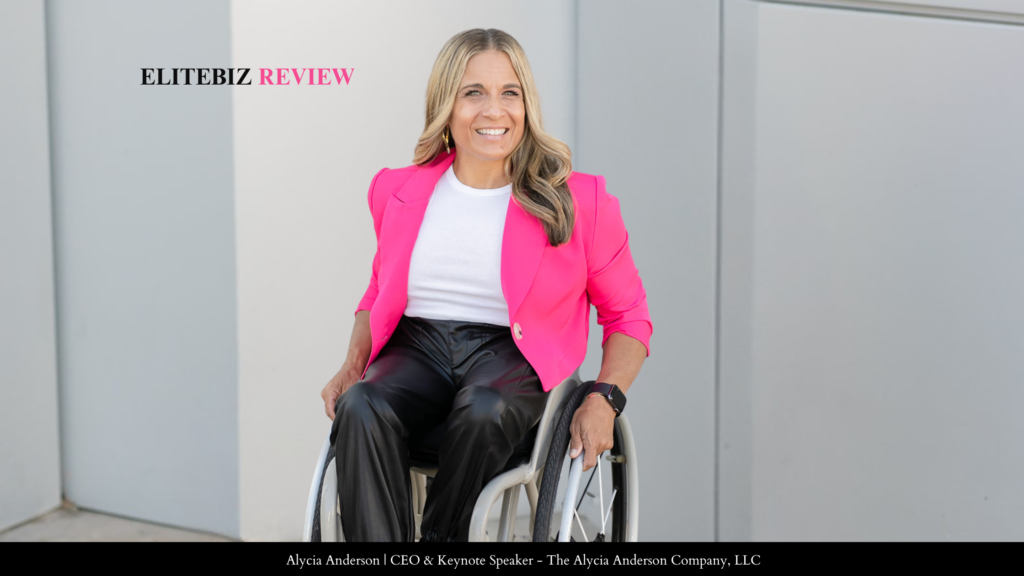
Leadership, in its most honest form, does not begin with authority or recognition. It begins with a decision. A decision to step forward, to speak, and to be visible even when the world has not yet created space for you. For Alycia Anderson, that decision was never theoretical. It was lived.
As CEO of The Alycia Anderson Company, LLC, a global keynote speaker, podcast host, and disability inclusion trainer, she operates at the intersection of business strategy and human experience. Her work is not positioned as inspiration alone. It is rooted in structure, accountability, and transformation. She does not ask organizations to simply care about access. She asks them to build it into how they hire, lead, communicate, and grow.
Her journey is not defined by overcoming disability. It is defined by recognizing it as a source of perspective, insight, and value. That distinction is what sets her work apart and what continues to shape the conversations she leads across industries worldwide.
Choosing Visibility When Invisibility Felt Safer
Every leadership story has a beginning, but few begin with a conscious negotiation between being seen and staying safe. Alycia’s did.
Growing up as a woman with a disability, she understood early that access, opportunity, and belonging are not always extended by default. They are often uneven, conditional, or entirely absent. That awareness did not arrive as a single defining moment. It built gradually through lived experience, shaping how she saw the world and her place within it.
One of the most pivotal shifts in her journey came when she stopped viewing her disability as something separate from her professional identity. Instead of treating it as a limitation to navigate around, she began to understand it as a perspective that organizations genuinely need but often overlook. That realization did not just influence her mindset. It redefined how she approached responsibility, decision making, and influence.
“I realized that my disability was not something I needed to overcome in order to lead. It was actually one of the most powerful sources of my leadership.”
That shift moved her from adapting to systems into questioning them. From participating in existing structures into building new ones. It laid the foundation for everything that followed.
Building a Company Around What Matters
The creation of The Alycia Anderson Company was not simply a business decision. It was an intentional extension of her purpose. Through it, she has built a platform that brings disability inclusion into direct conversation with strategy, operations, and long term growth.
Her work spans keynote speaking, consulting, training, workshops, and strategic advising. But what distinguishes it is not the format. It is the lens. She does not approach disability as a standalone topic. She integrates it into every layer of business decision making.
She works with organizations to examine how access shows up across hiring, retention, workplace culture, customer experience, leadership pipelines, entrepreneurship, procurement, communications, and events. In doing so, she challenges the idea that inclusion can exist as a side initiative or a parallel conversation.
Instead, she reframes it with precision. Disability inclusion is workforce strategy. It is brand trust. It is operational awareness. It is culture. It is business.
This clarity is supported by her own operational choices. Her company holds certifications as a small business, women owned business, and disability owned business. These are not symbolic markers. They represent alignment between identity, leadership, and execution. They also create pathways for other underrepresented entrepreneurs to see what is possible when representation is backed by structure.
Her role on the CDI Insurance Diversity Task Force, where she serves in the inaugural seat representing Persons with Disabilities Business Enterprise, extends that contribution into spaces where policy, procurement, and opportunity intersect.
From Intention to Implementation
A recurring challenge within organizations is not lack of awareness. It is the absence of structured follow through. Many companies express commitment to diversity and equity, yet disability is often left out or addressed only at a surface level.
Alycia’s work focuses on closing that gap in a way that is both practical and sustainable.
She guides organizations through critical questions. Who has access? Who is considered? Who is unintentionally excluded? Where do barriers exist within systems, policies, and assumptions? These questions are not rhetorical. They are designed to reveal gaps that directly affect performance, culture, and long term viability.
Her approach does not stop at reflection. It moves into systems. She emphasizes that inspiration alone is not enough. Without tools, it fades. What remains are processes, and those processes determine outcomes.
To support this, she is launching The Accessibility Check, a series of guides, checklists, and practical resources designed to help organizations implement accessibility across operations. The intention is clear. Accessibility should not feel overwhelming or abstract. It should feel structured, measurable, and achievable.
“Inclusion becomes real when it is budgeted, measured, communicated, practiced, and embedded.” That clarity shifts the conversation from intention to execution, where real change actually occurs.
Redefining What Leadership Looks Like
The concept of leadership is evolving, yet many organizations still operate within narrow definitions of what it should look like. Alycia challenges that directly by expanding not only who leads, but how leadership is expressed.
For her, leadership is not about perfection or volume. It is about truth, purpose, and responsibility. It is about using one’s voice with intention while creating space for others to step forward with their own.
Her leadership is shaped by the integration of all her identities. She does not separate being a woman, a disabled professional, an entrepreneur, a speaker, and an advocate. Each informs how she makes decisions, builds relationships, and creates direction.
This integrated perspective allows her to approach leadership as something adaptive and deeply human rather than fixed or performative. It also allows her to challenge traditional expectations without rejecting the need for excellence.
Through her upcoming Own It Mastery Collective, she is extending this philosophy by helping others step into speaking and advocacy roles with clarity and strategy. The goal is not to create replicas. It is to help individuals build their own voice with intention and structure. Leadership, in this sense, becomes less about position and more about what is made possible because of it.
The Power of Storytelling in Driving Change
In a space often driven by data, frameworks, and policy, Alycia brings something equally essential. Story. She understands that while data informs decisions, stories create connection. They allow people to feel the weight of an issue before attempting to solve it. That emotional understanding is often what moves conversations forward.
Through her keynote speaking and her podcast, Pushing Forward with Alycia, she uses storytelling to bridge the gap between lived experience and organizational systems. Her stories are not centered on personal narrative alone. They are used to illuminate broader realities that affect millions of people navigating access, bias, and opportunity.
A story can reveal a barrier that was previously invisible. It can challenge how talent is defined. It can shift perception from accommodation to opportunity. More importantly, it can stay with someone long after a presentation ends, continuing to influence how they think and act.
Her podcast extends this impact by creating consistent, open conversations about disability across industries, identities, and experiences. It reinforces a critical truth. Disability is not one story. It is many. And those stories deserve to be heard in spaces where decisions are made.
By making these conversations visible and ongoing, she ensures that disability inclusion remains part of everyday dialogue rather than a temporary initiative.
Understanding the Barriers Women Continue to Face
Despite visible progress, structural and cultural barriers for women in leadership continue to persist. Alycia addresses these with clarity, particularly in how they evolve across different identities and experiences.
She highlights challenges around pay equity, representation, access to advancement, and decision making authority. These barriers are often compounded for women with intersecting identities, including disability, where access is not only limited but inconsistently addressed.
She also points out that many leadership pipelines speak about diversity without fully examining who is missing and why. Without that level of examination, efforts remain incomplete and often ineffective.
Organizations, she emphasizes, must move beyond performative support. This includes transparent promotion pathways, equitable pay practices, accessible environments, flexible policies, and accountability at leadership levels.
Equally important is expanding the definition of leadership itself. When organizations reward only one style or pathway, they exclude a wide range of capable individuals whose strengths may not fit traditional models but are essential for growth.
“If a leadership program is not accessible, it is not equitable.” That statement reflects a broader shift in thinking. Equity cannot exist without access. And access must be intentional, not assumed.
Evolving from Proving to Owning
Alycia’s leadership journey reflects a transition many professionals experience but rarely articulate with clarity. The shift from proving to owning.
Earlier in her career, she focused on demonstrating value and belonging. This often meant navigating expectations, anticipating bias, and working within systems that were not designed with her in mind.
As she built her company and personal brand, her perspective evolved. Leadership became less about validation and more about ownership. Ownership of expertise. Ownership of voice. Ownership of direction and boundaries.
This shift allowed her to lead with greater clarity and consistency. It also strengthened her ability to build systems, manage growth, deliver results, and sustain long term relationships.
Her brand is not constructed around a persona. It is grounded in purpose. That authenticity is what allows her work to resonate across industries without losing its core message. Leadership, in this phase, becomes less about being accepted and more about setting the standard.
Resilience with Intention
Resilience is often framed as endurance, but Alycia approaches it with more nuance. For her, resilience is not about ignoring difficulty or pushing through without pause. It is about acknowledging what is difficult, adapting to it, seeking support when needed, and continuing forward with purpose.
She is also intentional in how she speaks about resilience, particularly within the disability community. She does not romanticize it. Disabled individuals should not have to be exceptional simply to access opportunities that should already exist.
That perspective shifts the focus from celebrating resilience alone to questioning the systems that make it necessary. What sustains her motivation is impact in its most human form. The individual who feels seen for the first time. The leader who rethinks a decision. The organization that begins to change how it operates. Purpose remains the constant. It is what brings her back, even on the most challenging days.
Expanding Impact Through Platforms and Initiatives
Alycia’s work continues to expand through a series of initiatives that reinforce her broader mission. Her company remains the central platform, delivering global speaking and consulting engagements focused on disability inclusion and organizational transformation. Her podcast continues to create space for ongoing dialogue, representation, and shared learning.
The Own It Mastery Collective is designed to support individuals building careers in speaking and advocacy, offering guidance, structure, and clarity based on lived experience. The Accessibility Check provides practical tools that help organizations translate intention into execution across planning, operations, and culture.
Her role on the CDI Insurance Diversity Task Force extends her influence into policy and procurement systems, ensuring that disability owned businesses are represented in spaces where economic opportunity is shaped. Each initiative serves a distinct purpose, yet together they create a connected ecosystem of influence, education, and implementation.
A Vision Rooted in Ownership and Access
Looking ahead, Alycia’s vision remains focused on integration. Not as an abstract ideal, but as a practical necessity. She continues to advocate for a future where disability inclusion is recognized as essential to how organizations operate, grow, and innovate. Where access is not conditional. Where systems are designed with intention rather than adjusted after the fact.
Her message to aspiring women leaders reflects this perspective. Own your story. Define your values. Build relationships. Continue learning. Step into spaces that may not have been designed for you, and then help reshape them so others do not face the same barriers. Authentic leadership, she believes, begins when individuals fully embrace who they are and use that clarity to contribute to something larger than themselves.
Conclusion: Leadership That Changes the System
Alycia Anderson’s work does not fit into a single category. It exists across strategy, communication, advocacy, and lived experience. What connects it is a clear and consistent intention.
She is not working to be included within existing systems alone. She is working to influence how those systems are built and who they are built for.
Her work challenges organizations to rethink how they define access, talent, and value. It asks individuals to reconsider visibility, ownership, and voice. And it continues to move the conversation forward in ways that are both practical and deeply human.
Real change does not begin when systems evolve. It begins when someone decides they no longer need permission to exist within them. And then builds what should have been there all along.