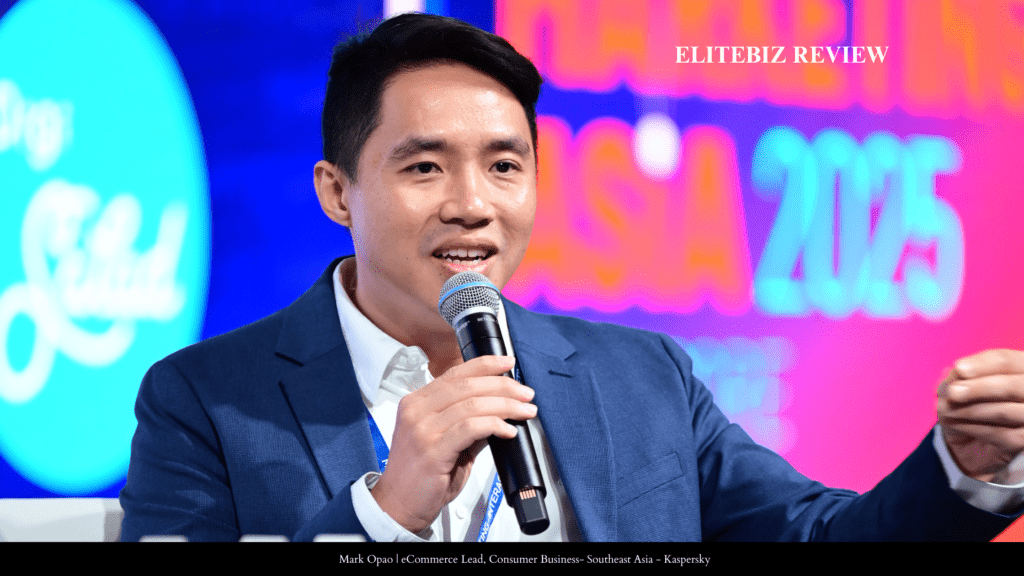
In the rapidly evolving digital economy, e-commerce leaders are increasingly responsible for managing complex ecosystems that blend technology, consumer behavior, and strategic business thinking. Among those shaping this transformation is Mark Opao, eCommerce Lead, Consumer Business – Southeast Asia at Kaspersky, whose career journey reflects adaptability, curiosity, and a strong commitment to continuous learning.
A Journey Fueled by Curiosity and Opportunity
Mark Opao’s entry into the world of e-commerce was not originally part of his career plan. Prior to leading the e-commerce business for Southeast Asia, he spent many years working as a Digital and Communications Planning Strategist. In that role, he advised clients and stakeholders across various industries throughout Asia and the Middle East on how to effectively use paid media channels in a holistic way to achieve business objectives.
While he gained extensive experience in digital strategy, Mark found himself increasingly curious about the broader picture of managing an entire online business. That curiosity eventually aligned with opportunity when his current organization offered him the chance to lead its e-commerce operations in Southeast Asia as part of the company’s ambitious growth strategy in the Asia-Pacific region. Embracing the opportunity with a growth mindset, Mark stepped into the role despite initial uncertainties. Today, he reflects on the move as one of the most meaningful career decisions he has made.
Rethinking the Role of the Modern E-Commerce Leader
For Mark, the concept of influence in e-commerce leadership goes beyond recognition or personal status. In fact, he modestly avoids labeling himself as an “influential” figure. Instead, he believes that e-commerce leaders function much like modern chief executive officers, particularly given the complexity and scale involved in managing digital businesses today.
Operating in a region as diverse and volatile as Southeast Asia requires balancing multiple factors at once. According to Mark, successful e-commerce leadership requires orchestrating strong business fundamentals, consumer-first planning, and the effective use of technology platforms. These components must work together seamlessly in order to create sustainable growth and meaningful digital experiences.
The Rise of the Super App Ecosystem
One of the most defining shifts in Southeast Asia’s digital economy is the emergence of the “super app” ecosystem. Mark observes that regional platforms have rapidly evolved into all-in-one digital environments that combine services such as payments, grocery delivery, ride-hailing, food delivery, and e-commerce marketplaces within a single application.
While regional super apps like Grab initially paved the way, many countries now have their own versions of these integrated platforms. Examples include Touch ‘N Go in Malaysia, Zalo in Vietnam, and Gojek or GoPay in Indonesia. Mark believes that these ecosystems will continue evolving toward models similar to advanced platforms such as WeChat and Alipay in mainland China.
Another rapidly emerging trend in the region is the rise of livestreaming as a digital sales channel, which is becoming increasingly prominent for brands looking to engage customers in more interactive ways.
To adapt to these developments, Mark approaches business planning with what he calls a “super app mindset.” This perspective requires companies to build digital experiences that integrate effectively within these ecosystems while ensuring that new initiatives do not undermine or cannibalize existing online sales channels.
Creating Seamless Digital Commerce Experiences
Delivering meaningful digital commerce experiences requires a careful balance between brand consistency and consumer centricity. In a crowded digital landscape where consumers encounter brands across multiple platforms, Mark believes consistency is essential. Brand elements such as colors, typography, visual imagery, and tone must remain coherent regardless of where the consumer engages with the brand.
At the same time, the customer experience must remain the central focus. This includes optimizing every step of the purchasing journey, from product discovery and research to the shopping cart process and payment options. The ultimate goal is to convert every visitor into a customer in the shortest possible time while maintaining a positive user experience.
Achieving this level of optimization can be particularly challenging for organizations that
operate across both business-to-consumer and business-to-business models or those managing both online and physical retail environments. However, Mark believes it becomes achievable through consistent internal alignment among teams.
Turning Data into Strategic Insight
For many e-commerce leaders, the abundance of digital data can become both a powerful asset and a significant challenge. Mark explains that while organizations have access to vast quantities of data, consolidating and interpreting that information effectively is often far from straightforward.
Different teams frequently rely on separate dashboards and reporting systems, which can lead to fragmented insights that are difficult to unify. To overcome this challenge, Mark emphasizes the importance of identifying clear “sources of truth” from the outset.
These sources should be limited to platforms and dashboards that directly impact key business performance indicators. From there, data can be organized into two essential categories: effectiveness metrics, which measure how well campaigns achieve their intended objectives, and efficiency metrics, which evaluate the resources required to reach those outcomes.
Mark also recognizes the growing value of data visualization and dashboard technologies that aggregate multiple datasets. However, regardless of how visually advanced these systems become, he believes every dataset must ultimately answer two critical questions: Is the insight meaningful, and is it actionable? If the answer to either question is negative, then the data does not meaningfully support strategic decision-making.
Leadership Rooted in Personal Growth
Mark’s leadership philosophy centers on a concept he describes as personal leadership. In his view, the most effective corporate leaders are those who demonstrate the same leadership qualities in their personal lives as they do in their professional roles.
Leaders who embody curiosity, resilience, and empathy are better equipped to guide teams through high-growth environments and periods of transformation. In industries undergoing constant innovation, such as digital commerce, transformation is rarely a one-time event. Instead, it is an ongoing process of experimentation, iteration, and learning.
For this reason, Mark believes organizations must continuously test new ideas, accept occasional failures, and learn quickly from those experiences.
Lessons from Challenging Experiences
One of the most defining challenges in Mark’s career occurred when he relocated to China in 2015. At the time, he had limited knowledge of the local market and spoke only a few basic phrases in Mandarin. Given his role in communications strategy, the situation presented a significant professional challenge.
However, Mark approached the experience with determination and confidence. By leveraging his strengths and dedicating himself to learning the market, he eventually succeeded in the role. The experience not only strengthened his professional capabilities but also reshaped his perspective on leadership.
He credits the leaders who trusted him during that period despite his initial limitations. Their willingness to invest in his potential taught him that great leaders do not try to shape employees into replicas of themselves. Instead, they recognize and nurture the unique strengths each individual brings to the organization.
Preparing the Next Generation of E-Commerce Professionals
As the digital economy continues evolving, Mark believes aspiring e-commerce professionals must develop a balance between commercial understanding and specialized expertise. The debate between becoming a specialist or a generalist often arises in the digital industry, yet Mark believes the most effective professionals combine both perspectives.
Having strong commercial awareness allows professionals to understand the financial and strategic aspects of managing an online business. At the same time, possessing deep expertise in areas such as digital marketing, analytics, or user experience design provides practical insight into how the digital journey unfolds.
Artificial intelligence is also becoming an increasingly important capability for both current and future e-commerce professionals. Beyond technical skills, Mark emphasizes the importance of cultivating a growth mindset, remaining open to continuous learning, and accepting that failure is often part of the innovation process.
Patience is another quality he considers essential. The availability of real-time data can sometimes create pressure to make rapid decisions. However, Mark cautions that building a successful brand, earning customer trust, and increasing long-term customer value all require time and thoughtful strategy.
Focus in an Era of Constant Disruption
Despite the many disruptions shaping the digital industry, Mark believes the most effective way to stay agile is surprisingly simple: focus.
Disruptions are inevitable, but they should not become distractions. Leaders must remain focused on the core fundamentals that drive business performance while allocating time and resources to testing new ideas, optimizing strategies, and exploring emerging platforms.
This balance allows organizations to innovate without losing sight of their long-term objectives.
Redefining the Perception of E-Commerce Leadership
When asked about the professional legacy he hopes to leave, Mark offers a thoughtful perspective. Rather than seeking recognition, he hopes to change how organizations perceive the role of e-commerce professionals.
In some companies, e-commerce teams are still viewed as technical support units responsible primarily for maintaining websites. Mark believes this perception significantly underestimates the strategic importance of the field.
He reiterates his belief that e-commerce leaders operate as modern business leaders, responsible for driving growth, managing complex digital ecosystems, and shaping the future of customer engagement.
Through his work, Mark hopes to demonstrate that e-commerce professionals are not merely technical operators but rather key drivers of innovation and transformation in the global business landscape.
As digital commerce continues to expand and evolve, leaders like Mark Opao remind us that success in the industry requires not only technological expertise but also curiosity, resilience, strategic thinking, and a relentless commitment to learning.