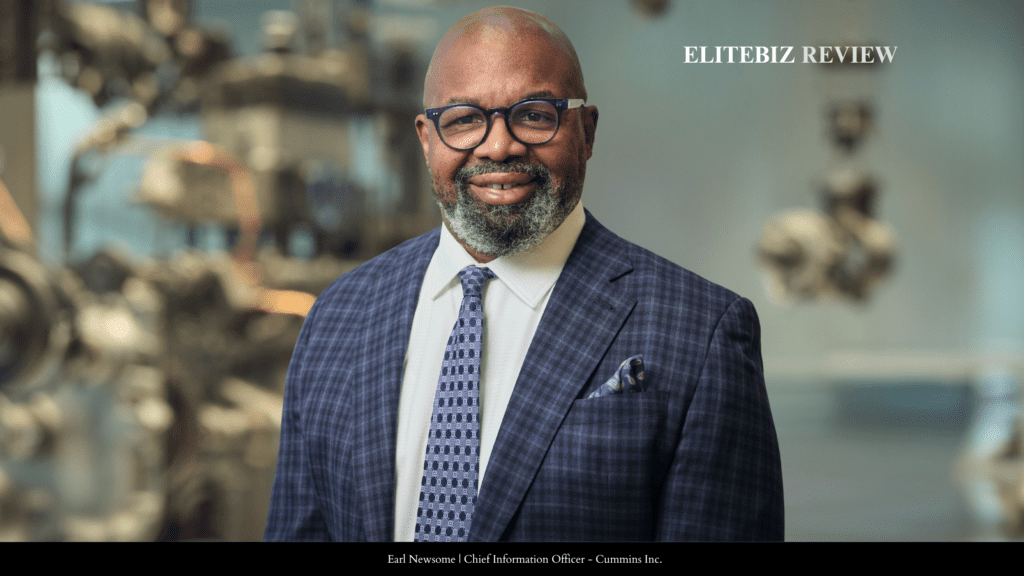
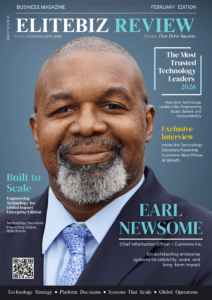
In a time when technology leaders are expected to deliver innovation at speed, manage constant disruption, and still keep people at the center, trust has emerged as the ultimate differentiator. Few leaders embody this principle as consistently and authentically as Earl Newsome, Vice President and Chief Information Officer at Cummins Inc. His career, spanning military service, consulting, and more than two decades in global enterprise leadership—offers a powerful case study in how trust is built not through titles, but through habits, values, and daily choices.
Earl’s story is not a straight line. It is a journey defined by transitions, curiosity, and a deep belief that people are capable of far more than they often imagine. Across roles at organizations such as Owens-Illinois, Estée Lauder, TE Connectivity, Praxair/Linde, and now Cummins, he has consistently focused on one unifying purpose: building a world without limits so people can be all they can be—while creating some magic along the way.
Rooted in Resilience: The Foundations of Character
Earl’s leadership mindset was shaped long before he held executive roles. Growing up in a single-parent household and spending his early years with his grandfather—a military veteran and civil rights activist—instilled in him a profound sense of resilience and possibility. From modest beginnings, he learned that circumstances do not define destiny. That belief would later become a cornerstone of his leadership philosophy.
His time in the military reinforced discipline, accountability, and service. More importantly, it taught him that leadership is not about rank, but responsibility. In high-stakes environments, trust is earned through consistency, preparation, and care for the people beside you. Those lessons carried forward into consulting, where Earl learned to adapt quickly, listen deeply, and deliver value in unfamiliar environments. Consulting sharpened his ability to enter new organizations, understand their culture, and build credibility through action rather than authority.
Across more than twenty years in Corporate America, Earl’s repeated transitions—from industry to industry, company to company—reinforced a simple truth: every new beginning is an opportunity to build. He often describes how he finds belonging by creating something meaningful, whether that is a team, a culture, or a shared vision. This builder’s mindset continues to define how he approaches leadership today.
Purpose Lived, Not Laminated
At the heart of Earl’s leadership is a clearly articulated purpose: to build a world without limits so people can be all they can be while creating some magic along the way. This is not a slogan—it is an operating system that influences how he makes decisions as CIO at Cummins.
Purpose shows up in the way he challenges limiting beliefs, both in himself and others. When someone doubts their own potential or the feasibility of an idea, Earl sees an invitation to reframe what is possible. He believes that the stories people tell themselves can either confine or liberate them, and he actively works to help teams rewrite those narratives through encouragement, preparation, and support.
As CIO, this purpose translates into a focus on enabling people rather than controlling them. Technology is not an end in itself, but a means to unlock human potential. Whether driving digital transformation or modernizing systems, Earl consistently asks how technology can remove barriers, simplify work, and empower teams to do their best work.
Consistency, Credibility, and Courage in Action
In an era of rapid digital change, trust is both fragile and essential. For Earl, trust is built through visibility, consistency, and integrity. It is sustained not by grand gestures, but by everyday habits.
He emphasizes transparency—leaders should never leave their teams guessing. Clear communication, honest feedback, and follow-through create psychological safety, which in turn fuels innovation. Earl also believes that trust grows when leaders are willing to listen, especially to dissenting voices. Seeking diverse perspectives and synthesizing them into clear decisions strengthens both outcomes and relationships.
Importantly, Earl views trust as reciprocal. Leaders must trust their teams as much as they expect to be trusted themselves. That means empowering people with decision rights, supporting smart risk-taking, and treating failures as learning opportunities rather than reasons for blame.
Turning Bold Ideas into Business Reality
Earl is fond of the idea that “any sufficiently advanced technology is indistinguishable from magic.” Yet he is equally clear that imagination must be grounded in execution. Being an effective technology leader requires the ability to dream boldly and then engineer those dreams into reality. One skill do build is Imagineering – where we imagine the future that we want and then engineer to create it. It is often said the best way to predict the future is to create it.
At Cummins, this balance shows up in a disciplined approach to innovation. Earl encourages divergent thinking early—imagining what could be possible without constraints. But he also knows when it is time to converge, land the plane, and move into execution. Technology must deliver tangible business value, whether through operational excellence, improved customer experiences, or new capabilities that position the company for the future.
This mindset allows teams to explore the art of the possible without losing sight of outcomes. Magic, in Earl’s view, is not mystery—it is clarity achieved through thoughtful design and hard work.
Creating Spaces Where People Can Truly Thrive
One of the most defining aspects of Earl’s leadership philosophy is his uncompromising stance on anti-toxicity. He believes that toxic behaviors—whether overt or subtle—erode trust and creativity. Addressing them directly and immediately is not optional; it is a leadership responsibility.
Creating environments of belonging requires more than good intentions. Earl focuses on practical actions: welcoming those who intend to do no harm, encouraging participation, and allowing people to raise concerns without fear of ridicule or retaliation. He pays close attention to micro-inequities, cliquish behavior, and other signals that inclusion may be breaking down.
Belonging also means development. Earl encourages people to climb the competency ladder through self-reflection, coaching, and honest feedback. He values “sensors” within the organization—individuals who will tell the truth and help leaders understand the real temperature of the culture.
Clarity as a Catalyst for Speed and Scale
In large, global organizations, complexity can easily become the enemy of progress. Earl is a strong advocate for simplicity. He challenges unnecessary rules, outdated processes, and systems that exist simply because “that’s the way we’ve always done it.”
Through techniques such as value stream mapping and journey mapping, he works to eliminate waste, streamline compliance, and maximize value. Simplicity, in his view, is not about cutting corners—it is about clarity. Clear systems enable faster decisions, better experiences, and greater accountability.
This philosophy extends to decision-making. Earl encourages leaders to focus on what truly matters, resist the temptation to admire problems, and move forward with confidence once the right path is clear.
Communicating with Precision, Presence, and Purpose
In boardrooms and executive discussions, Earl is known for his emphasis on brevity. Crisp storytelling, he believes, is an essential skill for technology leaders. Being technically right is not enough; leaders must be able to communicate ideas in ways that resonate.
Storytelling helps bridge the gap between technology and business. It provides context, builds alignment, and inspires action. By staying on target and avoiding unnecessary complexity, leaders can influence outcomes more effectively and earn credibility with stakeholders.
For Earl, storytelling is also about authenticity. Appropriate humor, curiosity, and a willingness to be human create connection. Trust grows when leaders show up as themselves.
Daily Disciplines That Compound Trust
Earl often emphasizes that trust is built through habits, not titles. Among the habits he values most are curiosity, visibility, and consistency. Trusted leaders are present—they get proximate to their people, customers, and partners. They do the work, ask thoughtful questions, and follow through on commitments.
He also believes in celebrating progress. Optimism, when paired with realism, keeps teams motivated through change. Failures are treated as learnings, and momentum is built one step at a time.
Another defining habit is the willingness to challenge the status quo. Earl encourages leaders to overcome fear, uncertainty, and doubt by practicing bravery. A “+one” mindset—adding one new experience, perspective, or connection each day—helps individuals and organizations continue to grow.
Leadership That Shows Up Where the Work Happens
Despite leading in a global organization, Earl places high value on physical and personal connection. He believes people notice absence, and that leaders must make the effort to be seen and accessible. Getting proximate means understanding the view from the field—how strategies and systems actually impact day-to-day work.
This proximity helps balance justice and mercy, ensuring decisions are both fair and humane. It also reinforces trust, as people feel heard and valued when leaders take the time to engage directly.
Preparing the Next Generation of Trusted Technology Leaders
Looking toward 2026 and beyond, Earl’s advice to aspiring CIOs is both practical and deeply human. Be quad-deep—develop social, business, industry, and technical competence, with a strong lean toward the business. Build networks inside and outside your organization, and seek unvarnished truth through mentors, coaches, and personal boards of directors.
Most importantly, be authentic. Technology will continue to evolve, but the fundamentals of leadership endure. Trusted CIOs are those who combine imagination with execution, courage with humility, and ambition with care for others.
What Trust Really Means in a Digital-First World
When asked to define trusted leadership in a digital-first world, Earl’s perspective is refreshingly simple: trusted leadership is consistent action grounded in purpose, integrity, and care for people. It is leadership that makes it cost nothing to be yourself, creates space for growth, and leaves organizations—and individuals—better than it found them.
As people reflect on Earl Newsome’s leadership journey, what stands out is not just the systems he modernized or the transformations he led, but the culture he built and the people he empowered. In a world hungry for trust, his example reminds us that the most powerful technology of all is human belief—belief in possibility, in progress, and in one another.
Leadership in Practice: Turning Values into Daily Action
What distinguishes Earl’s leadership is his ability to translate values into behaviors that people experience every day. He is intentional about showing up, listening, and engaging in ways that reinforce trust. Whether through regular check-ins, open forums for dialogue, or informal conversations that surface honest feedback, Earl believes leadership is most effective when it is visible and human.
He often reminds teams that leadership is a role, not a title. That belief shapes how he approaches decision-making and accountability. Rather than positioning himself as the final authority on every issue, he focuses on creating clarity around decision rights, empowering others to lead from where they are, and holding himself to the same standards he expects of his organization. This consistency reinforces credibility and builds confidence across teams.
Navigating Change Without Losing the Human Core
Digital transformation is rarely just a technical exercise. For Earl, it is fundamentally about people—how they experience change, how they adapt, and how they find meaning in the work they do. He recognizes that fear, uncertainty, and doubt often accompany large-scale transformation, and he addresses those emotions directly rather than ignoring them.
By communicating early, often, and honestly, Earl helps teams understand not just what is changing, but why it matters. He encourages leaders to acknowledge discomfort while maintaining optimism about the future. This balanced approach allows organizations to move forward without minimizing the human impact of change.
Mentorship, Sponsorship, and the Next Generation of Leaders
Earl places strong emphasis on mentorship, coaching, and sponsorship as essential components of leadership development. He encourages emerging leaders to take ownership of their growth, seek diverse perspectives, and build relationships that challenge and support them.
At the same time, he understands the unique power of sponsorship—using influence to open doors, create visibility, and advocate for others when they are not in the room. By actively investing in people’s potential, Earl helps create a leadership pipeline rooted in trust, capability, and shared purpose.
Integrating Life, Work, and Well-Being
Another defining aspect of Earl’s philosophy is his belief in integration over balance. He recognizes that work, family, health, and personal interests are deeply interconnected. Rather than prescribing a single model for success, he encourages individuals to define what integration looks like for them at different stages of life.
This flexibility fosters trust and sustainability. People perform at their best when they feel respected as whole individuals, not just contributors to outcomes. Earl’s approach reinforces the idea that long-term success is built on well-being, not burnout.
A Legacy of Trust and Possibility
Looking ahead, Earl Newsome’s legacy is one of possibility—possibility unlocked through trust, purpose, and consistent action. His leadership demonstrates that technology, when guided by strong values, can be a powerful force for inclusion, progress, and human connection.
As organizations navigate an increasingly complex digital future, Earl’s journey offers a compelling reminder: the most trusted leaders are those who combine imagination with discipline, ambition with empathy, and innovation with integrity. In doing so, they do more than lead transformation—they create environments where people believe in themselves, in each other, and in what is possible when trust has no limits.