Leading Business Magazine | EliteBiz Review

Author name: elitebizreview@gmail.com

personal branding

The Rise of Personal Branding for Business Leaders in 2026

Leadership Influence in the Digital Economy In 2026, business leadership extends far beyond operational excellence and strategic oversight. Executives are no longer evaluated solely by financial performance or internal management capabilities. Instead, they are increasingly assessed by their visibility, credibility, and influence in the public domain. Personal branding for business leaders has evolved from a marketing advantage into a strategic necessity. As explored in our pillar article on The Future of Business Leadership in 2026, modern leadership is defined by digital fluency, transparency, and ecosystem thinking. In this landscape, executive visibility reinforces corporate authority. Leaders who articulate clear perspectives on industry shifts, digital transformation, AI adoption, sustainable growth, and hybrid workforce management are shaping not only their organizations but entire sectors. The rise of personal branding signals a structural change in how leadership authority is built and sustained. The Shift from Corporate Brand to Executive Brand Historically, companies invested heavily in corporate branding while executive presence remained largely confined to boardrooms and industry conferences. However, digital platforms have democratized communication. Stakeholders now engage directly with leaders through professional networks, interviews, and thought leadership publications. Consumers, investors, and employees increasingly associate organizational credibility with executive authenticity. A company’s vision often gains clarity through the voice of its leadership. This shift reflects a broader transformation in trust dynamics. Modern audiences value transparency and accessibility. They prefer hearing directly from decision-makers rather than anonymous corporate messaging. As a result, CEO personal branding has become an extension of corporate strategy. Why Personal Branding Matters More in 2026 Several macro trends are accelerating the importance of executive visibility. First, digital transformation has amplified information flow. News cycles move rapidly, and narratives form quickly. In this environment, leaders who remain silent risk losing control of their organization’s story. Second, the competition for top talent has intensified. Skilled professionals seek employers whose leadership demonstrates clarity of purpose and forward-thinking vision. A strong personal brand attracts high-performing individuals who align with that vision. Third, investor expectations have evolved. Shareholders assess not only financial performance but also governance standards, sustainability commitments, and leadership credibility. Visible executives who articulate strategic roadmaps inspire greater confidence. Finally, global interconnectedness has blurred geographical boundaries. Leaders now operate within global ecosystems where reputation travels faster than ever. Personal branding is no longer optional—it is a leadership responsibility. Defining Executive Personal Branding Personal branding for business leaders is not self-promotion. It is the deliberate articulation of expertise, values, and strategic perspective. An effective executive brand communicates: Core leadership philosophy Industry specialization Commitment to innovation Ethical standards Long-term vision It positions the leader as a thought authority rather than a commentator. Consistency across communication channels strengthens credibility. Authenticity remains central. Audiences can quickly identify superficial branding attempts. Sustainable personal branding is grounded in genuine insight and experience. Thought Leadership as Strategic Positioning Thought leadership is the primary vehicle for executive branding. By sharing informed perspectives on industry developments, leaders shape discourse and establish authority. For example, executives who contribute insights on AI integration, data-driven leadership, or sustainable growth strategies demonstrate intellectual leadership within their sectors. These topics align naturally with broader business leadership trends and reinforce strategic expertise. Thought leadership content may include: Industry articles Expert interviews Panel discussions Strategic forecasts Digital platform commentary The goal is not frequency alone but depth and clarity. High-quality, insight-driven contributions generate long-term influence. The Role of Digital Platforms in Executive Branding Professional digital platforms have become powerful amplifiers of executive presence. Leaders can now communicate directly with stakeholders without intermediary filters. Consistent engagement through strategic posts, commentary on emerging leadership trends, and reflections on digital transformation initiatives builds credibility over time. However, effectiveness depends on strategic discipline. Leaders should focus on topics aligned with organizational priorities and personal expertise. Overextension into unrelated themes can dilute brand clarity. The most impactful executive profiles reflect intellectual consistency and strategic coherence. Building Authority Through Expertise One of the most critical elements of executive branding is alignment. Personal narratives must reinforce corporate identity rather than contradict it. If an organization positions itself as innovation-driven, its leadership should demonstrate digital fluency and forward-thinking perspectives. If sustainability forms part of corporate strategy, executives should communicate measurable commitments and progress. Misalignment between personal messaging and corporate direction can create confusion or reputational risk. Coordinated communication between leadership and corporate teams ensures consistency. In this way, personal branding strengthens rather than competes with organizational branding. Aligning Personal Brand with Corporate Strategy Authority is built through demonstrated expertise. Executives must identify their core domains of specialization and contribute meaningfully within those areas. For instance, a leader spearheading AI-driven transformation initiatives can establish authority by discussing AI governance, predictive analytics adoption, and risk management frameworks. Similarly, executives focused on hybrid workforce optimization can contribute insights into digital collaboration systems and performance metrics. Expertise-driven branding enhances credibility because it reflects operational experience rather than abstract commentary. Over time, repeated association with specific themes builds recognizable authority. Authenticity and Vulnerability in Leadership Communication Modern audiences respond positively to authenticity. Leaders who acknowledge challenges, discuss lessons learned, and share strategic recalibrations humanize executive roles. This does not require oversharing personal details. Rather, it involves communicating with intellectual honesty. Transparent discussion of industry volatility, digital transformation obstacles, or cultural shifts fosters trust. Authenticity strengthens engagement and differentiates leaders from overly curated corporate personas. In 2026, authenticity is not weakness—it is strategic strength. Personal Branding and Talent Attraction Employer branding increasingly intersects with executive branding. Professionals often research leadership profiles before joining organizations. A visible and respected executive team enhances recruitment efforts. Leaders who articulate a compelling vision, demonstrate commitment to innovation, and engage thoughtfully in industry discourse attract ambitious talent. Moreover, internal employees feel greater alignment when leadership communicates directly and consistently. This reinforces organizational culture and morale. Personal branding thus contributes to both external recruitment and internal retention. Reputation Management in a Real-Time Media Environment The speed of digital communication increases reputational vulnerability. A single misinterpreted statement can escalate quickly. Proactive personal branding acts as a reputational buffer. Leaders who maintain consistent, value-driven communication build goodwill over time. In moments of


How AI Is Reshaping Executive Decision-Making in 2026

How AI Is Reshaping Executive Decision-Making in 2026

Artificial Intelligence Moves Into the Executive Core Artificial intelligence is no longer confined to operational automation or experimental innovation labs. In 2026, AI in executive decision-making has become a central pillar of modern business leadership. Organizations across industries are integrating AI-powered analytics into strategic planning, risk management, financial forecasting, and competitive intelligence. As explored in our pillar article on The Future of Business Leadership in 2026, digital transformation is redefining how leaders operate. AI now functions as a strategic augmentation tool that enhances executive clarity, accelerates insights, and improves long-term positioning. The shift is not about replacing human leadership—it is about upgrading leadership capability. Executives who embrace AI-driven intelligence are making faster, more informed decisions while maintaining strategic agility in volatile markets. The Evolution from Intuition-Based to Intelligence-Augmented Leadership Strategic planning has become increasingly dynamic. Five-year static roadmaps are giving way to adaptive frameworks supported by continuous data feedback. AI tools enable executives to simulate multiple business scenarios simultaneously. For example: How would a 5% supply chain disruption impact quarterly margins? What is the projected revenue shift if consumer demand changes regionally? How might currency fluctuations affect international expansion plans? AI-driven modeling systems generate outcome probabilities based on historical data and market patterns. Leaders can test assumptions before committing capital. This capability enhances strategic agility—one of the defining leadership trends of 2026. Organizations that integrate AI into planning processes respond more effectively to economic volatility and geopolitical uncertainty. Financial Forecasting and Capital Allocation Financial decision-making is one of the areas where AI has delivered measurable impact. AI-powered forecasting tools analyze historical performance, macroeconomic indicators, and sector-specific data to produce more accurate revenue projections. These systems detect subtle shifts in market demand and alert executives to emerging patterns. Capital allocation also benefits from predictive modeling. Leaders can evaluate which divisions are likely to generate higher returns and optimize resource distribution accordingly. Rather than reactive budgeting, AI enables proactive financial strategy. This level of precision gives AI-enabled enterprises a competitive edge over organizations still relying on conventional spreadsheet-based forecasting. AI in Risk Intelligence and Crisis Prevention Risk management has evolved into risk intelligence. Traditional risk frameworks often relied on periodic audits and compliance checklists. In contrast, AI continuously scans for anomalies across cybersecurity systems, supply chains, and financial transactions. For instance, AI can: Detect unusual transaction patterns indicating fraud Identify supplier vulnerabilities based on geopolitical instability Monitor cybersecurity breaches in real time Flag regulatory compliance risks before penalties occur Executives now receive early warning indicators that allow preemptive action. In a world where reputational damage can spread rapidly, this proactive approach is essential. AI-driven risk intelligence strengthens organizational resilience—a core component of future-ready business leadership. Data-Driven Leadership and AI Synergy AI and data-driven leadership are deeply interconnected. While data-driven executives rely on metrics and performance dashboards, AI enhances the depth and predictive value of those metrics. For example: Traditional analytics might show declining customer retention. AI analysis can predict which customer segments are most likely to churn and suggest targeted interventions. This synergy enables precision strategy rather than broad corrective measures. Executives who combine AI insights with data governance frameworks build a robust analytical culture. As discussed in our cluster article on How Data-Driven Leaders Are Outperforming Competitors, analytics maturity directly correlates with performance outcomes. AI simply accelerates and sharpens that analytical advantage. Ethical AI and Responsible Governance While AI offers transformative potential, responsible governance is critical. Bias in algorithms, lack of transparency, and over-reliance on automated recommendations can create ethical challenges. Leadership accountability remains central to AI deployment. Executives must ensure: Transparent data sourcing Clear accountability for algorithmic decisions Human oversight in high-impact judgments Compliance with regulatory standards Ethical AI frameworks are not just risk mitigation tools—they enhance stakeholder trust. In 2026, investors and consumers expect responsible innovation. Leaders who prioritize ethical oversight protect both brand reputation and long-term value. AI and Talent Strategy Executive roles involve constant high-stakes decisions. Over time, decision fatigue can reduce clarity and effectiveness. AI systems alleviate cognitive load by filtering irrelevant information and presenting structured insights. Instead of sorting through fragmented reports, leaders receive consolidated intelligence summaries. This allows executives to focus on: Long-term vision Strategic partnerships Innovation exploration Organizational culture AI acts as a decision-support partner, enabling leaders to allocate mental energy more efficiently. Integrating AI Into Corporate Culture Successful AI adoption is not purely technological—it is cultural. Organizations must foster AI literacy across leadership teams. Executives should understand not only what AI can do but how it works conceptually. Training programs, cross-functional workshops, and collaborative experimentation strengthen internal confidence. Resistance often stems from misunderstanding. Transparent communication about AI objectives reduces fear and increases adoption rates. Leadership alignment around digital transformation accelerates enterprise-wide integration. AI and Competitive Advantage in 2026 The competitive landscape increasingly differentiates between AI-enabled enterprises and traditional operators. AI-powered organizations benefit from: Faster strategic pivots More accurate demand forecasting Reduced operational waste Enhanced customer personalization Improved risk mitigation Competitors that delay AI integration risk falling behind in efficiency and innovation. However, competitive advantage does not come from technology alone. It comes from leadership’s ability to integrate AI strategically rather than reactively. Challenges in AI Implementation Despite its benefits, AI adoption presents challenges. Data fragmentation across departments can limit system effectiveness. Integration costs may strain budgets. Employees may resist automation due to job security concerns. Leaders must approach implementation with structured planning: Define clear objectives Start with pilot programs Measure impact incrementally Communicate transparently Gradual integration reduces disruption while maximizing learning. The Future of AI-Augmented Leadership Looking ahead, AI capabilities will continue expanding into predictive innovation modeling, automated negotiation analytics, and advanced strategic simulations. Executives who cultivate digital fluency today will adapt more effectively tomorrow. The future of leadership is not about delegating decisions to machines. It is about building collaborative intelligence systems where technology enhances human capability. Organizations that master this balance will define the next era of enterprise excellence. Conclusion: Intelligence as a Leadership Multiplier In 2026, AI in executive decision-making is no longer a futuristic concept—it is a leadership standard. By integrating

The Future of Business Leadership in 2026: Trends, Strategy & Digital Transformation

The Future of Business Leadership in 2026: Trends, Strategy & Digital Transformation

Business Leadership in an Era of Intelligent Acceleration Business leadership is no longer defined solely by authority, operational oversight, or quarterly performance metrics. As we move through 2026, leadership is being reshaped by digital transformation, artificial intelligence, evolving workforce expectations, and a rapidly shifting global economy. The pace of change has accelerated to a level where static leadership models can no longer sustain growth. The future of leadership is being built at the intersection of technology, human intelligence, and strategic foresight. Leaders are now expected to manage complexity, navigate uncertainty, and drive innovation while maintaining cultural cohesion and long-term sustainability. In this new landscape, business leadership is not just about guiding organizations — it is about architecting resilient ecosystems capable of adapting continuously. This comprehensive analysis explores the leadership trends defining 2026, the expanding role of digital transformation in executive strategy, and the competencies required to thrive in the next era of business. The Transformation of Business Leadership Models Historically, business leadership operated within hierarchical frameworks designed for stability and predictability. Decision-making was centralized, information flowed vertically, and authority was closely tied to tenure and positional power. While this model served industrial-era organizations effectively, it is increasingly misaligned with the realities of a digitally integrated global economy. In 2026, leadership structures are becoming flatter, more collaborative, and more responsive. The modern executive no longer functions solely as a decision-maker at the top of a pyramid. Instead, leaders operate as facilitators of innovation, orchestrators of talent, and stewards of long-term vision. Authority is gradually being replaced by influence, and control is being replaced by coordination. This shift reflects a broader transformation: organizations are evolving from rigid systems into adaptive networks. As a result, business leadership now demands the ability to manage ambiguity while maintaining clarity of direction. Digital Transformation as a Strategic Imperative Digital transformation has transitioned from a competitive advantage to a fundamental requirement for survival. However, in 2026, it is no longer confined to technological upgrades or software adoption. True digital transformation is a comprehensive rethinking of how organizations create, deliver, and sustain value. Leaders must view digital transformation not as an IT initiative but as a strategic reinvention of business models. This includes digitizing core operations, integrating real-time data systems, automating repetitive workflows, and enhancing customer experiences through intelligent technologies. More importantly, it requires cultivating a digital-first mindset across the organization. The role of business leadership in this transformation is pivotal. Executives must align digital investments with long-term strategic objectives, ensure cross-departmental collaboration, and foster a culture that embraces experimentation. When digital transformation is embedded into the organizational DNA rather than treated as a temporary project, it becomes a sustainable growth engine. Leadership Trends 2026: Defining Characteristics of Modern Executives The leadership trends shaping 2026 reveal a clear pattern: successful executives blend technological fluency with human insight. Several defining characteristics are emerging as essential to future-ready leadership. One of the most prominent trends is data-driven decision-making. Leaders today operate in environments saturated with information. Advanced analytics platforms provide real-time performance metrics, predictive modeling, and scenario simulations. Rather than relying solely on intuition, executives are leveraging structured insights to guide strategic choices. However, effective leadership requires more than data interpretation — it demands contextual understanding and the ability to translate insights into actionable outcomes. Another defining trend is AI-augmented leadership. Artificial intelligence tools are now integrated into financial forecasting, supply chain optimization, talent analytics, and customer segmentation. Leaders who understand the capabilities and limitations of AI are positioned to unlock significant efficiency gains. At the same time, ethical oversight and responsible deployment are critical. The future of leadership includes ensuring that automation enhances human potential rather than replacing strategic thinking. Equally important is the resurgence of human-centric leadership. As technology becomes more sophisticated, employee expectations are also evolving. Professionals seek meaningful work, transparent communication, and inclusive cultures. Leaders must demonstrate empathy, emotional intelligence, and active listening. Trust remains a foundational currency in modern organizations, and digital advancement cannot substitute for authentic leadership presence. Hybrid and distributed workforce management also defines leadership in 2026. Remote collaboration, global talent pools, and flexible schedules are now embedded into corporate structures. Leading hybrid teams requires clarity in goal-setting, results-oriented performance metrics, and consistent communication frameworks. Executives must cultivate cohesion even when teams are geographically dispersed. Finally, purpose-driven leadership has emerged as a strategic differentiator. Investors, consumers, and employees increasingly evaluate organizations based on environmental, social, and governance commitments. Leaders are expected to integrate sustainability into corporate strategy rather than treating it as a compliance obligation. Purpose alignment enhances brand trust and long-term resilience. Strategic Agility in a Volatile Economy Economic volatility has become a constant rather than an exception. Market disruptions, geopolitical tensions, technological breakthroughs, and regulatory shifts create a dynamic operating environment. In such conditions, strategic agility is indispensable. Strategic agility refers to the ability to pivot without compromising long-term objectives. It involves continuous scenario planning, rapid resource reallocation, and iterative experimentation. Agile leaders recognize that perfect information rarely exists; instead, they build adaptable frameworks capable of absorbing shocks. Rather than pursuing rigid five-year plans, modern executives adopt modular strategies. They establish clear long-term visions while allowing tactical flexibility. This balance between stability and adaptability distinguishes high-performing organizations from those that struggle to respond to change. The Expanding Role of Digital Fluency Digital fluency has become a core leadership competency. While executives are not expected to master technical coding languages, they must understand how digital infrastructure shapes business outcomes. Cloud computing, cybersecurity frameworks, automation platforms, and AI ecosystems are no longer peripheral concerns — they are central to enterprise growth. Leaders who lack digital awareness risk making uninformed strategic decisions. Conversely, those who embrace digital fluency can evaluate technological investments with clarity and confidence. They can ask informed questions, assess scalability, and align innovation with operational goals. Digital transformation initiatives often fail not because of technology limitations but due to leadership disconnect. When executives actively champion digital evolution, organizations are more likely to achieve successful implementation. Change Management: The Human Side

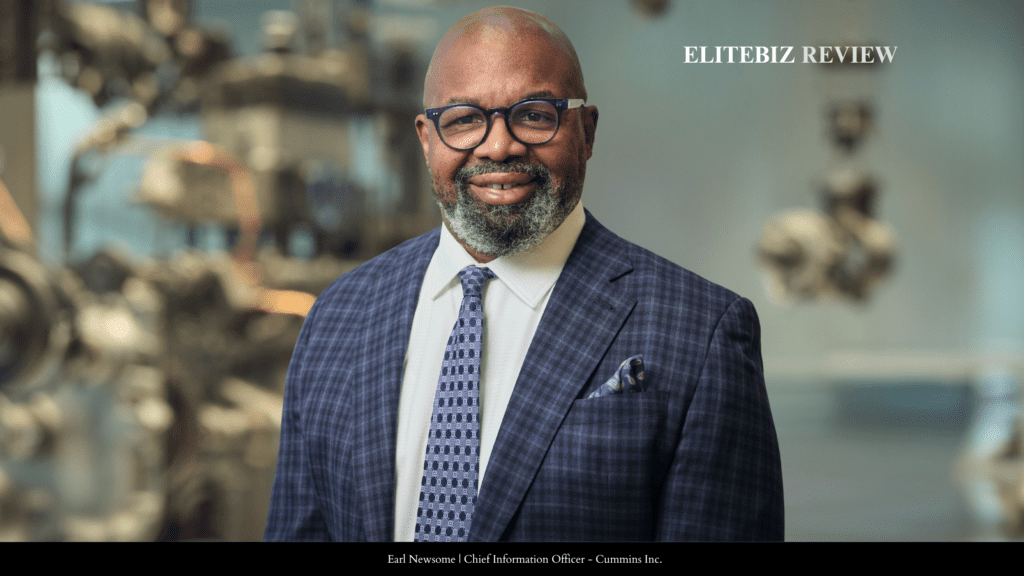
Earl Newsome | Chief Information Officer - Cummins Inc.

Trust Without Limits: The Leadership Journey of Earl Newsome – Shaping People-First Technology, Purpose, and Progress

Digital Version In a time when technology leaders are expected to deliver innovation at speed, manage constant disruption, and still keep people at the center, trust has emerged as the ultimate differentiator. Few leaders embody this principle as consistently and authentically as Earl Newsome, Vice President and Chief Information Officer at Cummins Inc. His career, spanning military service, consulting, and more than two decades in global enterprise leadership—offers a powerful case study in how trust is built not through titles, but through habits, values, and daily choices. Earl’s story is not a straight line. It is a journey defined by transitions, curiosity, and a deep belief that people are capable of far more than they often imagine. Across roles at organizations such as Owens-Illinois, Estée Lauder, TE Connectivity, Praxair/Linde, and now Cummins, he has consistently focused on one unifying purpose: building a world without limits so people can be all they can be—while creating some magic along the way. Rooted in Resilience: The Foundations of Character Earl’s leadership mindset was shaped long before he held executive roles. Growing up in a single-parent household and spending his early years with his grandfather—a military veteran and civil rights activist—instilled in him a profound sense of resilience and possibility. From modest beginnings, he learned that circumstances do not define destiny. That belief would later become a cornerstone of his leadership philosophy. His time in the military reinforced discipline, accountability, and service. More importantly, it taught him that leadership is not about rank, but responsibility. In high-stakes environments, trust is earned through consistency, preparation, and care for the people beside you. Those lessons carried forward into consulting, where Earl learned to adapt quickly, listen deeply, and deliver value in unfamiliar environments. Consulting sharpened his ability to enter new organizations, understand their culture, and build credibility through action rather than authority. Across more than twenty years in Corporate America, Earl’s repeated transitions—from industry to industry, company to company—reinforced a simple truth: every new beginning is an opportunity to build. He often describes how he finds belonging by creating something meaningful, whether that is a team, a culture, or a shared vision. This builder’s mindset continues to define how he approaches leadership today. Purpose Lived, Not Laminated At the heart of Earl’s leadership is a clearly articulated purpose: to build a world without limits so people can be all they can be while creating some magic along the way. This is not a slogan—it is an operating system that influences how he makes decisions as CIO at Cummins. Purpose shows up in the way he challenges limiting beliefs, both in himself and others. When someone doubts their own potential or the feasibility of an idea, Earl sees an invitation to reframe what is possible. He believes that the stories people tell themselves can either confine or liberate them, and he actively works to help teams rewrite those narratives through encouragement, preparation, and support. As CIO, this purpose translates into a focus on enabling people rather than controlling them. Technology is not an end in itself, but a means to unlock human potential. Whether driving digital transformation or modernizing systems, Earl consistently asks how technology can remove barriers, simplify work, and empower teams to do their best work. Consistency, Credibility, and Courage in Action In an era of rapid digital change, trust is both fragile and essential. For Earl, trust is built through visibility, consistency, and integrity. It is sustained not by grand gestures, but by everyday habits. He emphasizes transparency—leaders should never leave their teams guessing. Clear communication, honest feedback, and follow-through create psychological safety, which in turn fuels innovation. Earl also believes that trust grows when leaders are willing to listen, especially to dissenting voices. Seeking diverse perspectives and synthesizing them into clear decisions strengthens both outcomes and relationships. Importantly, Earl views trust as reciprocal. Leaders must trust their teams as much as they expect to be trusted themselves. That means empowering people with decision rights, supporting smart risk-taking, and treating failures as learning opportunities rather than reasons for blame. Turning Bold Ideas into Business Reality Earl is fond of the idea that “any sufficiently advanced technology is indistinguishable from magic.” Yet he is equally clear that imagination must be grounded in execution. Being an effective technology leader requires the ability to dream boldly and then engineer those dreams into reality. One skill do build is Imagineering – where we imagine the future that we want and then engineer to create it. It is often said the best way to predict the future is to create it. At Cummins, this balance shows up in a disciplined approach to innovation. Earl encourages divergent thinking early—imagining what could be possible without constraints. But he also knows when it is time to converge, land the plane, and move into execution. Technology must deliver tangible business value, whether through operational excellence, improved customer experiences, or new capabilities that position the company for the future. This mindset allows teams to explore the art of the possible without losing sight of outcomes. Magic, in Earl’s view, is not mystery—it is clarity achieved through thoughtful design and hard work. Creating Spaces Where People Can Truly Thrive One of the most defining aspects of Earl’s leadership philosophy is his uncompromising stance on anti-toxicity. He believes that toxic behaviors—whether overt or subtle—erode trust and creativity. Addressing them directly and immediately is not optional; it is a leadership responsibility. Creating environments of belonging requires more than good intentions. Earl focuses on practical actions: welcoming those who intend to do no harm, encouraging participation, and allowing people to raise concerns without fear of ridicule or retaliation. He pays close attention to micro-inequities, cliquish behavior, and other signals that inclusion may be breaking down. Belonging also means development. Earl encourages people to climb the competency ladder through self-reflection, coaching, and honest feedback. He values “sensors” within the organization—individuals who will tell the truth and help leaders understand the real temperature of the culture. Clarity as a Catalyst for

Hema Vallah

Hema Vallabh: Building Movements, Rewriting Narratives, and Shaping the Future of Women-Led Innovation in Africa

Digital Version In a rapidly shifting global landscape where inclusion, equity, and innovation are no longer optional but essential for progress, certain leaders stand out—not for the loudness of their voice, but for the depth of their conviction. Among them is Hema Vallabh, Founding Partner of Five35 Ventures & Co-founder at WomHub, a visionary ecosystem builder whose journey reflects resilience, purpose, and an unwavering belief in the power of women to transform societies. Her path from a young girl in South Africa to an engineer, social entrepreneur, venture capitalist, and mother is not simply a story of professional evolution, but a testament to inner strength and the profound possibility of systemic change. This edition of The Most Impactful Leaders to Watch in 2026 delves into her remarkable trajectory, her leadership philosophy, and her mission to reshape the future of African innovation through intentional, gender-lens investing. A Journey Shaped by Purpose, Pain, and Possibility Hema’s story begins in a post-apartheid South Africa, in a culturally rich but disadvantaged community where humility was woven deeply into society, often overshadowing ambition. Raised by loving parents who instilled service, integrity, and sound values, she grew up excelling academically but with little confidence in her own voice—far removed from the global stages she would one day speak on. Her first turning point came through a scholarship to study Chemical Engineering at the University of Cape Town, a transformative opportunity that revealed how access can reshape entire life trajectories. While pursuing engineering, she became acutely aware of the gender imbalance across the STEM pipeline. The scarcity of women inspired her to co-found WomEng, a volunteer initiative that evolved into a global nonprofit supporting girls and women in engineering. Her work as an engineer, both locally and internationally, reinforced the same truth: women’s absence was not only a social concern, but also a business opportunity waiting to be unlocked. This realization paved the way for WomHub, the commercial spin-out of WomEng, which has grown into the continent’s most comprehensive gender-lens ecosystem builder and home to Africa’s first female-focused co-working tech space and innovation hub. Yet, while building platforms for women across STEM and entrepreneurship, Hema navigated a deeply personal and painful chapter. Shortly after taking the plunge and leaving the corporate world to focus on WomEng, she married. Not long into the marriage, her husband left. The reason was painfully simple—she did not fit the traditional idea of what a wife should be. The work she fought for, believed in, and was celebrated for—empowering women and advocating for equality—became the very thing she was punished for. The divorce ignited years of shame, guilt, and intense imposter syndrome. She questioned her identity and capacity: How could she advocate for women while struggling to stand up for herself? How could she be strong publicly yet feel so diminished privately? For nearly half a decade, she shut down emotionally and socially. Professionally, however, she continued to perform at high levels, wearing the brave face many women are forced to adopt while quietly breaking inside. This period marked one of the darkest seasons of her life. She grappled with mental health challenges—depression, isolation, and a slow erosion of confidence she had spent so many years building up. But in this darkness also emerged the clarity that would shape her future. When everything else felt uncertain, the only constant she could hold on to was her work. The certainty that her mission mattered above all else sustained her. It was within this vulnerable period that WomHub came to life. The heartbreak and trauma sharpened her conviction and reminded her why her work was not just professional; it was deeply personal. It gave her a resilience she did not know she possessed. Rebuilding her personal life while building WomHub became intertwined acts of courage. Each step reinforced her belief that women can rise, rebuild, and lead despite profound personal upheavals. Then in 2021, after nearly two decades in STEM and entrepreneurial ecosystems, Hema co-founded Five35 Ventures, an early-stage, female-focused venture capital fund. Five35 was the culmination of years spent witnessing a glaring inequity: despite immense talent and potential, women founders in Africa continued to be chronically underfunded, receiving less than 5% of venture capital on the continent. Five35 became the final piece of an ecosystem she had long been constructing—starting with talent (WomEng), moving to venture building (WomHub), and culminating in capital (Five35). It marked a shift from advocacy to action, enabling her to directly invest in closing the gender funding gap rather than merely spotlighting it. At the age of 40, Hema entered another transformative chapter: the journey to motherhood through IVF using a donor. Self-admittedly, motherhood had not always been a calling for her, but the pandemic years brought introspection. After reflecting on what she had built and achieved, she asked herself a profound question: What am I building all of this for? She realized she was ready to start her own family, independently of a partner or conventional expectations. After a number of failed attempts over almost 3 years, taking an immense mental, physical and emotional toll, she birthed a “miracle” baby boy in 2024. Becoming a mother to her son deepened her sense of purpose in powerful ways. Her lifelong work of creating a more equitable world for women was now intertwined with raising a boy who would grow into a man shaped by those values. The responsibility of nurturing the “men of the future” added a new layer of meaning to her mission. It reinforced her belief that systemic transformation is not just about today’s founders, but also about tomorrow’s leaders. Across all these chapters—engineering, social entrepreneurship, divorce, venture creation, and motherhood—Hema’s leadership philosophy crystallized around three principles: Purpose over position: Leadership is meaningful only when it widens access and opportunity.Courage over perfection: The most transformative decisions are often made long before one feels ready.Ecosystem thinking: Sustainable change requires holistic interventions, not fragmented fixes. Her journey is nonlinear, deeply human, and profoundly intertwined with the ecosystems she is building. Five35 Ventures: A

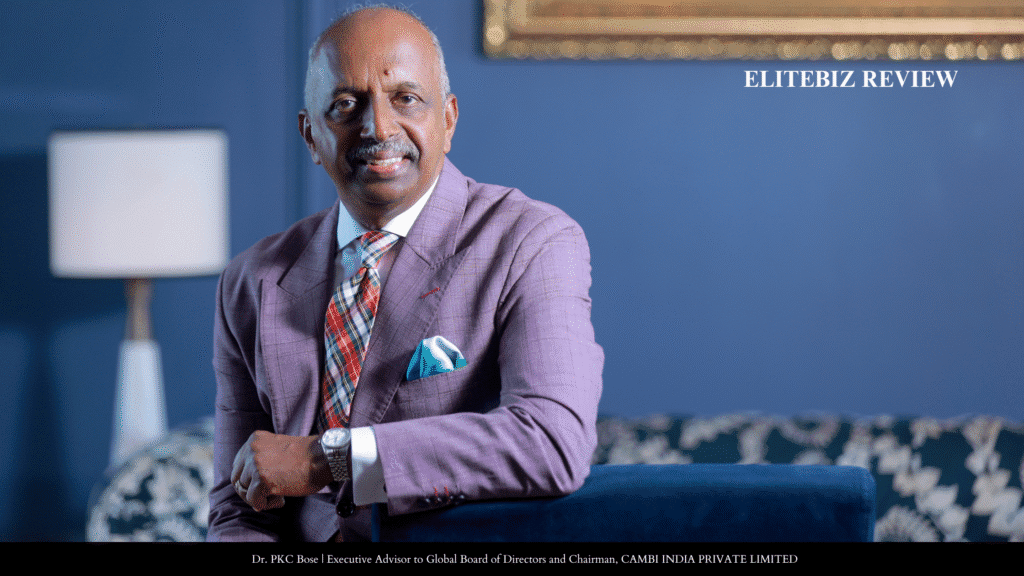
Dr. PKC Bose | Executive Advisor and Chairman - Cambi India Ltd

Dr. PKC Bose: A Global Sustainability Evangelist Pioneering the Circular Economy Transformation

Digital Version In an era defined by environmental urgency and the quest for regenerative growth, few leaders embody the principles of sustainability as profoundly as Dr. PKC Bose, Executive Advisor to Global Board of Directors and Chairman, CAMBI INDIA PRIVATE LIMITED. A visionary industrialist and global sustainability advocate, Dr. Bose’s leadership journey reflects a career-long dedication to one purpose: transforming industries and mindsets toward a circular, sustainable, and inclusive future. From shaping multinational manufacturing empires to leading the charge in renewable energy, biogas, and waste-to-resource technologies, Dr. Bose’s professional story is one of innovation, integrity, and impact. Today, at the helm of Cambi India—part of the Norway-based global leader in sludge-to-biogas and biofertilizer technology—he stands as a driving force behind India’s transition to a circular economy. His mission: to prove that sustainability and prosperity are not opposing goals, but powerful partners in redefining the future of human progress. A Career Built on Vision and Transformation Dr. Bose’s journey toward becoming one of the world’s most respected sustainability leaders began with a simple yet profound conviction—to work only for organizations that serve the planet. His professional ascent is marked by leadership roles that span continents, technologies, and industries, each contributing to his deep understanding of industrial transformation and sustainable growth. He began his career as General Manager of Operations for a U.S.-based company, where he developed a strong foundation in engineering management and operations excellence. His career soon took him to SEW EURODRIVE Group, a renowned German power transmission company, where he served as Managing Director & CEO for 12 years. Under his leadership, SEW EURODRIVE established a strong manufacturing presence in India and became a trusted name across the continent. Later, Dr. Bose joined SAERTEX Group, Germany—the global leader in advanced technical textiles made from glass, carbon, and aramid fibers. For over 16 years, he steered SAERTEX’s Indian operations to the forefront of the composite materials sector, building one of the strongest organizations in the industry. His next chapter took him to ENERCON Group, Germany, the world’s largest privately-owned wind turbine manufacturer, as Vice Chairman & Managing Director. There, Dr. Bose led a remarkable transformation of the company’s Indian operations. He established a world-class Innovation Centre, three manufacturing plants for wind turbine blades, generators, and towers, and positioned ENERCON India as a major global exporter of renewable-energy components. Under his stewardship, ENERCON became synonymous with engineering excellence, sustainability, and industrial innovation. After completing his tenure at ENERCON, Dr. Bose co-founded ENREGO ENERGY GmbH, Germany, alongside senior colleagues from the ENERCON Group. ENREGO ENERGY focuses on wind, solar, green hydrogen, and energy storage systems—and has rapidly emerged as one of the fastest-growing green energy companies in Europe. In parallel, Dr. Bose has continued to serve as an advisor and board member to numerous international organizations leading the global sustainability transition, including ArcelorMittal Building Solutions, 2G Energy AG, Nagarro Group, EJOT GmbH, B&T Composite, and Kineco Composite. Yet among his many roles, his work with Cambi Group holds a special place. As Executive Advisor and Chairman of Cambi India, Dr. Bose is bringing one of the world’s most transformative technologies—the Thermal Hydrolysis Process (THP)—to India for the first time, helping the country turn urban waste challenges into renewable energy opportunities. Cambi India: Turning Waste into Wealth Cambi Group, headquartered in Norway and listed on the Oslo Stock Exchange, is a global leader in sustainable wastewater treatment and resource recovery. Through its cutting-edge THP technology, the company transforms sewage sludge into biogas, biofertilizer, and clean water, enabling a full-circle solution for waste management. Cambi India, under Dr. Bose’s leadership, is driving this mission forward by localizing and scaling the technology for India’s unique environmental and infrastructural needs. Its approach is not merely technological—it is transformational. Cambi’s THP systems use high temperature and pressure to pre-treat sludge, breaking down organic material and significantly enhancing biogas yield. The process not only reduces sludge volume and operational costs but also produces pathogen-free, Class-A biosolids safe for agricultural use. As a result, wastewater treatment plants transition from being cost centers to energy-positive facilities that generate renewable power and valuable soil nutrients. This innovation directly supports India’s broader sustainability objectives, from Net Zero 2070 to Swachh Bharat Urban 2.0, GOBAR-Dhan, and the National Green Hydrogen Mission. By enabling cities to generate renewable biogas and high-quality biofertilizer, Cambi India is contributing to cleaner energy, circular resource use, and sustainable agriculture—all crucial pillars of the circular economy. “Cambi India is not just treating wastewater—it is reimagining waste as a resource,” says Dr. Bose. “Our mission is to turn sanitation challenges into economic opportunities and position India as a global leader in sustainable innovation.” Evangelizing the Circular Economy For Dr. Bose, being an evangelist for the circular economy is not simply a professional responsibility—it is a personal philosophy. He believes that circularity represents a transformative shift in how societies view waste, resources, and growth. “To be a circular-economy evangelist is to challenge the take-make-dispose mindset and replace it with one of regeneration and renewal,” he explains. “It means proving that environmental stewardship can drive prosperity, and that sustainable growth is not a contradiction but a necessity.” Dr. Bose drives this vision by bridging the gap between innovation and implementation. He works closely with utilities, policymakers, and industries to advocate for technologies that turn waste into value—anaerobic digestion, thermal hydrolysis, and biogas-to-energy systems among them. Through his mentorship and leadership, he not only guides decision-makers but also inspires the next generation of engineers, scientists, and entrepreneurs to see sustainability as the defining challenge of their time. “Being a sustainability evangelist,” he says, “is about creating believers, not just customers; building systems change, not just projects.” Innovation as the Engine of Climate Action The cornerstone of Cambi’s success lies in innovation. The company’s THP technology transforms what was once an environmental liability—sewage sludge—into a renewable asset. Traditionally, sludge disposal has relied on landfilling or incineration, both costly and environmentally harmful. Cambi’s approach flips that paradigm, enabling cities to generate energy, improve soil

Bonnie Ward | Market Director of Marketing and Communications - CHI St. Vincent

Bonnie Ward: Leading with Purpose, Compassion, and Strategy in Healthcare Communication

Digital Version In the evolving landscape of healthcare, communication has become more than a supporting function—it’s a bridge that connects innovation, empathy, and community trust. At CHI St. Vincent, this bridge is built and strengthened under the leadership of Bonnie Ward, the Market Director of Marketing and Communications, whose visionary approach has been redefining how healthcare systems engage with patients, caregivers, and communities. For Bonnie, strategic communication in healthcare has entered a transformative era. “Consumers are interacting with healthcare brands much more like they do retail brands such as Amazon or Walmart,” she explains. “They want to select providers and surgical specialties based on the ability to get in quickly and conveniently.” This evolution in consumer behavior, particularly among Millennials and younger generations, has shifted expectations dramatically. Where older generations often displayed hospital loyalty, today’s patients are looking for speed, transparency, and accessibility—hallmarks of the retail experience. This shift has pushed healthcare marketers, including Bonnie’s team, to adapt rapidly. “This retail-style interaction with patients has challenged marketers and strategists to adopt online capabilities for scheduling much sooner than it naturally would have occurred,” she notes. “Healthcare has historically not adopted digital innovation as quickly as other business sectors.” Through this lens, Bonnie sees communication not just as a tool but as a responsibility—one that balances technological advancement with the deeply human essence of care. Anchoring Innovation in Mission and Compassion At CHI St. Vincent, a faith-based organization and part of one of the nation’s largest Catholic healthcare systems, mission and purpose are inseparable from strategy. Bonnie emphasizes that every initiative begins and ends with the organization’s core values. “When you are part of the nation’s largest Catholic faith-based healthcare systems, like St. Vincent is, mission is at the forefront of every conversation,” she says. “Our mission of expanding access to care and serving those who are most vulnerable leads us to look at where healthcare is lacking in the community so we can bridge the gap for our patients.” Bonnie’s perspective embodies the dual lens of a strategist and a servant leader. Her approach ensures that marketing decisions are grounded not only in growth metrics but also in social responsibility. “Mission also drives strategists to maximize our investments to ensure our growth opportunities make the most sense—both from a return-on-investment standpoint and from an access standpoint. Marketers and strategists have to work together to vet opportunities that make sense and also fulfill our obligation to humanity.” For Bonnie, the goal is to ensure that marketing is never detached from the mission—it’s a vehicle for fulfilling it. The Power of Data-Driven Storytelling In an era dominated by analytics and automation, Bonnie maintains a clear conviction: data and storytelling are not separate forces—they are symbiotic. “It is interesting to me that strategists and marketers talk about data and storytelling as two separate decision-making processes,” she shares. “I mentor my team to understand that your data should be driving the stories you tell, and for that matter, not to tell.” Her philosophy transforms raw numbers into narratives that resonate deeply with communities. For instance, Bonnie explains how data can reveal patterns that help save lives. “Data tells us that there is a seasonality that can be tracked for several procedures, including aneurysms, due to factors such as temperature change and barometric pressure,” she says. “As marketers, we can use this data to ensure that the stories shared leading up to this seasonality are about knowing where to go in an emergency, signs of small brain bleeds, or what symptoms to watch for if you are traveling.” Through this approach, CHI St. Vincent transforms statistics into storytelling with purpose—turning awareness campaigns into life-saving education. “Using data that is at a marketer’s fingertips strengthens consumer needs with community education,” Bonnie emphasizes. Making Healthcare Communication Accessible to All Healthcare marketing, at its heart, must speak the language of its audience. For Bonnie, this means ensuring clarity, accessibility, and trust across every communication channel. “In Arkansas, the average reading level is about 8th grade,” she explains. “That is why we are diligent about ensuring patient educational materials, videos, Google search terms, and signage are all understandable at that reading level.” But accessibility isn’t just about simplification—it’s about inclusion and collaboration. CHI St. Vincent actively engages patients to refine communication strategies. “We also interact with local patients through a patient experience team to showcase these types of materials and welcome feedback,” she says. “The key is to not work in silos but to garner feedback through small groups or focus groups and actually reflect your learnings in all that you do.” This open, feedback-driven approach has allowed CHI St. Vincent to build genuine relationships with the community, reinforcing the organization’s identity as both a healthcare provider and a trusted neighbor. Honesty and Integrity as the Foundation of Brand Trust Leadership, especially in healthcare marketing, is often tested during moments of change. For Bonnie, one such moment came in 2017, when CHI St. Vincent made the difficult decision to discontinue labor and delivery services. “My small but mighty marketing team at St. Vincent knows that my number one priority is honest communication—even with challenging information that you may have to share,” she recalls. “When our health system made the hard decision to no longer offer labor and delivery, we took an honest media approach.” What made this approach exceptional was the organization’s choice to collaborate with a competitor. “This approach even included us openly partnering with a competitor of ours who had the strongest labor and delivery program in the area so we ensured no lapse of care for our patients or employees,” she explains. The transparency paid off. “While we were met with some negative commentary, the support for our decision was overwhelmingly positive due to our transparency. The integrity of your brand must be reflected consistently or it falls short. Consumers are savvy and know when something is genuine.” This philosophy has become a cornerstone of Bonnie’s leadership: authenticity builds credibility, and credibility sustains trust. A Campaign with
Dana Mosora | Founder & Director - ASASE Foundation

Trailblazing Sustainability: How Dana Mosora and the ASASE Foundation Are Turning Plastic Waste into Opportunity

Digital Version In an era where the conversation around sustainability often revolves around policy debates, corporate pledges, and technological breakthroughs, there remain stories of individuals who take a deeply personal journey to transform communities. One such story belongs to Dana Mosora, Founder and Director of the ASASE Foundation. Her work in Ghana is a testament to how vision, resilience, and community empowerment can redefine the future of plastic waste management while uplifting women and families in underserved regions. A Journey from Corporate Boardrooms to Community Streets Dana Mosora’s story begins far from Accra’s bustling markets or Kumasi’s neighborhoods. As a chemical engineer, she built her career with multinational companies like Colgate Palmolive, Sara Lee, and Dow Chemical. These roles afforded her global exposure, continuous personal growth, and the opportunity to learn from remarkable colleagues. Over the years, she gathered not just technical expertise, but a deep appreciation for how collective knowledge and mentorship shape a professional journey. Yet, as retirement approached, she found herself reflecting on the wealth of experiences she had accumulated. “I always felt that people with whom I worked and, from whom I learned so much through the years, left each their own mark and somehow made me a better and more accomplished professional,” Mosora recalls. With this realization came the desire to give back—to redirect her skills and energy towards a mission beyond corporate success. Her answer came during work travels in Africa, where she witnessed firsthand the pervasive absence of plastic waste management systems. The sight of discarded packaging flooding streets and waterways revealed a challenge she could no longer ignore. What began as a retirement hobby soon evolved into a life mission. Drawing inspiration from the resilience of women in African communities—women she observed leading families and villages with unmatched determination—Mosora envisioned an initiative that would tackle plastic waste while empowering women. With some of her early retirement funds and a $100,000 grant from the Dow Impact Fund, she established the ASASE Foundation in Accra, Ghana. The first imperfect but symbolic step was building a recycling plant for discarded water sachets—ubiquitous in Ghana’s communities yet devastating to the environment. This first step, though small, laid the foundation for what would grow into a model of hope for communities across the country. The Core Mission: Turning Waste into Value At its heart, the ASASE Foundation exists to demonstrate that community-driven solutions can tackle plastic waste while creating livelihoods. Its mission is clear: build and manage community-based recycling operations, empower women to lead them, and ultimately transfer ownership to local employees. The focus is on water sachets—small plastic packets of drinking water that dominate the Ghanaian market. While affordable, they contribute massively to street litter and clogged drains. The Foundation diverts these sachets from becoming pollution and instead recycles them into usable plastic, creating both cleaner streets and economic value. “We enable women to become key players in the solution,” Mosora explains. “We finance the infrastructure and manage operations until employees, majority women, are ready to take over.” The approach is holistic: job creation, skill development, community empowerment, and environmental restoration all converge. Today, ASASE’s operations support about 200 employees across three plants—two in Accra and one in Kumasi. The majority are women, who not only earn secure incomes but also gain leadership experience. In every sense, the Foundation embodies a model where waste becomes worth, and marginalized communities transform into pioneers of circular economy practices. One concrete materialization of the value created for the community is the conversion plant in Weija Gwabe, Accra , still in pilot phase, where plastic waste is transformed in plastic lumber used by local artisans to build outdoor furniture and school benches. Confronting the Obstacles in Sustainable Packaging To understand the urgency behind ASASE’s mission, one must consider the larger picture of sustainable packaging. For decades, the packaging industry innovated with a focus on performance, convenience, and cost efficiency. This resulted in increasingly complex packaging: multilayer composites of plastics, metals, and paper designed to maximize function—but virtually impossible to recycle. “It became really sophisticated without any consideration of the end of life,” Mosora observes. The consequence? Plastic packaging waste that accumulates globally, especially in regions with little to no waste infrastructure. The path forward, according to Mosora, requires bold redesign. Packaging must be simplified and built for recyclability. Innovations are underway, but economic barriers remain—chiefly the high cost of recycled plastic compared to virgin materials. Legislative interventions, like Europe’s Packaging and Packaging Waste Regulation, which mandates recycled content and recyclability at scale, are vital levers for change. However, in the Global South, where 80% of plastic packaging ends up as litter due to absent systems, the issue is even more urgent. Here, the challenge is twofold: building basic waste management infrastructure and financing it. While organizations like the Alliance to End Plastic Waste support many projects with the aim to create a systemic change, Mosora emphasizes that systemic solutions require much larger investments and new innovative financial support solutions. Without bold leadership, the cycle of waste and pollution persists. Advancing Circular Economy Practices in the Global South The ASASE Foundation serves as a living model of circular economy in action. By embedding recycling within communities, the Foundation ensures that value created from waste remains local. “It’s about cashing-in the plastic waste of the community for the benefit of the community,” says Mosora. In practice, this means plastic sachets collected from streets are processed into recycled materials, which can then be sold or repurposed. Local people gain jobs, new skills, and stable incomes. More importantly, women are positioned as leaders of these enterprises, ensuring that benefits ripple through families and villages. The operations in Tema West and Weija Gwabe, Accra, and more recently opened in Juaben, Kumasi illustrate this principle. Streets are cleaner, households benefit from additional income, and communities take pride in owning solutions to their waste problems. For the Global South, where large-scale centralized systems may be unrealistic, ASASE’s decentralized, women-led model offers a scalable and replicable approach. Beyond

David Klingberg | Director and Principal - Smart Planning and Design

Designing the Future: David Klingberg’s Vision for Sustainable and Community-Centric Urban Spaces

Digital Magazine David Klingberg stands as a distinguished figure in the realm of urban planning and design, with over three decades of experience shaping the built environment. As the Director and Principal of Smart Planning and Design, he has led numerous projects that exemplify his commitment to sustainable, community-centric urban development. His journey from land surveying to urban design is a testament to his dedication to creating spaces that not only serve functional purposes but also enrich the communities they inhabit. From Surveying to Urban Design David’s professional journey began in land surveying, where he gained firsthand experience on building sites. It was during this time that he realized his passion lay not in the technicalities of construction but in the broader vision of designing cities that foster community and connectivity. Recognizing that urban design was not a mainstream career path at the time, he considered architecture but opted for town planning due to its more direct route. After completing his degree and working for a couple of years in local government, David sought to deepen his expertise by enrolling in the Urban Design Masters course at Oxford Brookes University in the UK, renowned for its excellence in the field. To fund his studies, he worked evenings cleaning carpets while working during the day at Port Adelaide Council. This period of dedication paid off, as he found his true calling in urban design. His career path led him to Manchester, then Sydney, and eventually Melbourne, Australia. There, he first owned and ran the Australian arm of David Lock Associates, a town planning and urban design firm, before founding Smart Planning and Design. Under his leadership, the firm has become known for its innovative approach to urban planning and design, focusing on obtaining development approvals and delivering smart city solutions. Navigating Complex Challenges In his role, David has encountered and helped clients navigate some of the most complex challenges in urban planning. He notes that some of the most intricate issues are often the most mundane. Council processes can be complex and bureaucratic, and what may seem like a clear pathway can be derailed by red tape and referrals to other government authorities, such as the water or road authorities, causing delays. David emphasizes that persistence and daily action are key to overcoming these roadblocks and ensuring great outcomes for clients. His approach involves maintaining open lines of communication with stakeholders, staying informed about regulatory changes, and proactively addressing potential issues before they become obstacles. This methodology has enabled Smart Planning and Design to consistently deliver successful projects that meet both client expectations and community needs. Guiding Principles: Responsive Environments David’s approach to sustainable and community-centric urban development is guided by the principles outlined in the book Responsive Environments by Bentley et al., which he was trained in at Oxford Brookes University. The elements of Responsive Environments that facilitate great urban outcomes include: Permeability: Ensuring that spaces are accessible and interconnected, allowing for easy movement and interaction. Legibility: Designing environments that are easy to understand and navigate, enhancing user experience. Variety: Incorporating diverse elements to cater to different needs and preferences, fostering a vibrant community. Robustness: Creating spaces that are durable and adaptable, capable of withstanding changes over time. Visual Appropriateness: Ensuring that designs are aesthetically pleasing and contextually appropriate. Richness: Providing a variety of sensory experiences to enrich the environment. Personalization: Allowing individuals to make spaces their own, fostering a sense of ownership and belonging. When these elements are well implemented and integrated into towns, cities, and regions, they create a “Responsive” environment—a great place to be that fosters community, supports the city’s economy, provides spaces for education and recreation, and respects architectural and cultural heritage. Adapting to Evolving Urban Challenges Urban planning is rapidly evolving to respond to increasing pressures such as climate change, housing demand, and infrastructure limitations. In response to climate change, urban planning is focusing on reducing and minimizing the urban footprint. This involves strategies such as promoting energy-efficient buildings, enhancing public transportation systems, and increasing green spaces to mitigate environmental impact. To address housing demand, cities are being planned to accommodate more people in existing urban environments through appropriate changes to planning policies and guidance. This includes changes to planning schemes in Victoria, Australia, to facilitate urban densification and sustainable development. By focusing on infill development and mixed-use zoning, urban planners can create more compact, walkable communities that reduce reliance on automobiles and promote sustainable living. Infrastructure limitations are being addressed through innovative solutions such as smart city technologies, which optimize resource use and improve service delivery. By integrating data-driven approaches into urban planning, cities can become more efficient and responsive to the needs of their inhabitants. Building Collaborative Relationships Collaboration with local councils can be challenging, but David has developed strategies to foster productive relationships with stakeholders and regulatory bodies. Smart Planning and Design has created opportunities to engage with stakeholders and regulatory bodies by maintaining regular contact, running workshops with clients and collaborators in both the private and public sectors, and engaging with councils through teaching and learning engagements. This approach breaks down barriers and facilitates positive exchanges, leading to more effective collaboration and successful project outcomes. By fostering a culture of collaboration and mutual respect, David has been able to navigate the complexities of urban planning processes and deliver projects that benefit both developers and the communities they serve. Showcasing Expertise Through Diverse Projects Smart Planning and Design works on a diverse range of projects, showcasing the team’s expertise and impact in various sectors. The firm has been involved in large-scale infrastructure projects, such as Bus Rapid Transit projects in Vietnam that connect diverse and disparate parts of the city, as well as small-scale childcare and townhouse projects throughout Melbourne to provide places for education and community development. These projects highlight the firm’s ability to deliver impactful urban design solutions across different contexts and scales. Each project undertaken by Smart Planning and Design reflects David’s commitment to creating environments that are not only

Debbie Rodriguez | CEO - Competitive Edge Partners & Consulting, LLC

Debbie Rodriguez’s Inspiring Journey from the Field to the Forefront of Construction Leadership

Digital Version In a field long defined by concrete, steel, and tradition, Debbie Rodriguez has carved out something far more enduring: a legacy rooted in people. As the CEO of Competitive Edge Partners & Consulting, LLC, she is not only reshaping how projects are built but also redefining how people in the construction industry are valued, respected, and empowered. Her journey from staffing to construction leadership reflects determination, resilience, and a philosophy that puts people at the center of progress. A Path Built on Purpose Debbie’s introduction to construction came in an unconventional way—through staffing. In 2008, she co-founded Quality Labor Management (QLM), a skilled staffing company that supported industries like construction, logistics, and manufacturing. While working closely with construction workers, she noticed a troubling trend: too many of them were not treated with the respect they deserved. That realization struck a chord. For Debbie, staying silent was never an option. Instead, she decided to build something different—a company that valued relationships as much as results. This decision gave rise to Competitive Edge Partners & Consulting, LLC, a firm designed to be people-first in every sense. But Debbie’s story is about more than business—it’s about resilience, faith, and defying the odds. In February 2008, she was involved in a devastating motorcycle accident. Doctors told her family that her chances of survival were slim, and even if she made it through, paralysis was almost certain. Yet Debbie refused to let that prognosis define her. In the months that followed, she chose not to dwell on fear or self-pity. Instead, she saw the accident as a turning point—a chance to re-evaluate her life and her purpose. With determination, grit, and an unshakable spirit, Debbie made a full recovery—defying every expectation. From that moment forward, she committed herself to making a difference in the lives of others. Helping others isn’t just part of her work—it’s her passion, her calling, and something she lives out every single day. “Construction wasn’t just about building projects,” she reflects. “It was about building people, giving them opportunities to grow, and creating a culture where they could thrive.” Breaking Barriers in a Male-Dominated Industry The construction industry has long been considered a male-dominated space, rooted in tradition and slow to change. But leaders like Debbie Rodriguez are proving that the future of the industry looks very different. As CEO of CEP and co-founder of QLM and iBuild Central Florida, she has created an ecosystem that not only adapts to change—but drives it. Her values—safety, accountability, commitment, integrity, and passion—became her compass. She chose to lead with respect and humanity, reminding people that “we all put on our pants the same way.” That people-first mindset has fueled her leadership across all three companies, positioning them as catalysts for lasting change. QLM connects people with opportunities, iBuild develops their skills, and CEP provides a platform for them to grow and influence others. Together, they create a full-circle system: finding talent, training it, and empowering it to make an impact. Embracing Change in a Rapidly Evolving Industry The construction industry is undergoing a profound transformation. With new technologies, digital tools, and sustainability practices becoming the norm, adaptation is no longer optional—it is essential. At CEP, adaptation begins with people. Debbie believes the best way to prepare for change is to invest in training and development. Whether mastering new technologies, adopting safer methods, or embracing sustainability, her focus is on equipping the workforce with the skills and confidence they need to succeed. She envisioned iBuild in 2015 as a way to connect education with industry, and by 2016, the nonprofit became a reality. Since then, it has grown into a cornerstone of workforce development in Central Florida, preparing students with hands-on experiences, exposure to technology, and pathways to meaningful careers. “Innovation and sustainability matter,” Debbie notes, “but it’s people who bring those changes to life. When you build a culture that values learning and accountability, you are not just responding to change—you are leading it.” Supporting Women and Underrepresented Groups For Debbie Rodriguez, inclusivity is more than a principle—it is a practice. She has long championed women and underrepresented groups in construction, recognizing that diversity strengthens both companies and communities. At CEP, respect and support are foundational. Women are given opportunities to grow and lead, breaking barriers in what has traditionally been a male-dominated space. For underemployed, economically disadvantaged, justice-involved individuals, or those learning English, the company offers mentorship, training, and encouragement to help them build futures with dignity and hope. She also partners with organizations such as the Associated Builders and Contractors (ABC), the National Association of Women in Construction (NAWIC), and the Hispanic Chamber of Commerce of Central Florida to ensure diverse voices and talents are represented across the industry. Through iBuild, students from all backgrounds gain skills and confidence, discovering opportunities they may never have imagined. Preparing for the Future of Construction Looking ahead, Debbie sees three major trends shaping the construction industry over the next five years: Workforce Development – As older generations retire, the need for skilled new workers will intensify. Technology and Automation – From digital project management to advanced tools, technology will continue to change how projects are executed. Sustainability – Clients and communities will increasingly expect greener, more energy-conscious building practices. CEP is preparing by doubling down on people-first strategies: training and development, safety and sustainability, and building a pipeline of future talent through iBuild. Impactful Initiatives and Workforce Development Among the many initiatives Debbie has championed, iBuild Central Florida stands out as one of her proudest achievements. Envisioned in 2015 and launched in 2016, the program was created to address the skilled labor shortage. It has since grown into a coalition of more than 400 partners. Together, they introduce thousands of students to construction careers, provide pre-apprenticeship opportunities, and train adults—including those from underrepresented or disadvantaged backgrounds—for direct entry into jobs. At CEP, Debbie also looks within her current staff to train and promote talent, ensuring long-term growth and opportunity. By focusing on respect, opportunity,

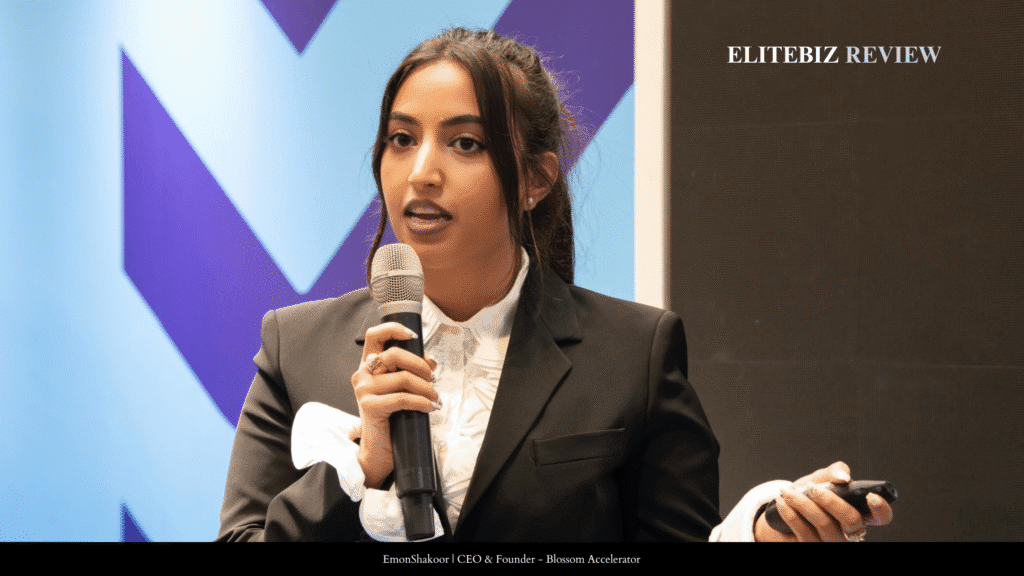
Emon Shakoor: Building Saudi Arabia’s Innovation Catalyst Through Blossom Accelerator

Digital Version Over the last few years, Saudi Arabia has undergone substantial development and reform. Under the banner of Vision 2030, the Kingdom has been rapidly reshaping its economy, society, and industries—becoming a global magnet for talent, investment, and innovation. At the heart of this remarkable journey is a new generation of leaders driving change with vision and resilience. Among them is Emon Shakoor, Founder and CEO of Blossom Accelerator, a pioneering investment and innovation platform that has become synonymous with empowering startups, fueling inclusion, and shaping the future economy of Saudi Arabia and the broader MENA region.   Established in 2016, Blossom Accelerator has quickly become one of the most rapidly growing platforms in the Middle East. For Shakoor, its creation was not just about starting a company—it was about answering a national call to action. “What inspired me to launch Blossom was the announcement of Saudi Arabia’s Vision 2030 that very same year,” she recalls. “I saw a once-in-a-generation opportunity to build an innovation economy—one that would not only support privatization but also generate new jobs, with locally founded and globally attracted startups serving as the essential building blocks of our future economy.”   The gap was clear. While talent and ambition were abundant, the region lacked a catalyst that could empower entrepreneurs from the ground up while also connecting them to global ecosystems of capital, corporates, and government institutions. Blossom emerged to fill that gap—designed as a grassroots, inclusive, and innovation-driven platform where startups could scale and institutions could learn to adapt alongside them.   Laying the Foundations of Blossom   From the outset, Blossom distinguished itself with a clear philosophy: inclusion, accessibility, and impact. Shakoor and her team designed sub-programs with a gender-focused lens, ensuring that women founders were not only included but actively spotlighted. International initiatives such as the Blossom Soft-Landing Program brought startups from diverse industries and geographies into Saudi Arabia’s burgeoning innovation market. Their work with partners like NEOM Masterclass extended this inclusivity further, supporting entrepreneurs with disabilities and ensuring that no innovator was left behind.   “This philosophy of building an inclusive, grassroots-driven innovation ecosystem is what shaped Blossom in 2016,” says Shakoor. “And it continues to guide everything we do today.”   What Sets Blossom Apart   In a region with growing interest in entrepreneurship, accelerators and innovation hubs are no longer scarce. Yet Blossom stands out as something different—more than just an accelerator, it is a catalyst and a full ecosystem builder. “What differentiates Blossom is that we empower startups from A to Z,” explains Shakoor. “We’re not just here to help them start, but to set up, scale, and ultimately succeed.”   Among Blossom’s most distinctive contributions is the Blossom Open Library, a free bilingual (Arabic and English) platform providing entrepreneurs with every startup and business document imaginable. For founders navigating the complexities of launching and growing a business, such resources have been game-changing.   Partnerships are another cornerstone of Blossom’s model. By working closely with leading corporates, semi-government entities, international organizations, and government agencies, Blossom provides its startups with direct access to markets and opportunities—whether through pilot projects, strategic partnerships, investments, or acquisitions.   The accelerator also supports the full company setup process, including legal, HR, and compliance requirements—removing barriers that often distract founders from focusing on growth.   But perhaps Blossom’s greatest differentiator lies in its culture. “Blossom has always been entrepreneurial-first,” says Shakoor. “whether that unicorn is a startup or a legacy institution ready to reinvent itself.”   Redefining the Role of Women in Innovation   Shakoor’s journey as a female tech founder in Saudi Arabia is deeply intertwined with the broader evolution of the Kingdom’s entrepreneurial landscape. When she started Blossom, the idea of a young Saudi woman leading an accelerator was unusual, even radical. But the transformation over the last decade has been profound.   “Today we see women not only participating but also leading startups, managing investment funds, and driving corporate innovation initiatives,” she notes. The numbers underscore this shift. According to the Global Entrepreneurship Monitor 2024/2025, 23.2% of Saudi women are engaged in early-stage entrepreneurial activity, positioning Saudi Arabia second globally for female entrepreneurship. This rate surpasses the U.S. at 18.8% and Germany at 7.6%. Even more, studies show that 34% of Saudi women now identify as entrepreneurs, and a remarkable 78% are considering launching their own businesses in the near future.   These statistics highlight a narrowing gender gap once thought impossible to overcome. “What excites me most is not just the participation, but the ambition,” says Shakoor. “I see young women in their 20s and 30s building companies with global outlooks from day one. Saudi women are not just entering the entrepreneurial stage—they are helping define the future of innovation.”   Challenges and Triumphs   Scaling Blossom was not without hurdles. Shakoor founded the company at the age of 23, and while her youth gave her energy and boldness, it also meant she had to work harder to build credibility. “Blossom was never just about being an accelerator—it was about creating an entire innovation economy catalyst and ecosystem builder. In the early days, not everyone understood the scale of the vision.”   The journey required persistence, consistency, and tangible proof of impact. Over the years, Blossom has delivered just that—helping startups raise significant funding rounds, driving job creation, and building bridges between public and private sectors. “That track record became our flywheel, and today the results speak for themselves,” she reflects.   She is quick to credit the wider transformation of Saudi Arabia as a crucial factor in Blossom’s growth. “None of this would have been possible without the bold reforms and leadership of our Crown Prince Mohammed bin Salman, who has empowered young people—and women especially—to step forward and lead change. Blossom’s success is not mine alone; it is a testament to the ecosystem created under Vision 2030.”   Aligning with Vision 2030   Saudi Arabia’s Vision 2030 has become a guiding framework for innovation in the Kingdom,

Dr. Saroj Pachauri | Director and Climate-Health Mentor and Dr. Ash Pachauri | Co-Founder and Senior Mentor - POP Movement

Dr. Saroj Pachauri and Dr. Ash Pachauri Uniting the World Through Intergenerational Climate Leadership

Digital Version The climate crisis is not only a story about carbon emissions, policies, or global agreements; it is fundamentally a story about people—their health, their livelihoods, their dreams, and their future. As the world grapples with the escalating threats of climate change, leaders who understand this human dimension and dedicate their lives to bridging science, policy, and action become indispensable. Among these leaders are Dr. Saroj Pachauri and Dr. Ash Pachauri, who guide the Protect Our Planet (POP) Movement with vision, compassion, and a relentless commitment to empowering young people. POP, founded by the late Dr. R.K. Pachauri, the Nobel Laureate who chaired the Intergovernmental Panel on Climate Change (IPCC) for over a decade, embodies the conviction that the future of climate action must be shaped by the youth of today. In this exclusive feature for Remarkable Leaders Shaping the Future of Climate Action 2025, we explore the personal journeys of Dr. Saroj and Dr. Ash, their leadership within POP, and their collective mission to build a truly intergenerational and inclusive climate movement that blends science, health, innovation, and hope. How Experiences Shaped Their Roles at POP Every leader carries with them the weight of their past experiences—moments that shape their convictions and carve their paths forward. For Dr. Saroj Pachauri, her lifelong work in global health provided profound lessons about the intimate link between human well-being and the health of the planet. “My work in global health has shown me how deeply connected human well-being is to the health of our planet,” she reflects. “From reproductive health to infectious diseases, I have seen how climate change amplifies vulnerabilities, especially for women, children, and marginalized communities. These experiences have strengthened my conviction that addressing climate change is central to protecting lives and livelihoods. At POP, I bring this perspective to ensure our climate action work also speaks to human health and dignity.” For Dr. Ash Pachauri, the journey was marked by an enduring passion for young people and their role in shaping the future. “My journey has always been centered on young people—their potential, creativity, and urgency,” he explains. “In global policy spaces, I often witnessed decisions being made about the future without the active participation of those who would inherit it. This pushed me to create avenues for young people to lead, not just follow, in climate action. My role at POP is to amplify the voices of young people and build bridges between generations, sectors, and regions.” Together, their perspectives—rooted in health and youth leadership—create a unique synergy that drives the ethos of the POP Movement. The Birth of POP: A Legacy of Leadership The vision for POP was born from the leadership and legacy of Dr. R.K. Pachauri, whose contributions to climate science and policy left an indelible mark on the world. Having served as Chairman of the IPCC for 13 years and Vice Chairman for 5 years before that, Dr. Pachauri was at the forefront of shaping global understanding of climate change. In 2007, he accepted the Nobel Peace Prize on behalf of the IPCC, alongside Al Gore. Despite these achievements, Dr. Pachauri recognized that scientific evidence and policy decisions alone would not suffice. He became convinced that real change could only come from a groundswell of knowledge-inspired action led by youth. His principle, “youth inspired by knowledge,” remains the cornerstone of POP’s philosophy. Young people, he believed, although the least responsible for climate change, bore its greatest burdens. Yet, through education and empowerment, their values and behaviors could transform families, schools, and communities. To realize this vision, he co-founded the POP Movement with his son, Dr. Ash Pachauri, and later established the World Sustainable Development Forum (WSDF) as POP’s sister organization. While POP empowers young people to take action, WSDF connects them with leaders in policy, business, and science, bridging generational divides. Today, POP is led by both Dr. Ash and Dr. Saroj Pachauri, continuing Dr. Pachauri’s mission of intergenerational solidarity. By 2026, POP will mark its 10th anniversary on Earth Day, celebrating a decade of youth-led climate leadership. Intergenerational Collaboration: A Non-Negotiable The POP Movement thrives on the principle that intergenerational collaboration is not optional—it is essential. Experience brings wisdom and context, while youth bring urgency and creativity. Together, these elements create transformative action. This balance was central to Dr. R.K. Pachauri’s vision. By establishing both POP and WSDF, he designed platforms where knowledge could flow across generations, empowering youth to take ownership while benefiting from the wisdom of seasoned leaders. At POP, initiatives are deliberately structured to model this exchange, ensuring that collaboration, not competition, defines the relationship between generations. As Dr. Ash emphasizes, “When these strengths converge, transformative action becomes possible.” Health and Climate: The Inseparable Nexus The climate crisis is also a public health crisis, and Dr. Saroj Pachauri has been a global voice in highlighting these connections. The impacts are already visible—rising respiratory illnesses from air pollution, vector-borne diseases moving into new regions, malnutrition driven by food insecurity, and the escalating mental health toll of climate anxiety. “Mental health, in particular, is emerging as a crisis of pandemic proportions,” Dr. Saroj warns. “Communities—especially young people—are struggling with the uncertainty and trauma of climate-related challenges.” POP addresses these urgent issues through education, research, advocacy, and innovation. The organization is currently editing its fifth publication on climate and health, while its POP Academy delivers world-class courses to equip young leaders at the nexus of health and climate. One of POP’s pioneering innovations is POPPix (mypoppix.com), an award-winning app dedicated to climate and mental health. Available in 129 languages and even accessible via WhatsApp, POPPix helps young people build resilience and access community support. POP also works with partners worldwide on projects ranging from clean cooking technologies to sustainable food systems, ensuring that climate solutions are also health solutions. Empowering Youth as Leaders At the heart of POP’s mission is youth empowerment. According to Dr. Ash, three strategies have proven most effective: Trust—Young people must be given real decision-making power, not just symbolic roles. Mentorship—Pairing youth

Robin Sutara | Field Chief Data Strategy Officer - Databricks

From Vision to Impact: How Robin Sutara is Redefining AI’s Role in Business

Digital Version In today’s rapidly evolving digital era, the story of artificial intelligence is not only about algorithms, data pipelines, or computational breakthroughs. It is also about the visionaries who bridge technology with humanity, translating innovation into meaningful outcomes for people, organizations, and society. Robin Sutara, Field Chief Data Strategy Officer at Databricks, is a true representation of innovation, with a career that began in maintaining Apache helicopters in the U.S. Army to advising global enterprises on data and AI strategy highlights how technology, when guided by purpose-driven leadership, can be truly transformative. Her story is both unconventional and deeply inspiring—a reminder that innovation is not confined to linear career paths but often shaped by curiosity, resilience, and the desire to solve real-world challenges. With more than two decades of experience across Microsoft and Databricks, Sutara has emerged as one of the most influential voices in advancing responsible AI, democratizing data, and helping enterprises translate cutting-edge technology into measurable impact. A Non-Traditional Journey with a Purpose Robin Sutara never followed the typical path into data and technology. Her foundation was laid in the U.S. Army, where she worked on repairing the weapons and electrical systems of Apache helicopters. In that high-pressure environment, she discovered a love for problem-solving and the precision of technology. Yet what truly set the course for her career was a deeper realization: data had the power not only to transform organizations, but also to improve the lives of the people within them. Over more than two decades at Microsoft, Sutara’s journey reflected this belief. From her early days in consumer support to overseeing Azure Data Engineering Operations, she advanced to become Microsoft UK’s Chief Data Officer. Through each role, she witnessed the same truth—technology alone is not the endgame. The real impact comes when people are empowered to harness data, turning information into insight and insight into better decisions. Her move to Databricks in 2022 represented both a natural progression and a bold new chapter. Having experienced firsthand the frustrations of fragmented data ecosystems, Sutara was drawn to Databricks’ mission of unifying structured and unstructured data with AI into a single governed platform. Today, she collaborates with hundreds of global customers, helping them not only implement technology but also transform their cultures into data-driven organizations. As she explains, “Technology alone is never enough. True transformation happens when organizations embrace cultural change—when people are empowered to solve problems, innovate, and make decisions informed by trusted data.” How AI Is Reshaping Data Strategy in 2025 In her role as Field Chief Data Strategy Officer, Sutara sees firsthand how AI is fundamentally altering enterprise data strategies. The shift, she notes, is not incremental but transformative. She outlines three major changes defining 2025: Democratization through natural language.Tools like AI/BI and Genie allow business users to query data in plain English, opening insights to employees far beyond data science teams. This democratization ensures decision-making is no longer the privilege of a select few but an organizational capability. The rise of the Data Intelligence Platform.Unlike traditional platforms, Databricks’ intelligent Data Intelligence Platform understands the semantics of an organization’s data, enabling automatic optimization, intelligent infrastructure management, and natural language interfaces. The critical importance of unified data foundations.As AI adoption accelerates, the cost of data silos becomes clearer. Fragmentation undermines security, governance, and AI effectiveness. Databricks addresses this by combining lakehouse architecture with generative AI, creating a platform capable of optimizing performance and managing infrastructure within the context of specific business goals. For Sutara, this evolution reflects more than a technical milestone. It is a shift toward future-oriented innovation, where AI does not merely report on the past but predicts, prevents, and empowers organizations to act proactively. Translating AI into Tangible Business Value Her leadership is marked by an exceptional ability to bridge innovative thinking with tangible business outcomes. She emphasizes that deploying sophisticated models is not enough—organizations must align people, processes, and technology with clear objectives. She points to a powerful example from the manufacturing sector, an industry generating more than 1,800 petabytes of data annually. A leading client suffered significant financial setbacks, running into millions, because of unforeseen downtime. By unifying IoT sensor data, ERP maintenance records, environmental information, and technician notes within Databricks’ platform, they could implement predictive maintenance models. The results were transformative: 67% reduction in unplanned downtime within one year Over $12 million in cost savings 23% improvement in product quality A cultural shift as teams moved from reactive firefighting to strategic planning Perhaps most importantly, the initiative built trust in AI recommendations. Maintenance teams, production managers, and data scientists collaborated in new ways, empowered by a shared, data-centric mindset. As Sutara reflects, “The success came not just from the technology, but from changing how people worked together, trusted insights, and embraced a culture of data-driven decision-making.” Principles for Responsible and Ethical AI As AI becomes more embedded in daily life, concerns about fairness, transparency, and inclusivity grow louder. To Sutara, responsible AI isn’t a choice but a necessity for fostering trust and driving lasting innovation. Her approach rests on six guiding principles: Fairness and Inclusiveness: AI must reduce bias, not amplify it. This requires diverse teams that challenge assumptions and question data sources. Reliability and Safety: Systems must be consistent with human values and monitored continuously to prevent harm. Transparency and Clarity: Individuals impacted by AI should have a clear understanding of how decisions are reached. Accountability: Responsibility for outcomes must be well-defined, ensuring both organizational and societal accountability. Privacy and Security: Robust governance, encryption, and risk management are non-negotiable. Human Oversight: AI must augment rather than replace human judgment, with diverse voices guiding design and deployment. At Databricks, these principles are operationalized through frameworks like the AI Security Framework, which identifies 62 technical risks and provides pathways for balancing innovation with safety. Sutara insists that building trustworthy AI requires continuous vigilance: “Responsible AI is not a compliance checkbox—it is a commitment that must guide decisions across the entire lifecycle.” Leadership Lessons from AI Transformation Over decades of guiding

Chatgpt Google

Inside Scoop: How ChatGPT Gets Real-Time Answers — Hint: It’s Using Google

In a surprising turn of events, a recent exposé by The Information revealed that ChatGPT, developed by OpenAI, isn’t entirely relying on its own AI models to fetch up-to-the-minute information. Instead, it’s tapping into Google Search results—scraped via a third-party service called SerpApi—to deliver responses on fast-paced topics like news, sports scores, and market updates (The Information, Storyboard18, The Financial Express). Why This Matters Real-time relevance: Unlike ChatGPT’s traditional reliance on static training data, this setup equips it to address current events with remarkable immediacy. Behind-the-scenes workaround: Previously, OpenAI had requested direct access to Google’s proprietary search index—a request that was declined. The use of SerpApi appears to be a creative, albeit controversial, alternative (Storyboard18, mint). A pragmatic twist in competition: Despite the fierce rivalry between OpenAI and Google, there’s a tangible data-sharing dynamic—one company’s data is powering the other’s AI ambitions (Medium, AInvest, Sherwood News). A Demonstration of Influence One striking demonstration involved a former Google engineer, Abhishek Iyer. He published dummy web pages—only indexed by Google, and nowhere else. Yet, when those specific pages were queried, ChatGPT retrieved the exact fabricated content. This serves as a strong indicator that ChatGPT indeed accesses Google Search results, not just cached knowledge (Storyboard18, mint). SerpApi: The Data Bridge SerpApi is a service tailored for extracting live search results from Google’s index and serving them through a structured API. Clients include major tech players such as Meta, Apple, Perplexity, and now, apparently, OpenAI (The Information, mint). Although Google has tried to limit SerpApi’s access, they have yet to pursue legal action—potentially to avoid regulatory complications amid ongoing antitrust scrutiny (TipRanks, AInvest, Sherwood News). Why OpenAI Did It Speed matters: OpenAI’s own web crawler and partners like Bing haven’t matched Google’s speed and breadth, especially for niche or long-tail queries (AInvest, TipRanks). User experience: Ensuring ChatGPT provides timely, accurate answers enhances its utility and keeps pace with rivals like Gemini (by Google) and xAI’s Grok, both of which leverage their own search backends natively (Storyboard18, mint). Infrastructure synergy: Despite the competition, OpenAI still relies on Google Cloud to power parts of its infrastructure—a pragmatic blend of cooperation and rivalry (Tom’s Guide, AInvest). What This Means for You Transparency matters: Users might not realize that ChatGPT’s “search” responses have indirect reliance on Google—something that raises questions about disclosure, sourcing, and trust. Competitive complexity: Even giants like OpenAI may lean on their arch-rival in practice—showing just how intertwined AI ecosystems can be behind the scenes. Legal and ethical waters: As AI continues to rely on scraping and aggregated data, the legality and ethics of such methods warrant ongoing scrutiny. TL;DR: In a nutshell ChatGPT sources some real-time information by fetching Google Search results via SerpApi. This happens despite Google denying direct access to its search index. A staged experiment confirmed ChatGPT’s access to Google-only content. SerpApi powers this data pipeline, and other tech leaders also use it. It helps OpenAI remain up-to-date while bypassing traditional roadblocks. While clever, this approach brings transparency and legal questions to the fore.

Suman Bhattacharya | Director of Data Science - Docusign

Suman Bhattacharya and Docusign: Harnessing the Power of Data Science to Transform the Future of Digital Agreements

Digital Version In an era where artificial intelligence (AI) is redefining business practices across industries, leaders like Suman Bhattacharya stand at the intersection of innovation and impact. As the Senior Director of Data Science at DocuSign, Suman is pioneering advancements that not only enhance the user experience but are also reshaping the foundational processes of digital transactions. His journey into the world of data science and AI is rooted in a solid academic background and has evolved into a career marked by foresight, adaptability, and a clear sense of purpose. This exclusive interview for our upcoming edition, Tech Trailblazers Advancing the Next Wave of Innovation – 2025, delves deep into Suman’s trajectory, his work at DocuSign, and the broader role of AI in transforming enterprise SaaS. From driving intelligent agreement management to building ethical and scalable AI systems, Suman offers critical insights into where the future is heading and how we can prepare for it. A Physicist’s Journey into Data Science Suman’s story begins in the world of physics. While pursuing his Ph.D., and later during his tenure at esteemed research institutions such as Los Alamos and Argonne National Laboratories, he found himself applying advanced statistical methods and early machine learning techniques to decipher complex data sets. “I started applying different ML/AI and statistical techniques to process and distinguish signals from noise in the data,” he recalls. Long before “data science” became a buzzword in the tech industry, Suman was already engaging in its core practices. The natural progression from academia to industry came when data science began gaining traction in the corporate world. “When data science exploded in the industry, I decided to take my skills I learned in academia and apply them in industry problems,” Suman notes. His deep understanding of theory, coupled with real-world application, allowed for a seamless transition and positioned him at the forefront of an evolving field. Intelligent Agreement Management: The Next Frontier As Senior Director of Data Science at DocuSign, Suman plays a pivotal role in driving innovation through AI and machine learning. With the advent of Intelligent Agreement Management (IAM), AI is no longer just an enhancement, it is integral to the product’s architecture. “AI plays an important role in extracting information from agreements, creating workflows, and searching stored agreements,” he explains. One standout example is Navigator, a DocuSign product that allows users to store and search through past agreements, even if those agreements were signed with other platforms. This capability marks a shift from static digital signatures to dynamic, AI-powered contract intelligence. “We also apply ML/AI to optimize customer experience as they navigate through the product,” adds Suman, reinforcing the role of data science in creating intuitive, frictionless digital experiences. Elevating Customer Experience and Automation with AI At the heart of Suman’s team’s work lies a commitment to personalization, automation, and security. By leveraging AI to deliver timely, tailored information, they are redefining the digital agreement experience. A prime example of this is the use of AI agents to craft personalized campaign messages. “The campaign the customers receive actually speaks to their business needs, as opposed to a generic email,” he explains. Another high-impact initiative involves AI-led lead scoring. With millions of users exploring DocuSign’s services, manually qualifying each lead would be impossible. Instead, Suman’s team has developed models that prioritize leads based on use cases and behavioral signals. “We apply AI to create a prioritized list of leads to follow up with,” he says. These efforts not only streamline internal workflows but also create meaningful business value. Scaling Innovation Through Applied Data Science Among the most exciting projects Suman has spearheaded is the recommendation engine that helps DocuSign’s sellers match products to customer needs. “We use AI to identify which product to recommend to our customers based on various signals,” he shares. The approach blends traditional machine learning with cutting-edge generative AI, producing tailored value propositions at scale. “For instance, if we know a prospective customer is in the legal industry, we can showcase how different IAM products like Navigator, Maestro, and Unlimited Sends help manage the end-to-end lifecycle of an agreement in a law firm,” he explains. These capabilities provide sales teams with not just data, but context-rich insights delivered with the power of AI. Responsible AI: Balancing Speed with Ethics In an age where AI adoption often outpaces regulation, Suman remains grounded in responsible innovation. “We have a strong governance in place around any AI use cases we productionize,” he emphasizes. The team ensures that ethical standards remain central to their work. One cornerstone of their ethical framework is the “human-in-the-loop” approach. Before any AI-generated content is deployed at scale, it is reviewed for quality, accuracy, and hallucination. “This pilot phase helps us maintain integrity while testing new AI capabilities,” Suman adds. Generative AI Meets SaaS: A Paradigm Shift Looking ahead, Suman sees enormous potential in the convergence of generative AI and enterprise SaaS platforms like DocuSign. In his view, while GenAI is making waves in B2C ecommerce through innovations in search and checkout, its true power in B2B lies in augmenting relationship-driven workflows. “AI has the potential to streamline the entire deal lifecycle in B2B through automation and personalization,” he observes. From shortening sales cycles to empowering customers with faster access to relevant information, GenAI is poised to reshape how enterprise platforms operate. Developing the Next Generation of Data Scientists Suman is deeply passionate about mentorship and fostering future leaders in data science. He highlights that aspiring professionals must be versatile. “A data scientist would require statistics and analytics skills as well as engineering skills to build ML/AI systems in production,” he says. However, technical skills alone are not enough. Suman believes business acumen is what sets great data scientists apart. “It is critical because a data scientist is in a unique position to drive data-driven decisions,” he adds. Being able to communicate complex insights in a language business stakeholders understand is invaluable. Nurturing a Culture of Learning and Experimentation Fostering a culture of continuous learning is central to Suman’s leadership

David Budzevski | SVP, Business Development & Commercialisation, Global Acceptance & Merchant Solutions - Mastercard

At the Intersection of Innovation and Inclusion: Mastercard’s David Budzevski Leads the Way

Digital Version In today’s fast-evolving digital economy, leaders who can align technology, commerce, and purpose are the ones shaping the future. Among the influential figures driving innovation at Mastercard is David Budzevski, Senior Vice President of Business Development & Commercialisation in the Global Acceptance & Merchant Solutions division. With a career journey marked by unexpected beginnings, transformative pivots, and a steadfast focus on innovation, David exemplifies what it means to lead with vision and impact in the global financial services space. In the fast-moving world of digital finance, few leaders blend innovation and inclusion as seamlessly as David Budzevski. With a career that spans startups, national banks, and global platforms, David’s trajectory reflects more than professional growth — it’s a story of vision, reinvention, and grounded leadership. What sets him apart isn’t just his strategic clarity or global expertise, but his unwavering belief that impact must be both scalable and human. Whether guiding merchant solutions across continents or co-creating technology from the ground up, he leads with empathy, listens with intention, and acts with purpose. In every chapter of his journey, David has stayed anchored to the idea that progress isn’t measured only by reach — but by relevance, resilience, and responsibility. From Startups to Global Platforms: A Journey Fueled by Purpose David’s entry into the financial services world was neither planned nor conventional. It began with a startup focused on helping local governments manage and optimize their underground infrastructure. “This was before VC funding was widespread,” David recalls. “Our journey lasted just two years before we had to shut down the business.” While the outcome was not what he had hoped for, the experience proved to be a springboard into the world of technology-driven customer solutions. He transitioned into financial services with the Commonwealth Bank of Australia, where he led their Merchant Solutions division. That role introduced him to the intricacies of the payments industry—a domain that would ultimately define his professional passion. “From that moment on, his interest became unwavering,” he reflects. David went on to take on several product roles across the Australian banking landscape, culminating in a leadership position overseeing Merchant Acquiring for the country’s largest financial institution. With an unquenchable thirst for learning and growth, he joined Mastercard in 2020. There, he co-founded and led the commercial product strategy for the Gateway solution. This role not only gave him global exposure but also an opportunity to partner closely with engineering, manage profit and loss accountability, and drive innovation from concept to market. His successful leadership within Mastercard led to a relocation to the United Kingdom, where he expanded his focus on go-to-market strategies and emerging markets. Today, David oversees global business development and commercialization efforts for Mastercard’s Merchant Solutions portfolio. Learning from the Greats: Mentorship and Leadership Style Reflecting on his development as a leader, David credits several influential mentors for shaping his path. “There were several individuals in both Australia and the UK who have significantly impacted my career,” he says. Notable among them are Sam Itzcovitz, Keith Douglas, Martijn van Os, and Kaushik Gopal. One mentor, in particular, helped shape David’s leadership style—a servant-leadership approach grounded in empathy, clarity, and collaboration. “I see myself as a leader who supports the team like family, gets in the trenches when needed, and sets a clear vision for success,” he shares. He often reflects on the idea that even the smallest presence can have a powerful impact—just like a tiny mosquito can disrupt an entire night.” It serves as a reminder that every contribution matters and small efforts can have big impacts. Creating the Future of Global Commerce David’s current role places him at the nexus of business development and innovation. What excites him most is the opportunity to help shape the future of commerce on a global scale. Working closely with partners around the world, he identifies strategic opportunities and brings forward solutions that create tangible value for both merchants and consumers. “Mastercard’s global footprint and our technology leadership give us a unique platform to influence the evolution of payments,” he says. From tokenization to embedded finance, the potential is immense. David is particularly passionate about empowering merchants to harness these technologies to build more seamless, secure, and inclusive payment ecosystems. He sees the role as not just commercial, but deeply impactful. “Connecting market needs with Mastercard’s capabilities allows us to unlock growth, improve customer engagement, and help businesses thrive in an increasingly digital world.” Balancing Innovation with Fundamentals Innovation is central to Mastercard’s DNA, but for David, it must be purposeful and scalable. His approach begins with a comprehensive understanding of customer needs and market dynamics. “We stay closely connected with partners, merchants, and the fintech ecosystem to identify early signals and challenges.” Innovation, for David, is not just about exploring new ideas but ensuring they are viable, scalable, and aligned with Mastercard’s principles of trust, inclusion, and security. “We rigorously test new concepts and validate them with data to ensure long-term value creation, not just short-term wins.” This disciplined approach allows his team to maintain a balance between bold vision and practical execution—a balance that is critical in a fast-paced, high-stakes industry. Global Exposure, Local Relevance Having worked across continents, David understands that while certain needs like trust and security are universal, how those needs are expressed varies dramatically by region. “One size fits all simply doesn’t work,” he explains. Instead, Mastercard scales globally by listening locally. He emphasizes the importance of cultural awareness, empathy, and agility when entering new markets. Whether it’s enabling QR payments in Southeast Asia or supporting open banking in Europe, the solutions must be contextually relevant. This global-local strategy helps ensure that Mastercard’s innovations are both impactful and inclusive. Aligning with Mastercard’s Mission of Inclusion Mastercard’s vision to power inclusive digital economies resonates deeply with David’s own professional mission. “Our goal is not just to drive commercial growth but to do so in a way that expands access and empowers underserved communities.” His current strategic priorities reflect this commitment. First,

El Lee | Chief Operating Officer - Sensen Technology (SenSen)

Where Innovation Meets Accountability: El Lee on Driving Financial Evolution at SenSen

Digital Version In an era marked by rapid digital transformation and disruptive innovation, financial leadership demands more than just precision and prudence, it requires vision, agility, and a relentless pursuit of relevance. El Lee, the Chief Operating Officer of SenSen Technology, stands at the forefront of this new wave of finance leaders. With a career defined by trailblazing ventures and a philosophy grounded in sustainable innovation, El is not just adapting to the future of finance, he’s shaping it. “Finance is no longer just about balancing books or meeting compliance—it’s about building systems that endure, evolve, and empower. My mission has always been to fuse innovation with accountability, creating platforms that deliver speed without sacrificing trust, and intelligence without losing human oversight. Every step of my career, from investment banking to fintech innovation, has been driven by one guiding principle: sustainable value. True financial evolution is not measured in quarterly spikes, but in long-term resilience, customer trust, and the ability to adapt seamlessly to what’s next.” From Investment Banking to Fintech Trailblazer El took his first professional steps within the intense environment of investment banking. There, he gained an insider’s perspective on the mechanics of financial systems, how they function, where they break down, and what they often overlook. “began my career in investment banking, which gave me a firsthand understanding of how financial systems operate — and at times, where they fall short,” El shares. “That experience made me ask harder questions about access, efficiency, and trust.” These questions became the foundation for his transition into fintech. In 2019, he co-founded Onchain Custodian, pioneering Asia’s first institutional-grade digital asset custodian, a venture that signaled a pivotal shift in the region’s digital finance landscape. Just two years later, he co-founded dtcpay, a fintech company that spearheaded fiat-to-token payments in Singapore, offering merchants and consumers new, legally compliant methods of transaction. Today, at SenSen Technology, El is leading the charge in developing programmable financial infrastructure. His vision is a platform where stablecoins, fiat currencies, and card payments coexist, delivering seamless and secure financial experiences. Each chapter of his journey reflects an unwavering commitment to pushing fintech boundaries while maintaining a strong foundation in compliance and real-world applicability. Redefining Success in the New Enterprise Era In today’s rapidly changing business landscape, conventional measures of success no longer capture the full picture.. El reflects on his evolving perspective: “I once believed that success was all about growth — more users, higher volumes, and continuous expansion. Over time, I have come to define success as building systems that endure.” For El, success means staying strong, focusing on lasting growth, and making a positive difference. At SenSen, this philosophy translates into platforms that deliver tangible business value, helping clients reduce costs, accelerate cash flow, and increase operational control. But it is not just about the platform. At the heart of El’s strategy lies a focus on cultivating vibrant team dynamics and a thriving organizational culture. “It’s essential to build a team that embraces accountability, understands how to navigate risks, and confidently explores new ideas within set boundaries. Sustainable momentum is harder than speed. But it lasts longer.” Understanding how financial systems work is only the beginning—real progress comes from identifying where they fall short, and building the solutions that bridge those gaps. Every venture I’ve led has been about making finance more secure, accessible, and relevant for the future. The Intelligence Revolution in Finance As AI, automation, and data-driven strategies reshape the business landscape, the role of finance is transforming dramatically. Finance has moved far beyond its traditional roles of bookkeeping and meeting compliance standards. Today, it’s about strategic intelligence. “According to El, fintech today is shifting focus from simple record-keeping to delivering deeper intelligence. “AI is already replacing routine tasks like reconciliation and anomaly detection, but the real shift is in how fintech can now inform strategy, real-time dashboards, predictive forecasting, embedded compliance.” At SenSen, programmable rule engines and automated data pipelines are utilized to manage everything from wallet limits to transaction routing. By taking this integrated route, fintech becomes a fundamental product strategy instead of just an isolated department. The goal is to make data actionable, driving not only speed but also accountability throughout the enterprise. Unified Infrastructure: A Strategic Game-Changer One of the most impactful financial strategies El has championed at SenSen is the unification of back-end infrastructure. This implies that fiat currencies, stablecoins, card issuance, and compliance functions are all managed within one unified technology stack. The result? Streamlined operations, faster execution, and greatly optimized unit economics. Moreover, introducing real-time liquidity routing across various partners has significantly enhanced the overall customer experience. It ensures better conversion rates, faster settlements, and higher transaction visibility, a benefit for SenSen, its partners, and its clients. “Most importantly,” El emphasizes, “we embedded frontier fintech into the product itself. Our customers don’t just use a platform, they manage treasury, compliance, and payments from one interface. That alignment of fintech and product with market-fit is our strategic edge.” Aligning Finance With Product and Customer Impact In a high-tech company like SenSen, the integration of finance with product development is not an afterthought, it is a strategic imperative. “Finance and financial control is a core part of the customer requirement. When a customer executes a cross-border payment or issues a card, that is finance in action,” El explains. By tightly aligning fintech and product roadmaps, SenSen reduces development cycles and increases the value delivered to clients. The platform is designed to remove friction, reduce handoffs, and build trust, all essential elements in modern financial services. “When you unify payments, compliance, and treasury into one infrastructure, you don’t just gain efficiency—you create a platform that can adapt, scale, and deliver value in ways that siloed systems never can.” Risk Management: Built Into the DNA In a space where innovation and speed are critical, risk management must be proactive and deeply embedded. At SenSen, compliance is not a siloed function; it’s infused into every layer of the organization. “We built real-time

Laura Flores Westrup: At the Helm of Creative Transformation in a Globalized World

Digital Version In a world where creativity and technology increasingly intersect, it takes a rare kind of leader to balance the artistry of storytelling with the precision of business strategy. Laura Flores Westrup, General Manager of Hogarth Mexico, embodies that balance. With nearly two decades of experience navigating the complex terrain of marketing, brand strategy, and content production, Laura has emerged as a visionary force in shaping the evolution of creative operations—not just in Mexico, but across global markets. Her journey is defined by duality: analytical yet creative, structured yet agile, grounded in Mexico yet inherently global. This unique blend of attributes has powered her professional ascent and made her a key figure in the transformation of Hogarth into a powerhouse of end-to-end creative production. A Career Built in Two Distinct Chapters Reflecting on her professional journey, Laura sees two transformative stages that have brought her to where she is today. “The first stage of my career was about building a solid foundation in business and brand strategy. The second has been much more fast-paced—focused on innovation and delivering results,” she shares. Laura’s early career was steeped in global marketing and creative agencies, where she led strategy for iconic brands. It was here that she honed her expertise in brand-building, creativity, and understanding consumer touchpoints. A pivotal moment came when she was transferred to TBWA Hamburg, tasked with leading global communication strategy for Nivea skincare under the Beiersdorf umbrella. “That experience was not only an immersion in international coordination but also a personal and cultural transformation,” she recalls. “We implemented ten Disruption workshops for the Nivea corporate brand across key markets worldwide. The cultural clashes were real—but the global perspective I gained was invaluable.” The second major milestone has been her role at Hogarth Mexico. Joining in its entrepreneurial infancy, Laura has since led the organization through nearly a decade of transformation. “Each year has been dramatically different. From shaping our market offer from scratch to reinventing our operational model within the WPP network, this journey has been the most exhilarating and demanding phase of my professional life.” Leadership with Purpose and Authenticity At the heart of Laura’s leadership style is a deep belief in human potential. “I’ve always believed in learning from the best and hiring people better than me,” she says with humility. For her, leadership is about amplifying the strengths of those around her and fostering a culture where diverse perspectives are not only welcomed but essential. Her guiding principles are rooted in coherence, honesty, and empathy—values that have helped her build strong, unified teams through both success and adversity. “A leader must be transparent and aligned with the team’s values. That’s what keeps us going during challenging times.” Transforming Hogarth’s Role in Mexico and Beyond Under Laura’s stewardship, Hogarth Mexico has grown far beyond its initial roots in localization and production adaptation. Today, the team leads full-scale creative campaigns, executing some of the most complex and high-stakes content strategies for both local and international clients. “A lot of companies can produce content,” Laura says. “But what differentiates us is the pride we take in high-end delivery and our ability to scale through an intelligent operational model. I know that today’s CMOs struggle over how to feed the omnichannel beast without breaking their budget or sacrificing brand integrity. Our job is to provide that operational peace of mind, so they can get back to focusing on what they do best: creating brand magic.” From local agency partnerships to regional and global accounts, Hogarth Mexico under Laura’s leadership has become a model of integrated, end-to-end production. “We’ve upscaled everything—our team, our technological capabilities, our infrastructure. But most importantly, we’ve evolved our production strategy to align seamlessly with each client’s goals,” she notes. The Mexican Creative Industry on the Global Stage Asked about the current state of the Mexican marketing and creative landscape, Laura is both optimistic and realistic. “In many ways, the challenges and opportunities we face are now global. Technology and AI have introduced new efficiencies, but also new risks, especially around data security and brand integrity.” But she also sees Mexico’s unique advantages clearly: “Our geopolitical position, economic stability, and deep talent pool create incredible opportunities. Our professionals are known for their openness and collaborative spirit, which makes us uniquely suited to thrive in global environments.” Innovation Through Technology—WPP Open Innovation is not just a buzzword at Hogarth—it’s embedded in the very systems that power its work. A cornerstone of this is WPP Open, the proprietary operating system that integrates cutting-edge technologies like Generative AI and virtual production in a secure, brand-safe environment. “WPP Open is our differentiator,” Laura says with pride. “While others experiment on public platforms, we build and test within a closed-loop system that protects our clients’ IP and allows us to innovate with confidence.” Through collaborations with tech giants like Nvidia and Epic Games, Hogarth Mexico is not just keeping up with the pace of innovation—it’s helping define it. “This platform allows us to work smarter, faster, and safer—ensuring that creativity is never compromised by scale or speed.” A Culture of Belonging: Diversity and Inclusion Beyond strategy and technology, one of Laura’s proudest accomplishments is the culture she has helped cultivate at Hogarth. “Diversity and inclusion are not corporate checkboxes—they’re foundational to creative innovation and relevance,” she emphasizes. Hogarth’s recognition as a “Best Place to Work for LGBTQ+” by the Human Rights Campaign for five consecutive years is a reflection of that commitment. “It’s a testament to our belief that when people feel they belong, they do their best work. That’s the environment we strive to create every day.” A Standout Project: Scaling Creativity with Passport Among the many high-impact projects under her leadership, one recent initiative stands out: a collaboration with the design studio Passport for a major North American client. The challenge? Delivering culturally nuanced, brand-consistent creative content at scale and at speed. Hogarth responded by building a unified content supply chain that connected internal teams, clients, and partners on a

Christopher Salerno: Driving a New Era of Real Estate Investment with Vision, Agility, and Integrity

Christopher Salerno: Driving a New Era of Real Estate Investment with Vision, Agility, and Integrity

Digital Version In the high-stakes, ever-evolving world of real estate development, standing out requires more than ambition; it requires a deep comprehension of markets, courageous innovation, and firm commitment to core values. Christopher Salerno, QC Capital Founder and CEO can exist at the junction of all of these pillars with his real estate investment firm boldly striding across flex space, multifamily, and express car wash asset classes. Because the economic landscape is increasingly unpredictable, Salerno charts a course that redefines how investors approach real estate as well as positions QC Capital as both a movement and a firm centered around performance, transparency, also investors create long-term wealth. His adventure exemplifies what it means to be among 2025’s most impactful leaders in real estate development. It was characterized through persistent discipline plus a visionary mindset. The most powerful transformations in business are not just about capital or strategy — they’re about vision, discipline, and an unwavering commitment to creating value that extends far beyond balance sheets. Leaders who dare to build differently leave a mark not just on markets, but on communities and lives. In a world obsessed with short-term gains, it’s the architects of long-term impact who truly redefine what success means. From Residential Roots to Institutional Excellence Salerno’s entry into real estate began in the residential space, where he quickly distinguished himself. “I realized early on that true wealth and long-term impact are achieved through ownership and investment,” he shares. After leading one of the top-performing real estate teams in the Southeast, Salerno recognized a glaring gap: there were very few firms offering everyday accredited investors access to institutional-grade opportunities without the red tape. This realization laid the foundation for QC Capital—a firm built from the ground up with the mission to deliver data-driven, cash-flowing investment opportunities. Initially focused on multifamily properties, QC Capital has since expanded into high-yield alternatives, including car wash funds and flex industrial spaces. The firm’s ethos remains steadfast: deliver consistent performance, maintain investor alignment, and uphold full transparency. Standing Apart in a Saturated Market In today’s dynamic and often saturated real estate investment landscape, differentiation is essential. QC Capital’s strength lies in its relentless execution, operational discipline, and investor-first approach. While many firms rely heavily on marketing buzz, Salerno and his team double down on institutional underwriting, meticulous data analysis, and vertically integrated management systems. “What sets us apart is how we back up our strategies with real data,” says Salerno. “We don’t chase trends—we stick to fundamentals and execute with precision.” As a leader, Salerno is guided by three core values: integrity, urgency, and clarity. “I believe in making fast but thoughtful decisions, building accountable teams, and communicating with absolute transparency,” he adds. “Whether it’s good news or bad, our investors always hear it straight.” Breaking New Ground: Transformative Projects and Lessons Learned Among the most transformative initiatives QC Capital has embarked upon is its car wash fund—an innovative expansion that opened the firm to a completely new asset class. “It was a leap,” Salerno admits. “But one that proved the power of operational scalability, strong partnerships, and trust within our team.” Unlike multifamily properties, express car washes present a unique business model that blends real estate with operational oversight. QC Capital’s success in this space highlighted the importance of site selection, team cohesion, and speed of execution. More importantly, it validated Salerno’s thesis that today’s investors are eager for recession-resilient, cash-flowing alternatives, especially in periods when traditional assets experience cap rate compression. The experience reinforced a key leadership principle for Salerno: agility is as critical as vision. “We had to build new operational systems, forge industry relationships, and learn fast. It wasn’t easy, but it was one of our most rewarding moves.” True wealth isn’t built by chasing trends — it’s forged through ownership, vision, and a commitment to opening doors for others. Adapting to a Changing Market with Long-Term Strategy While other firms pivot frequently in response to market fluctuations, QC Capital’s approach is strategically anchored. The firm focuses on asset classes that demonstrate enduring consumer demand and operational control. For Salerno, stability and adaptability are not mutually exclusive—they’re complementary forces. “Interest rate volatility and tightening capital markets have shifted the investment landscape,” he explains. “Rather than react impulsively, we’ve doubled down on segments where we see long-term value—express car washes, flex industrial spaces, and underserved submarkets.” In parallel, QC Capital invests heavily in investor education. Through webinars, newsletters, and the company’s own podcast, Salerno and his team aim to empower investors with insights that help them make informed decisions. -The podcast stands alone from QC and is Branded as “The Chris Salerno Show” “We believe educated investors are stronger partners,” Salerno emphasizes. “Our job isn’t just to manage capital—it’s to build lasting trust.” The Tech Advantage: Data-Driven Confidence In a data-rich, tech-enabled age, firms that fail to embrace technology fall behind. At QC Capital, technology is viewed as a non-negotiable asset, enhancing everything from deal sourcing to asset management and investor communications. “Technology gives us a competitive edge,” says Salerno. “We leverage data analytics to underwrite deals with precision, forecast cash flows, and manage portfolios in real-time.” From AI-enhanced market research tools to proprietary investor communications, QC Capital ensures its operations are scalable, efficient, and transparent. “The future of real estate belongs to those who can make fast, confident decisions. Data makes that possible.” Identifying Value: Strategy Meets Discipline When it comes to identifying high-potential multifamily assets, Salerno maintains a disciplined, fundamentals-driven methodology. His team considers population growth, job diversification, supply-demand imbalances, and rent-to-income ratios as key indicators. “We don’t just look at the surface metrics,” he says. “We walk every property, dissect submarket trends, and build conservative, stress-tested pro formas.” The team also evaluates operational inefficiencies and value-add opportunities, particularly those arising from underperforming management or deferred maintenance. “Opportunity often hides in plain sight,” Salerno notes. “The key is knowing where to look—and having the team to capitalize on it.” The Mindset Behind the Mission Leadership, especially in a capital-intensive industry

Dr. Damodar Sahu | Co-Founder & Chief Growth Officer - Data Safeguard Inc.

Dr. Damodar Sahu: Championing Ethical Innovation and Digital Trust in the AI Era – 2025

Digital Version In today’s era of relentless technological disruption, digital transformation has become more than a buzzword—it is an imperative. Across industries and continents, visionary leaders are redefining enterprise growth, empowering innovation, and embedding trust into the fabric of modern digital ecosystems. Among these influential change-makers, Dr. Damodar Sahu, Co-Founder and Chief Growth Officer of Data Safeguard Inc., stands out for his unwavering dedication to ethical innovation, data privacy, and the future of AI-driven enterprise solutions. With nearly three decades of global experience in digital transformation, product development, ecosystem building, and strategic leadership, Dr. Sahu represents a generation of leaders who combine technical excellence with a deeply human-centered mission. At the core of his journey is a belief that privacy is not a luxury but a fundamental human right—a value that has shaped the founding philosophy of Data Safeguard Inc. As the digital world accelerates, it’s no longer enough to simply innovate — we must ensure every advancement is rooted in trust, transparency, and human values. True leaders understand that technology’s greatest impact lies not in what it can do alone, but in how it empowers people and protects their dignity in a connected world. A Purpose-Driven Journey Rooted in Privacy and Progress Dr. Sahu’s career spans leadership roles in technology giants like Wipro, where he led strategic partnerships and digital innovation at scale. Yet, his move into the realm of data privacy was not incidental; it was a conscious response to a rapidly evolving world where data has become both an asset and a vulnerability. Data Safeguard Inc. was born from this realization—that the exponential growth of digital data, coupled with the complexity of global regulations and the rise of data breaches and synthetic fraud leading to financial crimes, demanded a bold new approach. Founded with a mission to safeguard digital futures, the company is committed to building trust-centric infrastructures through AI-powered data privacy solutions and intelligent compliance tools. Defining Growth in the Digital Age As Chief Growth Officer, Dr. Sahu brings a multidimensional perspective to enterprise scaling. For him, growth is not limited to revenue figures but includes building ecosystems of value creators. Leading global marketing, investor engagement, partnerships, and sales, he advocates for co-innovation models that foster long-term collaboration. A signature strategy he introduced is the “3Cs Growth Framework”—Co-Innovate, Co-Invest, and Co-Elevate. This approach ensures that partners and clients grow alongside the company. It reflects a deeper philosophy of shared success and community-based innovation. Through this, Data Safeguard has cultivated an agile, collaborative ecosystem that not only accelerates enterprise growth but also embeds a culture of privacy-first innovation. Redefining Privacy Compliance with AI At the heart of Data Safeguard’s innovation is its flagship platform, ID-PRIVACY®, a zero-code, AI-powered compliance suite designed to address global privacy challenges. From Universal Consent Management to Synthetic Fraud Prevention, the platform offers a full spectrum of solutions tailored to meet the most rigorous data privacy to governance standards worldwide. What sets the company apart is its proprietary AI engine, CCE® (Cognoscible Computing Engine), which powers real-time insights, intelligent automation, and proactive risk mitigation. This technology enables enterprises to not only meet regulatory requirements such as GDPR, CPRA, PDPA, and India’s new DPDPA but to do so with speed, accuracy, and confidence. Addressing the Enterprise Pain Points Modern enterprises face a daunting set of challenges on their digital transformation journey. These include navigating fragmented regulations, overcoming a shortage of privacy expertise, and shifting internal mindsets toward proactive compliance. Data Safeguard confronts these challenges head-on by offering a unified platform that simplifies privacy operations, reduces manual intervention, and makes data protection scalable. Additionally, the company is playing a leading role in advocating for a Global Privacy Interoperability Framework. By working closely with regulators, think tanks, and academic institutions, Data Safeguard is helping to harmonize global privacy standards and establish a common language for trust. Recent Innovations Making an Impact Among the company’s recent breakthroughs is the expanded deployment of ID-REDACT®, a high-accuracy automated redaction tool integrated within the ID-PRIVACY® suite. Capable of handling structured and unstructured data with over 99.54% accuracy, ID-REDACT® enables organizations to minimize compliance risk while protecting sensitive personal information. These innovations are not merely incremental; they represent a shift from reactive compliance to proactive privacy governance. Enterprises can now measure ROI from privacy initiatives, reduce legal exposure, and strengthen their brand trust—all while operating at digital speed. Innovation Meets Integrity: Balancing Growth with Trust In an environment where cybersecurity threats and regulatory expectations are continually evolving, the balance between innovation and trust is critical. Data Safeguard’s approach to this balance is rooted in its design philosophy: Privacy by Design. By embedding compliance, ethical AI, and risk controls into the core of their technology, the company enables its clients to stay ahead of threats while remaining compliant and accountable. Dr. Sahu emphasizes that innovation must be explainable, responsible, and inclusive. With flexible deployment models (on-premise or enterprise cloud), transparent AI algorithms, and support for multilingual compliance, Data Safeguard is enabling enterprises to operate with confidence in a complex world. Emerging Technologies Shaping the Future AI, automation, and blockchain are not just reshaping technology landscapes—they are reconfiguring how trust is established in digital ecosystems. Data Safeguard is at the forefront of this shift, leveraging AI through its CCE® engine to automate compliance workflows, detect anomalies, and personalize user experiences. Blockchain, too, holds promise in privacy management, especially in establishing immutable consent trails and transparent data usage histories. These technologies are being actively explored to create tamper-proof systems of accountability that can scale across borders and industries. Leading Culture with Purpose and Agility At its core, transformation is driven not by technology, but by culture. At Data Safeguard, internal innovation is cultivated through empathy, curiosity, and cross-functional collaboration. Dr. Sahu and his leadership team nurture an environment where every employee feels connected to the larger mission of protecting digital dignity. By fostering clarity of purpose and encouraging rapid execution, the company remains agile amid changing market dynamics. Teams are empowered to take risks, experiment,

Henry Gordon-Smith | Founder & CEO - Agritecture

Planting the Seeds of a Smarter Tomorrow: The Visionary Journey of Henry Gordon-Smith, Founder & CEO of Agritecture

Digital Version At a time when global food systems face unprecedented pressure—from rapid urbanization and resource depletion to climate volatility—Henry Gordon-Smith has made it his mission to reimagine how and where we grow food. As the Founder and CEO of Agritecture, a pioneering consultancy that blends data, design, and environmental intelligence, Gordon-Smith stands at the crossroads of agriculture, architecture, and innovation. But this isn’t just a story about vertical farms and sensor-driven greenhouses. It’s the story of a man who saw a gap in the system, chose to fill it, and is now leading a quiet revolution—one data-driven urban farm at a time. Cities weren’t designed to feed people — and that’s where our work begins. Agritecture was born from the belief that smarter food systems belong at the heart of urban life. We combine environmental insight, data-driven planning, and design thinking to help communities build food resilience that’s not just sustainable — but scalable, inclusive, and built to last. Where Curiosity Meets Purpose Gordon-Smith’s journey began with a question that was as personal as it was pressing: What would a truly sustainable city look like, and why didn’t agriculture play a bigger role in it? The deeper he explored this question, the clearer it became that urban agriculture was being treated as an afterthought—if it was considered at all. In 2011, during his graduate studies, he wrote a thesis on vertical farming, which quickly evolved into one of the first blogs dedicated to the topic. The response was overwhelming. Architects, planners, entrepreneurs, and policy-makers from around the world began reaching out. And what started as academic curiosity quickly morphed into a professional calling. “Urbanization was accelerating. Traditional food systems were breaking down. City planning wasn’t built with food in mind,” Gordon-Smith recalls. “Agritecture was born out of a mission to bridge that gap—to bring agriculture to the urban conversation in a data-driven, meaningful way.” Today, Agritecture operates in over 45 countries, helping shape the future of food in environments as diverse as New York City rooftops and the deserts of the UAE. Designing Farms with Intelligence and Empathy Agritecture is not your conventional AgTech firm. At its core, it is a strategic consultancy—offering feasibility studies, master planning, technology selection, and tailored software tools that support the entire lifecycle of urban and controlled environment agriculture (CEA) projects. “We aren’t here to sell hype,” Gordon-Smith emphasizes. “We help people make smarter, more sustainable decisions about how to grow food, where to grow it, and with what tools.” Among the firm’s landmark achievements is the UAE Agricultural Revitalization project (2024–2025), a massive undertaking 1000’s of farms across the country. Agritecture’s team is developing smart irrigation recommendations, low-energy CEA frameworks, and crop diversification strategies fit for desert climates—transforming barren landscapes into thriving, resilient food systems. Another example is Agritecture’s collaboration with IKEA. The global retailer sought to align its sustainability goals with urban food production near store sites. Agritecture’s team advised on integrating modular food production systems that not only cut transport emissions but also increased community engagement and circularity—turning store footprints into food hubs. Beyond client engagements, the company also created the Agritecture Designer Platform, a SaaS tool used by startups, government agencies, and investors alike to simulate and de-risk CEA ventures. The tool models farm economics based on location, technology choices, and operating constraints—democratizing access to informed decision-making in AgTech. We don’t push tech for hype. We design farm systems that understand the people, the climate, and the context — because sustainability without empathy isn’t sustainable at all. Innovation That Matters When asked about the future of agriculture, Gordon-Smith doesn’t flinch. He rattles off five critical innovations that, in his view, will reshape the industry in the next decade: Integrated Climate and Irrigation Automation AI-Augmented Agronomy Localized Food Hubs Using Modular CEA Digital Twin Models for Farm Planning Water-Smart Technologies “These aren’t just buzzwords. They’re solutions to real, existential problems—food insecurity, climate risk, water scarcity,” he says. “Our job is to make these tools accessible, adaptable, and impactful.” Gordon-Smith’s vision goes beyond technology for technology’s sake. It’s about designing systems that can adapt to a changing planet and serve both people and the environment. Innovation should answer a real need — not just check a box. If it’s not adaptable, accessible, and rooted in reality, it doesn’t belong in our food systems. Growing in the Heart of the City Urban farming is no longer fringe. It’s rapidly becoming central to how cities think about resilience, sustainability, and supply chain independence. Gordon-Smith predicts a layered evolution in the years to come: Boutique vertical farms in dense urban cores High-efficiency greenhouses on urban peripheries Supportive policy frameworks for city agriculture Circular systems that reuse water, energy, and nutrients This, he explains, isn’t about scattering farms across rooftops for aesthetics. It’s about embedding food systems into urban infrastructure—turning cities into living, breathing ecosystems. Grounding Innovation in Sustainability At Agritecture, sustainability isn’t just a checkbox. It is the DNA of the firm’s methodology. Every project is assessed along four key pillars: environmental impact, economic viability, community engagement, and scalability. This means looking at the entire supply chain. It means calculating lifecycle footprints. It means asking hard questions about who benefits—and who doesn’t—from the implementation of a new technology. “In the Caribbean, we focus on hurricane resilience. In the UAE, it’s about conserving water,” Gordon-Smith explains. “Sustainability isn’t one-size-fits-all. It has to be contextual. It has to be real.” Bridging the AgTech Divide Despite the promise of AgTech, Gordon-Smith is acutely aware of the barriers faced by traditional farmers: high upfront costs, lack of digital literacy, and tools that often feel designed for someone else. “A lot of AgTech is built in silos,” he says. “We work to bridge that divide by designing hybrid models and working closely with everyone from banks to farmers to policy-makers.” This people-first approach includes training, educational initiatives, and product development that prioritizes accessibility and inclusion. “It’s not just about deploying tech,” he adds. “It’s about co-creating solutions that actually work on

Driving a Greener Future with Bioenergy – Oscar Espinosa Mijares and the Mission of Pellet México Bioenergía

Digital Version As the world pivots towards clean energy solutions to confront the intensifying climate crisis, leaders in renewable technologies are emerging as pivotal change agents. Among them is Oscar Espinosa Mijares, the Founder of Pellet México Bioenergía, whose journey in reshaping Mexico’s energy landscape began with a visionary mission: to transform industrial fuel consumption through sustainable bioenergy alternatives. Founded in 2016, Pellet México has grown from a bold idea into a catalyst for systemic change, redefining how residual biomass is viewed, valued, and utilized in the pursuit of decarbonization. We’re not just replacing fossil fuels — we’re challenging the way the world sees waste, energy, and responsibility. Every pellet we produce carries the story of a smarter, more sustainable future. What started as a vision to decarbonize industry has become a movement rooted in action, precision, and purpose. A Vision Rooted in Change The origin of Pellet México Bioenergía was driven by a deep awareness of Mexico’s need for a more diversified and environmentally conscious energy matrix. From its inception, the company aimed to promote alternatives to fossil fuels, especially in industrial heat generation—a sector long reliant on diesel and LPG. For Espinosa, the goal wasn’t merely to develop a new fuel source but to lead a broader movement toward a circular economy. “We have always advocated for the necessity of a complementary energy matrix that supports the planet’s sustainability goals,” he explains. The company’s focus is on substituting fossil fuels with solid biofuels derived from residual biomass, ensuring that waste products from various industries are reintegrated into the energy system in a sustainable, circular loop. Pioneering Innovation in Biofuels Pellet México has not only introduced an alternative fuel source but has also carved out new paths in technological adoption and application. As the first company to install a wood pellet mill in Mexico, it has set the standard for others in the region, showing both feasibility and replicability in its model. One of the company’s most significant innovations lies in its ability to turn residual biomass—byproducts of agriculture, forestry, and industrial processes—into high-quality solid biofuels. This transformation is not just a technical feat; it’s a socio-environmental achievement. “We promote a circular economy model,” Espinosa states, “where productive process residues are reintegrated for energy use, reducing waste and mitigating CO₂ emissions.” By leveraging local feedstocks, Pellet México has also crafted a regionally adaptive model, ensuring that the biofuel solutions are both sustainable and accessible, reinforcing the broader socio-economic fabric. Measuring Impact with Precision and Purpose Unlike many companies that speak vaguely of impact, Pellet México has developed a methodical approach to measuring its contribution to sustainability. The company evaluates its performance on three primary variables: the amount of residual biomass transformed, the quantity of fossil fuels substituted, and the corresponding carbon emission reductions. From its pilot plant in Valle de Bravo, the company has already produced 600 tons of wooden pellets and repurposed around 1,500 tons of sawmill residues. With expansion plans underway, Pellet México is poised to scale production to 13,000 tons annually by 2026, a move expected to significantly amplify its environmental impact. Over a ten-year horizon, the anticipated carbon mitigation is striking: 123,967 tons of CO₂ equivalent from diesel substitution and 243,733 tons of CO₂ equivalent from replacing LPG. These are not just numbers—they represent tangible contributions to global climate goals and a shift in how Mexico thinks about industrial energy consumption. Innovation, for us, isn’t about new technology alone — it’s about giving discarded resources a second life with lasting value. Overcoming Systemic Barriers Espinosa’s journey, however, has not been without formidable challenges. “Creating the market for biofuels in Mexico was our biggest obstacle,” he reflects. Before 2016, biofuels were scarcely discussed, let alone adopted, within the country. Convincing industrial clients to embrace biomass solutions demanded extensive advocacy, education, and patience. “It took years of effort and continuous communication in every possible forum to demonstrate the technology’s viability,” Espinosa says. But persistence paid off. What was once a fringe concept is now part of a visible trend gaining momentum across the region. Forging Global Partnerships One of the strategic decisions that helped drive Pellet México forward was the development of a strong international network. Since 2017, Espinosa and his team have collaborated with European partners to introduce best-in-class technologies for both pellet production and biomass combustion. Key collaborations include partnerships with Industrial Limones and Natural Fire from Spain, Hargassner and Kohlbach from Austria, and Uniconfort and AMG from Italy. These alliances have allowed Pellet México to adopt advanced technologies and adapt them to the unique regional context of Latin America—ensuring that innovation remains grounded in local relevance. A Glimpse Into the Future Looking ahead, Espinosa sees a promising but complex path for biofuels. “The sector is experiencing remarkable expansion and forward-thinking developments,” he states. With the ongoing global push to decarbonize sectors like transportation and manufacturing, biofuels—including Sustainable Aviation Fuel (SAF)—are expected to play a central role. Pellet México’s ambition is twofold: to continue growing Mexico’s internal market for biofuels and to support regional adoption throughout Latin America. “There is an underutilized potential in the region for incorporating local feedstocks into a sustainable energy value chain,” Espinosa emphasizes. Commitment to Research and Local Development To maintain a competitive edge in the dynamic energy sector, Pellet México has built its research and development strategy around collaboration. The company actively engages with global tech innovators while also partnering with local universities and research institutions. This dual approach ensures that the company not only remains current with international trends but also contributes to localized innovation ecosystems. “We’ve always believed that real progress comes from shared knowledge and the ability to adapt it to meet local needs,” Espinosa notes. Aligning with Global Sustainability Goals Pellet México’s work directly supports multiple UN Sustainable Development Goals (SDGs). These include: SDG 7 – Affordable and Clean Energy SDG 9 – Industry, Innovation, and Infrastructure SDG 11 – Sustainable Cities and Communities SDG 12 – Responsible Consumption and Production SDG 13 – Climate Action

Redefining Leadership and Elevating Representation in Business – Patrice Boone’s Impact as SVP & Chief Marketing Officer – Home & Auto at Synchrony

Digital Version In a business world increasingly defined by authenticity, inclusion, and purpose, Patrice Boone has emerged as a powerful force in shaping the narrative of modern leadership. As Senior Vice President and Chief Marketing Officer –  Home & Auto at Synchrony, Boone brings a wealth of experience, insight, and emotional intelligence to her role. Her leadership is rooted in service, driven by empathy, and grounded in a deep understanding of both the marketplace and the people within it. In the 2025 edition of Visionary Black Leaders Transforming the Business Landscape, Boone’s journey stands out as a blueprint for how transformative leadership can uplift teams, build brands, and create enduring impact. True leadership isn’t about commanding attention—it’s about creating space for others to rise, feel seen, and lead with confidence. That’s how transformation begins.   Leading with Service: A Defining Career Moment Boone views leadership not as a position of power, but as a commitment to responsibility. One of the most formative moments in her career came when she stepped into the role of Chief of Staff for a newly formed organization. Charged with integrating three disparate teams under one leader, Boone was thrust into a situation filled with anxiety, uncertainty, and transition. She quickly realized that the most important thing she could do was to listen. “People were understandably anxious,” she reflects. “I had to support them emotionally and advocate for their needs.” This role sharpened her instinct for servant leadership—removing roadblocks, creating psychological safety, and ensuring everyone felt seen and heard. This experience taught me a fundamental principle — true leadership is rooted in service, not authority. That philosophy continues to guide her approach at Synchrony. Championing Representation and Accountability As a Black executive in a leading financial services company, Boone carries a dual responsibility—to lead, and to model. She is highly conscious of the influence visibility holds and why representation matters. “Inclusion isn’t just about making space,” she explains. “It’s about actively driving growth and advancement, for people who look like me.” Boone makes it a priority to mentor and sponsor diverse talent, both within her immediate team and throughout the organization. She believes in creating a culture where open dialogue and accountability are not optional, but essential. By encouraging her team to reflect, engage, and question the status quo, she ensures that diversity and inclusion are woven into the very fabric of the company’s culture. Marketing Innovation with Purpose and Precision In a financial landscape where digital transformation is constant, Boone’s marketing philosophy is both agile and deeply strategic. “Consumers want dynamic and personalized content,” she notes. “That expectation has become the norm.” At Synchrony, Boone is steering marketing efforts that are authentic, data-driven, and human-centered. She emphasizes the importance of deep consumer understanding—knowing where customers are, what they need, and how to engage them across every channel. Rather than chasing trends, Boone focuses on building long-term relationships through consistent, values-based messaging. Her vision guarantees that each interaction consistently reflects the brand’s values and strengthens trust with the audience over time. Turning Challenges into Catalysts for Change Boone is candid about the challenges she has faced as a Black woman in executive spaces. Early in her career, she often found herself in rooms where she was the only person who looked like her. “There was a pressure to prove myself, or to speak on behalf of all Black people,” she says. Over time, however, she reframed that experience—not as a burden, but as a strength. Her distinct perspective has become a competitive advantage, especially in marketing. It allows her to see overlooked narratives, untapped needs, and the gaps in traditional approaches. Boone describes this as a “superpower,” one that brings empathy, resilience, and awareness to the table. It allows her to build connections with diverse audiences in a way that is both strategic and authentic. Creating Inclusive and Resonant Strategies Boone understands that effective marketing must reflect the diverse world it serves. She draws on her personal experiences in every campaign and prioritizes building a diverse team. “If the people shaping the narrative don’t reflect the audience, the message won’t land,” she explains. She also ensures that insights go beyond surface-level demographics. For Boone, understanding consumer behavior means understanding cultural context, personal values, and lived experience. Today’s consumers expect brands to stand for something, and Boone is committed to ensuring Synchrony delivers on that expectation with integrity and depth. A Legacy of Purpose-Driven Leadership Among the initiatives Boone is most proud of is Synchrony’s Education as an Equalizer, launched in 2021 with a $50 million commitment. This initiative addresses economic inequality by supporting marginalized and first generation college students in their pursuit of higher education and financial literacy. It includes three core pillars: enabling college attainment, providing workforce training, and equipping individuals with financial management skills. Boone sees this as more than a corporate initiative—it’s a statement of values. “Our children are our future,” she says. “Supporting education today ensures broader representation at the decision-making table tomorrow. Tables where people who look like me can sit and lead.” Visionary Leadership in 2025 and Beyond To Boone, visionary leadership in today’s world is about more than foresight—it’s about purpose. “She describes it as creating an environment where people and their ideas are able to thrive. That means leading with clarity, empathy, and adaptability. It means challenging outdated thinking and fostering a culture that embraces innovation and inclusivity. At Synchrony, she embodies this by staying close to her team, encouraging bold thinking, and connecting strategy to action. Boone is intentional in shaping change rather than merely reacting to it. By aligning values to vision, and vision to execution, she creates momentum that not only moves teams forward but inspires them to lead. Inclusion isn’t just about making space — it’s about actively driving growth and advancement, particularly for underrepresented groups. Unlocking Growth Through Perspective Boone believes that Black leaders bring a unique ability to identify blind spots—whether in products, hiring, or broader business culture. “We’ve had to navigate systems that

Human-Centered Innovation and Purpose-Driven Leadership in Supply Chain – Christine Barnhart’s Vision for the Future

Digital Version In a time when disruption and complexity define the global supply chain landscape, Christine Barnhart stands out as a leader who not only embraces innovation but does so with a deeply human lens. Christine, in her role as Chief Industry & Ecosystem Officer at Nulogy, draws on years of leadership experience, strategic insight, and a genuine dedication to fostering collaboration and inclusivity. Her approach is not just transforming the way businesses operate—it’s reshaping how leaders think about progress, people, and the power of ecosystems. I don’t just want to optimize systems—I want to humanize them. The future of supply chain isn’t only about data and delivery; it’s about people, purpose, and progress. Leadership Rooted in Empathy and Connection When asked about the principles that have guided her career, Christine speaks with humility and clarity: “Lead with empathy, listen more than you speak, and never underestimate the power of being a connector.” These tenets have shaped her leadership journey and continue to drive her impact at Nulogy. Throughout her career, Christine has leaned on the wisdom of mentors and the strength of her teams. She believes that leadership is not about having all the answers, but about creating space for others to contribute theirs. “The best leaders,” she says, “are those who recognize the value in diverse perspectives and empower their teams to lead alongside them.” This philosophy aligns closely with Nulogy’s commitment to building supply chain networks based on trust, transparency, and collaboration. Transforming Supply Chain Collaboration Nulogy is driven by a clear mission—to turn supply chain collaboration into a powerful competitive edge rather than just an abstract idea. Christine emphasizes that for Nulogy, collaboration is not a buzzword; it’s a business imperative. “We’re helping brands and their external partners operate in connected ecosystems, not isolated silos,” she explains. In a world where volatility and unpredictability are the new norms, agility is critical. Christine sees the ability to adapt together—not just individually—as the key differentiator between good and great organizations. Under her leadership, Nulogy is investing in smarter technologies, building stronger networks, and eliminating outdated tools like spreadsheets in favor of real-time, dynamic systems. It’s an evolution that reflects the future of the supply chain industry—interconnected, responsive, and human-centric. Balancing Innovation with Operational Excellence As Chief Industry & Ecosystem Officer, Christine sits at the intersection of innovation and execution—a balance she describes as “a dance, but a fun one.” Her role demands that she keep one foot in the future while staying firmly grounded in the practical needs of today. Innovation, for Christine, is about pushing boundaries and exploring what’s possible. But operational excellence requires discipline, structure, and consistency. The solution? Bringing in the right voices early and often—from customers and partners to internal teams. “Listening, learning, and staying rooted in what works in the real world is how we move forward,” she says. The supply chain of tomorrow isn’t just smarter or faster—it’s more thoughtful. It listens. It adapts. It uplifts. I’m committed to building a future where operational excellence walks hand in hand with human progress. Leading Through Ambiguity In today’s fast-moving environment, one of the most difficult leadership challenges is navigating ambiguity. Christine acknowledges the discomfort that comes when the pace of change outstrips the clarity of direction. “I’ve had to learn how to adapt and figure things out along the way,” she reflects. Her strategy involves surrounding herself with bold, curious individuals who aren’t afraid to challenge assumptions or try new approaches. In those moments of uncertainty, she relies on transparency, humor, and grace—both for herself and those around her. These qualities not only ease the stress of ambiguity but also build resilience and trust within teams. Building a Culture of Empowerment Christine’s leadership philosophy is grounded in the belief that empowered teams are the engine of progress. At Nulogy, this belief manifests in a workplace culture where collaboration isn’t just encouraged—it’s expected. Christine leads by example, making herself available, asking thoughtful questions, and ensuring that every voice is heard. Outside of her work with Nulogy, she actively fosters connections within the wider supply chain community. Whether it’s through professional organizations like ASCM and FS4, her podcast “Supply Chain Unfiltered,” or casual LinkedIn introductions, she’s constantly forging connections that foster learning, mentorship, and growth. “There’s power in helping others find their voice or their tribe,” she says. “It’s one of the most rewarding aspects of my role.” Looking Ahead: Technology Meets Humanity The future of supply chain is undeniably technological. Christine points to artificial intelligence as a key driver of transformation—redefining visibility, automating decision-making, and unlocking new efficiencies. But she is equally focused on the human dimension of this shift. “I believe the next few years will be defined by hybrid intelligence,” she says. “That’s people and technology working together, not one replacing the other.” For Christine, the challenge—and the opportunity—lies in preparing people to work meaningfully alongside emerging tools. It’s a reminder that innovation must always be in service of human progress. Championing Diversity and Inclusion As a woman who has often been “the only” in professional spaces, Christine is acutely aware of the challenges faced by underrepresented groups. She’s committed to changing that reality—within Nulogy and across the broader industry. At Nulogy, she is part of a leadership team striving to build inclusive environments where individuals from all backgrounds can thrive. But her advocacy doesn’t stop there. Christine regularly speaks out about the myth that qualified candidates from underrepresented backgrounds don’t exist. “They’re out there,” she asserts. “Our aim is to create environments where people prefer to stay.” For Christine, inclusion goes beyond a checklist—it’s about cultivating a culture. That mindset informs everything from hiring practices to mentorship efforts to how meetings are run and decisions are made. Leadership, to me, isn’t about standing at the front. It’s about noticing what’s missing, asking the right questions, and nudging the system forward—even when it’s uncomfortable. Especially then. Embracing Growth Through Bold Decisions Reflecting on her own career, Christine credits many of her pivotal moments to

Eddie Bright Jr.: Leading with Purpose and Redefining Inclusion in the Global Workforce

Digital Version As the business landscape continues to evolve at an unprecedented pace, leaders are faced with a pressing reality: profitability and innovation no longer stem from operational efficiency alone. Today, long-term business success is deeply intertwined with values—particularly those grounded in diversity, equity, inclusion, accessibility, and belonging (DEIA&B). These principles, once viewed as add-ons to corporate responsibility, have now become central to how businesses are perceived by the emerging generations that will soon dominate the consumer and employee bases—namely Gen Z and Gen Alpha. Eddie Bright Jr., Global CEO and Partner at ApTask, is not only acutely aware of this shift—he’s at the forefront of driving it. Through his leadership, ApTask has risen to become a globally recognized workforce solutions provider, known not just for delivering talent, but for transforming the way businesses think about people, culture, and the future of work. Certified as a Minority Business Enterprise (MBE) and a veteran-owned organization, ApTask is leading by example, showing that embracing DEIA&B is not just the right thing to do—it’s a strategic imperative. Vision Rooted in Empowerment Bright’s leadership vision was not born in a boardroom—it was forged over years of hands-on experience and a steadfast commitment to excellence. “Much of my early career was as an account executive,” he reflects. “For many years, I was fortunate to be considered one of the best in the business at placing professionals in IT, HR, Accounting, Finance, Procurement, and Engineering roles.” That success earned him a steady ascent into senior leadership, eventually becoming the Chief Executive in not just one, but three companies. However, with greater responsibility came a deeper realization: true leadership is not about personal accolades—it’s about creating environments where others can thrive. “As you grow into an executive role, the focus shifts. It becomes about empowering others to realize their own potential—regardless of where they sit in the corporate ecosystem.” This philosophy is deeply embedded into ApTask’s operations. As the only global staffing firm that is both minority- and veteran-certified, ApTask is uniquely positioned to deliver top-tier talent with a human-centered design methodology. “We know that the better the talent, the better the performance—and that drives revenue for our client partners,” Bright explains. “Inclusion isn’t just a moral compass; it’s a business strategy. Depending on the industry, companies that prioritize inclusion can be between 21% and 46% more profitable.” I believe that leadership is defined by how we help others reach their goals. My mission is to build a world of opportunity, where inclusion isn’t just a checkbox but a driving force behind organizational success and personal growth. A Journey Shaped by Mentorship and Purpose Behind every visionary leader is a series of pivotal moments and mentors who shaped their path. For Bright, these mentors instilled a powerful principle early on: success is measured by your ability to help others succeed. “Several of my most intimate mentors and coaches taught me that real success lies in uplifting those around you.” This mindset has shaped his leadership style and the trajectory of his career. Whether mentoring colleagues, guiding young professionals, or driving global workforce solutions, Bright operates from a zone he calls “genius”—a place where passion and purpose intersect. “It took me years to truly understand what it meant to operate from one’s zone of genius,” he says. “Everyone is equally gifted if given the encouragement and support to invest in themselves.” True success is measured by your ability to help others succeed and grow alongside you. Championing DEIA&B from the Inside Out ApTask’s approach to DEIA&B is far more than corporate lip service—it’s an internal principle that governs everything from hiring practices to client engagement. “We start internally,” Bright notes. “Diversity means having a range of people from different backgrounds—race, gender, age, ability, sexual orientation, culture, and more. But equity is about fairness and ensuring equal access to opportunities.” Inclusion, for ApTask, is about creating environments where every individual feels valued, while accessibility ensures that all people—regardless of ability—can fully participate. Belonging, the emotional outcome of genuine inclusion, fosters a workplace where people feel safe to be their authentic selves. “It’s not just about representation—it’s about transformation,” Bright says. ApTask’s global reach requires a nuanced understanding of inclusion across different regions. “Inclusion doesn’t look the same everywhere,” Bright explains. “In Latin America, for example, it might mean bringing more women into leadership roles. In other regions, it may mean outreach to religious minorities or creating new pathways for underrepresented talent. We adapt our strategies to local needs while staying true to our core values.” To stay ahead in a changing world, we must redefine how we connect talent with opportunity. Innovation in Workforce Solutions As the global talent market becomes more competitive, ApTask continues to stay ahead by redefining what it means to serve clients in a rapidly shifting world. A key part of that strategy is understanding generational change. “We define diversity not only by ethnicity but also by generational dynamics,” says Bright. “By 2030, over half the American workforce will be Gen Z. They’ve grown up with technology at their fingertips—and they expect a workplace that reflects their values.” To meet this demand, ApTask has created its GenZ Delivery Team, specifically designed to attract, retain, and empower young professionals aged 18 to 31. But the innovation doesn’t stop there. The company also runs two specialized programs to support neurodivergent talent and transitioning veterans—groups often overlooked by traditional hiring systems. By offering tools like emotional intelligence training, customized upskilling programs, and generational awareness workshops, ApTask helps its client organizations reduce turnover, improve retention, and develop internal leadership pipelines. “Our clients don’t just get access to talent—they get a roadmap for cultural transformation,” Bright says. Navigating Challenges with Resolve As one of the rare Black CEOs at the helm of a global staffing company, Bright has faced his share of adversity. “The challenges have been there—some obvious, many more subtle,” he shares. “But what’s helped me most is staying connected to my purpose. When you truly understand your

Kathleen Jinkerson | Vice President, HR & Total Rewards Solutions - The Talent Company

Kathleen Jinkerson – Delivering Customized, Forward-Thinking HR Strategies for Canadian Enterprises

As Vice President of HR & Total Rewards Solutions at The Talent Company, Kathleen Jinkerson stands at the forefront of strategic HR consulting in Canada. With over a decade at the firm, she has played a pivotal role in shaping its mission, strengthening its client partnerships, and championing customized people strategies that drive long-term organizational success. The Talent Company Ltd. is a fully Canadian-owned and operated organization recognized for delivering customized HR consulting and talent management services. At its core, the company’s mission is simple yet powerful: to help organizations achieve their goals through their people. “Cookie cutters are for baking—they’re not for HR,” Kathleen says with a smile. “We recognize the importance of gaining insight into each client’s distinct culture and environment. Our strength lies in moving beyond one-size-fits-all approaches to deliver customized, practical, and impactful solutions.” Meaningful change doesn’t happen by following a script—it takes curiosity, courage, and a deep understanding of people. That’s the kind of work that drives me every day. Empowering Clients Through Strategic, Personalized HR Solutions The Talent Company offers deep expertise across the entire HR landscape, including recruitment, compensation and total rewards, leadership development, team effectiveness, talent management, and career transitions. What distinguishes the firm is its hands-on, integrated, end-to-end approach to problem-solving and transformation. “Our team is made up of former HR and business leaders who bring real-world experience,” Kathleen notes. “They understand the operational realities of getting things done and are well-versed in both research and proven practices.” This combination of practical experience and thought leadership allows The Talent Company to bridge the gap between strategy and execution. Every engagement begins with active listening and deep discovery to align solutions with each client’s values, goals, and current business environment. The Talent Company’s Consultants will then support the client in executing on their prioritized actions, creating the policies, processes, and programs required to deliver positive experiences and results. “We don’t consider a project successful unless the client is able to sustain the behaviour or outcomes over the long term,” Kathleen emphasizes. “That’s the true test of delivering value.” Total Rewards as a Strategic Lever for Growth Kathleen’s particular area of expertise—total rewards—has evolved into a powerful lever for driving business results when delivered effectively. In today’s competitive talent landscape, organizations can no longer rely on outdated compensation models or generic incentive programs. “I’m obsessed with helping clients develop effective, future-ready rewards strategies,” she says. “It’s about building programs that reflect where the company is today while also setting them up for where they’re headed.” Each rewards strategy begins with evidence-based decision-making and a deep understanding of the organization’s business model, talent strategy, and workplace culture. Kathleen and her team use credible market data, regulatory expertise, internal insights, and in-depth analysis to shape customized recommendations—from compensation philosophy and salary structures to pay equity reviews and performance-based pay frameworks. “We don’t just help solve for today’s challenges,” she adds. “We help our clients anticipate emerging trends, such as pay transparency, and design programs that can scale with business growth.” In a world of increasing complexity and heightened employee expectations, the ability to design meaningful, flexible rewards programs gives HR and business leaders the strategic edge they need to attract, retain, and motivate top talent. The most impactful solutions come from truly listening—every organization has its own story, and our job is to help them tell it better through their people strategies. Evolving in Step with Canada’s Changing Business Landscape With the workplace evolving at unprecedented speed, The Talent Company remains agile and responsive. Whether navigating the ethical implications of AI, crafting hybrid work policies, or promoting equity and inclusion, the firm continually adapts its services to reflect the changing landscape of work in Canada. Kathleen points to the company’s ability to address shifting legislative, economic, and social forces while maintaining its core values. “We’ve enhanced our total rewards offerings to meet demand for pay equity audits and transparent compensation practices. We’ve developed leadership programs to help organizations build future-ready skills,” she explains. “And through our HR on-demand team, we offer scalable support for companies undergoing M&A, transformation, or major leadership changes.” What remains constant is the firm’s commitment to helping clients make data-driven, thoughtful decisions that reflect both current realities and future possibilities. “We don’t chase every trend,” Kathleen says. “Instead, we focus on what matters—delivering practical solutions that make a real impact.” The world of work is shifting fast, but our focus remains steady—supporting clients with practical, forward-thinking solutions that reflect today’s realities and tomorrow’s opportunities. Delivering Results That Last One of the firm’s proudest recent initiatives involved a large-scale leadership development program tailored for new Directors. After identifying gaps through their annual performance and talent review process, a client engaged The Talent Company to design a solution that would enhance core leadership competencies. “We created a program focused on strategic thinking, performance management, decision-making, and change leadership,” Kathleen recalls. “We adopted the 70-20-10 learning framework to integrate structured training with hands-on experience and collaborative peer support.” The result? Participants developed stronger strategic insight, improved their ability to collaborate across teams, and gained greater confidence in their leadership abilities. Now entering its fourth year, the program has become a cornerstone of the client’s leadership development strategy. “It’s truly fulfilling to witness the long-term difference our efforts make,” she shares. “That’s the true purpose behind what we do.” Staying Ahead of the Curve Serving clients across diverse industries—from tech startups and public sector agencies to manufacturing firms and national retailers—means The Talent Company must continuously stay ahead of emerging trends while ensuring its solutions are scalable and adaptable. “Our clients want modernized HR practices that drive results,” says Kathleen. “To deliver on that, we lean on a mix of rigorous research, deep domain expertise, and strong connections within the HR community.” The firm maintains strategic partnerships with independent research organizations like the Institute for Corporate Productivity, conducts its own surveys and forums, and remains actively engaged with HR and business leaders across Canada and beyond. “These

Paula Pul | Co-founder & Managing Partner - LAWMORE

Driving Legal Innovation and Championing Women in Business – Paula Pul’s Vision as Co-founder and Managing Partner of LAWMORE

In Poland’s rapidly evolving business landscape, innovation, inclusivity, and clarity have become vital pillars of progress. At the forefront of this transformation stands Paula Pul, Co-founder and Managing Partner of LAWMORE. Her journey from a law student to a pioneering leader in the legal field reflects an inspiring blend of vision, empathy, and practical execution. Through LAWMORE, Paula has not only reimagined how legal services can be delivered but also championed the role of women in business, catalyzing a new narrative of empowerment and leadership. At LAWMORE, we’ve reimagined how legal services can be delivered—offering clarity, accessibility, and practical solutions to the innovators and entrepreneurs driving progress. My journey has always been about challenging the status quo and creating a space where women in business are empowered to lead and thrive. The Inspiration Behind LAWMORE The concept of LAWMORE was born during Paula’s final year at university, a time when she was actively engaged in a student organization that supported young entrepreneurs. While organizing events for emerging business leaders, she quickly identified a pressing issue. Startups and tech-driven businesses were in dire need of legal support that understood their unique challenges. Traditional law firms were not equipped to speak the language of innovation or to provide guidance aligned with the pace and complexities of the tech world. Inspired by the advancements in the United States, where the legal industry had successfully adapted to meet the needs of startups, Paula envisioned a firm that would offer similar services in Poland. This meant providing legal advice that was not only accurate but also practical, clear, and tailored to the unique needs of innovators and entrepreneurs. LAWMORE was thus created to bridge this gap, emphasizing clarity, accessibility, and a deep understanding of the business world. From the beginning, the firm positioned itself not just as a legal advisor but as a strategic partner offering business-aligned solutions. Balancing Leadership with Strategy and Values As Co-founder and Managing Partner, Paula plays a dynamic and multifaceted role. One of her core challenges is ensuring that leadership and business strategy remain aligned with LAWMORE’s foundational values: clarity, practicality, and innovation. To do this, she has implemented a leadership model rooted in open communication, transparency, and agile responsiveness. Paula holds regular check-ins with her team, facilitates ongoing strategic sessions, and maintains constant feedback loops. These measures ensure that day-to-day operations reflect the broader goals of the firm. By clearly communicating expectations and cultivating a culture of mutual accountability, she empowers her team to take initiative while staying true to the firm’s ethos. Even in a fast-paced legal environment, this structure allows LAWMORE to maintain its commitment to delivering exceptional service with a human-centered approach. Championing Women in Business and Law Over the past decade, Paula has witnessed a transformative shift in the role of women in Poland’s business and legal sectors. From her early days navigating the startup ecosystem, she observed a stark underrepresentation of women among founders and investors. That reality is slowly changing. Today, an increasing number of women are launching startups and securing positions within venture capital firms. Despite this progress, barriers persist, such as stereotypes, limited access to funding, and exclusion from influential networks. To address these systemic challenges, Paula co-founded MEET HER, an initiative dedicated to empowering women in business. MEET HER provides mentoring, knowledge-sharing opportunities, and access to strategic networks that can propel women forward in their careers. By fostering a supportive and resource-rich environment, the initiative aims to accelerate the inclusion and impact of women in Poland’s professional landscape. Overcoming Challenges as a Young Female Leader Launching LAWMORE at just 24 years old, Paula faced considerable skepticism regarding her capabilities. In an industry historically dominated by older men, her age and gender often overshadowed her qualifications. She found herself needing to work harder, prepare more thoroughly, and consistently prove her expertise. Instead of allowing these doubts to undermine her, Paula turned them into motivation. By focusing on results and letting her work speak for itself, she gradually earned the respect and trust of clients and peers alike. Her experience has shaped a strong belief in the importance of authenticity and resilience. Today, she encourages other women to remain confident in their abilities and to challenge outdated perceptions through action and excellence. Navigating the Future of the Legal Industry Poland’s legal industry is undergoing swift changes, driven by technological advancements that are transforming both the delivery of legal services and client expectations. Paula highlights the growing influence of LegalTech, automation tools, and AI-driven analytics as powerful forces that are changing the way legal professionals work and engage with clients. LAWMORE is staying ahead of these changes by actively investing in technological solutions that streamline internal operations and improve client engagement. The firm also keeps a close eye on global best practices, particularly from markets like the United States, where innovation in legal services is more advanced. By participating in industry conferences and collaborative projects, LAWMORE maintains its position as a forward-thinking firm ready to meet the challenges of tomorrow. Fostering an Inclusive and Supportive Workplace At LAWMORE, inclusivity is not treated as an isolated initiative but as a guiding principle embedded into the company culture. Paula and her team have built a flexible work model that supports diverse lifestyles and responsibilities. This hybrid approach allows employees to manage their schedules in a way that suits both their professional and personal needs. Professional development is another cornerstone of LAWMORE’s inclusivity. The firm funds individualized training programs tailored to each team member’s interests and career goals. While these initiatives are available to all employees, they particularly support women by creating an environment where growth and leadership are nurtured holistically. Advice to Aspiring Female Entrepreneurs and Legal Professionals Paula’s message to aspiring female entrepreneurs is one of courage, continuous learning, and community. She highlights that mistakes serve as valuable lessons, paving the way for personal and professional growth. Investing in education and skill-building should be an ongoing process, and seeking mentorship can provide vital support along

Shaping the Future of Dentistry: Dr. Nilesh R. Parmar on Innovation, Integration, and Influence

Shaping the Future of Dentistry: Dr. Nilesh R. Parmar on Innovation, Integration, and Influence

In the ever-evolving landscape of dental science, few professionals embody the seamless integration of clinical expertise, business acumen, and global thought leadership like Dr. Nilesh R. Parmar. A multi-award-winning dentist, a Forbes Business Council member, and a respected figure in the world of prosthodontics, implantology, and orthodontics, Dr. Parmar’s journey is defined by a commitment to holistic patient care, continual innovation, and the drive to elevate the profession. From the operatory to the boardroom, Dr. Parmar bridges the gap between science and strategy, leveraging his interdisciplinary knowledge and entrepreneurial insight to redefine what modern dentistry can be. In this exclusive feature, he shares his perspective on the integration of specialties, the influence of global business networks, the future of dental technology, and the role of thought leadership in shaping the next generation of dental professionals. True innovation in dentistry isn’t just about advanced techniques—it’s about integrating science, strategy, and compassion to create a holistic experience that elevates both patient care and the profession itself.” A Multidisciplinary Clinical Philosophy With advanced training across prosthodontics, implant dentistry, and orthodontics, Dr. Parmar approaches clinical practice not through the lens of separate specialties, but through an integrated, patient-centric framework. “Rather than viewing these disciplines in isolation, I approach each case holistically,” he explains. “Optimal outcomes often require synergy between specialties. Every treatment plan is built with the understanding that functional, aesthetic, and long-term results are best achieved when disciplines complement each other.” This philosophy has become a cornerstone of his practice, allowing for tailored solutions that address the full scope of patient needs—from cosmetic improvements to complex restorative procedures. Dentistry Through a Global Business Lens As a member of the prestigious Forbes Business Council, Dr. Parmar has been exposed to a wide array of thought leaders and entrepreneurial minds from across industries. This experience has profoundly reshaped his view of dentistry—not just as a clinical science, but as a dynamic business with untapped potential. “Engaging with leaders from diverse sectors has helped me understand the importance of innovation, scalability, and brand-building within healthcare,” he says. “Dentistry is rooted in clinical excellence, but long-term impact also relies on how we manage operations, market our services, and lead our teams.” Through this global network, he has honed a strategic approach to practice management—adopting technologies that enhance care, optimizing workflows, and placing greater emphasis on patient experience design. The exposure to high-level business conversations has also influenced how he communicates value, builds partnerships, and positions his brand in a competitive marketplace. The Future of Orthodontics and Dental Science As we look toward 2025 and beyond, Dr. Parmar identifies three critical trends that are set to redefine the field of orthodontics and dental science: artificial intelligence, the rise of clear aligners, and the integration of 3D printing. “AI-powered treatment planning is enabling precise, predictive modeling of tooth movement, which increases both efficiency and patient satisfaction,” he shares. Clear aligner therapy, once limited in scope, has expanded to treat more complex cases with greater speed and accuracy, thanks to material advancements and data-driven planning. Perhaps most transformative is the adoption of 3D printing technologies. “We can now produce orthodontic appliances in-house with rapid turnaround, which reduces costs and improves the patient experience,” he explains. Dr. Parmar also emphasizes the growing importance of sustainability in dental care—highlighting the shift toward eco-conscious materials and energy-efficient technologies that align with patient values and global environmental goals. Business Acumen Meets Clinical Leadership Dr. Parmar’s pursuit of an MBA was not just an academic decision—it was a pivotal turning point in how he leads, innovates, and manages within the dental profession. “The MBA gave me a broader lens through which to view dentistry. I began to think more strategically—not only about treatment planning, but also about systems, team performance, and business growth,” he says. With sharpened leadership skills, Dr. Parmar focuses on cultivating a high-performance culture in his clinics. This includes clear communication, data-driven decision-making, and a strong emphasis on team accountability and development. It also empowered him to launch his healthcare consultancy—a venture that supports dental practices in improving operational efficiency and embracing innovation. “I now see dentistry as a platform to build ventures, influence health systems, and even attract sponsorships for my other passions, like motorsports. It is about seeing the bigger picture and having the confidence to take bold steps.” Navigating the Modern Patient Experience One of the defining challenges for today’s dental practitioners, according to Dr. Parmar, lies in meeting the increasingly high expectations of patients—who now demand more than clinical results. They want convenience, comfort, and a personalized experience. “Dentistry is no longer just about oral health—it’s tied to aesthetics, efficiency, and even ambiance,” he reflects. “Balancing those expectations with the reality of evidence-based, time-intensive clinical work is not easy.” Yet, for Dr. Parmar, this challenge represents an opportunity. By designing patient journeys that consider every touchpoint—from digital onboarding to post-treatment follow-up—he ensures a service that is as seamless as it is effective. Embracing Continuous Learning and Technological Evolution In such a fast-paced industry, staying current is non-negotiable. Dr. Parmar actively engages with the latest research, attends global conferences, and integrates new technologies as they emerge. “Digital dentistry, AI, and virtual consultations are changing everything. They streamline workflows, improve diagnostics, and make care more accessible,” he says. “We’re heading into an era where personalization, speed, and data will define the patient experience.” The Power of Thought Leadership and Personal Branding Dr. Parmar’s strong presence on professional platforms like LinkedIn is no accident. He believes personal branding and thought leadership are now essential for healthcare professionals. “Having a strong online presence helps us communicate our mission and what we stand for. It builds trust with patients, attracts talent, and opens doors to new opportunities,” he explains. For Dr. Parmar, authenticity and consistency are key. Sharing insights, engaging in dialogue, and contributing to industry conversations has positioned him as not just a clinician, but a leader with influence. “Thought leadership lets us shape the narrative. Instead of reacting to changes in our industry,

Andrei Feraru | Founder & Managing Director - Feraru Dynamics

Andrei Feraru and HAV-Sentry’s Innovative Approach to Occupational Health Through Wearable Technology

Wearable technology has come a long way in recent years, with innovations emerging across various industries that have the potential to transform both consumer and industrial applications. As the Founder and Managing Director of Feraru Dynamics, Andrei Feraru is at the forefront of this revolution, pioneering advancements in the field of wearable tech. Through his company, Feraru Dynamics, he has led the development of innovative solutions that are addressing significant health and safety challenges, specifically in the realm of Occupational Health. In this interview, Andrei shares his journey of founding Feraru Dynamics, his passion for wearable technology, the unique challenges faced by his company, and his vision for the future of this rapidly evolving industry. At HAV-Sentry, our vision is to redefine safety through innovation — bringing the latest sensor technology into Occupational Health to protect and empower every individual at work. The Inspiration Behind Feraru Dynamics Andrei Feraru’s interest in wearable technology was sparked early in his engineering career, particularly during his role as a Product Safety Engineer at Rolls-Royce Plc, where he started exploring the intersection of biomedical engineering and human body mechanics. His work focused primarily on understanding the effects of vibrations on the human body, which led to his interest in Hand Arm Vibration Syndrome (HAVS), a serious condition affecting workers who are exposed to hand-arm vibration over prolonged periods. While touring a factory in Derby, Andrei was introduced to the concept of Hand-Arm Vibration Syndrome (HAVS) for the first time. Intrigued by the potential risks posed to workers in industries such as manufacturing and construction, Andrei took it upon himself to research the topic. As he delved deeper into the existing solutions for preventing HAVS, it became clear to him that the current monitoring technology was inadequate. No wearable device existed that could comprehensively measure all the relevant parameters—such as vibration amplitude, frequency, exposure time, grip force, ergonomic posture, and anthropometric data—required to accurately assess vibration exposure and prevent the onset of HAVS. Recognizing the gap in the market, Andrei set out to develop his own measurement device that complied with ISO standards and UK guidance. The result was the creation of the HAV-Sentry, a wearable technology designed to measure vibration exposure in real-time and prevent the risks associated with HAVS. “My vision for HAV-Sentry’s role in the wearable technology space is to bring the latest sensor technology into Occupational Health and ensure people stay safe at work,” Andrei explains. “It’s about solving a real problem in the workplace while leveraging the power of wearable technology to keep workers safe.” In 2018, when the proof of concept was established and it was time to set up a Start-Up, Andrei reached out to his brother Vlad, a recent graduate from Coventry University at the time, and together they formed a team and raised investment to commercialise the intellectual property. Feraru Dynamics’ Differentiation in the Wearable Tech Industry Feraru Dynamics has quickly established itself as a unique player in the rapidly growing wearable technology industry. HAV-Sentry, the flagship product of the company, is a wireless and ergonomic wearable designed in full compliance with HSE regulations and aligned with ISO standards 5349 and 8041. According to Andrei, what sets Feraru Dynamics apart is its relentless focus on compliance and user comfort, as well as the company’s ability to push the boundaries of existing wearable technology. “We are the only comfortable wearable technology that meets the standards of the Health and Safety Executive (HSE) and ISO, which is a significant achievement in itself,” Andrei explains. “In 2017, the HSE made the statement that wearable gloves could not measure vibration exposure in a way that would be considered compliant. I saw an opportunity to change that narrative and create the first compliant glove that could measure vibration and other relevant parameters directly at the palm of the hand.” With nearly five years of research and development and an investment of nearly one million GBP, Andrei and his team succeeded in creating a wearable technology that complied with these stringent standards. This breakthrough was validated when Feraru Dynamics’ HAV-Sentry product was tested by vibration specialists at Buxton Labs in collaboration with the HSE. In December 2023, the HSE revised its official guidance to acknowledge that accurate measurements of vibration according to ISO standards can be made at the palm of the hand. “What we have created is not only compliant, but also user-friendly,” Andrei emphasizes. “The HAV-Sentry is built for comfort, allowing it to be worn during work without interfering with tasks. There are no tool attachments, no hanging wires, and no interruptions to workers’ daily tasks. It’s designed to provide real-time feedback, notifying workers when they need to stop to prevent dangerous exposure.” Staying Ahead of the Curve: Adaptation to Industry Shifts The wearable technology market has seen significant growth in recent years, particularly in the consumer and industrial sectors. As the demand for more advanced and specialized wearables continues to grow, companies like Feraru Dynamics must remain agile in adapting to industry changes and technological advancements. Andrei believes that Feraru Dynamics is ahead of the curve in the industrial application of wearable technology. “Our wearable technology, particularly in the space of HAVS, is at least seven years ahead of anything else on the market,” he explains. “2025 will be our second commercial year since incorporation, and we are growing faster than we initially forecasted.” The company is focused on maintaining its competitive edge by reinvesting revenue and seeking additional investment to fuel its growth. Andrei’s vision for Feraru Dynamics extends beyond HAV-Sentry; he sees the company as a leader in Occupational Health and Safety, with plans to introduce additional wearable technologies to address other workplace hazards. Feraru Dynamics’ commitment to innovation is further demonstrated by its efforts to incorporate artificial intelligence (AI) and machine learning (ML) into its wearable devices. Andrei explains that the company is working on AI models that can predict how long an individual operator can continue working with vibrating tools before developing symptoms of HAVS. This predictive

Shaping the Future of Connectivity through Innovation and Inclusion: The Vision of Mahnoor Nadeem, CEO of REDtone Digital Services

Digital Version In a world where digital transformation is reshaping industries at an unprecedented pace, connectivity is the backbone that enables progress, innovation, and inclusion. At the helm of REDtone Digital Services, Mahnoor Nadeem stands as a beacon of purpose-driven leadership, charting a bold path forward for the telecom sector. Her journey into the world of telecommunications and digital services reflects a blend of legal precision, entrepreneurial spirit, and a deep commitment to empowering communities through technology. Connectivity isn’t just about linking devices – it’s about connecting people to opportunities, communities to progress, and ideas to impact. At REDtone, our mission is to build an inclusive digital future where innovation is powered by purpose. From Legal Training to Leading Digital Transformation Mahnoor Nadeem’s entry into the telecom industry was not a conventional one. Trained as a barrister in the United Kingdom, she earned her LLB and LLM from City, University of London, and completed the Bar Professional Training Course at the Honourable Society of Lincoln’s Inn. Her legal background provided her with a strong analytical foundation and an appreciation for structure and governance, qualities that would later become instrumental in her leadership journey. Growing up alongside the growth of REDtone, Mahnoor witnessed the transformative power of connectivity from an early age. She saw how it could drive progress, enable innovation, and uplift communities. This early exposure planted the seeds for a deeper calling. In 2019, she began her journey with the REDtone Group as Group Vice President, a role that paved the way for her appointment as Chief Executive Officer of REDtone Digital Services. With this transition, she brought not only strategic acumen but also a personal mission to bridge digital divides and deliver meaningful impact. Under her leadership, REDtone Digital Services has launched a series of forward-looking initiatives. These include Redrackx, a robust cloud platform; Secure Bee, a cybersecurity service suite; and Redlinkx, a connectivity provider for consumers and small to medium-sized enterprises. In addition, the company has expanded its managed services and deepened its cybersecurity capabilities through strategic partnerships with global leaders such as Palo Alto Networks, SolarWinds, and Checkmarx. Each of these efforts reflects a steadfast commitment to building secure, scalable, and inclusive digital ecosystems. The Trends Defining the Next Chapter of Telecom Innovation The telecom industry is experiencing rapid transformation, and Mahnoor is keenly aware of the technological and societal trends that are shaping its future. Among the most influential trends she identifies is the rise of artificial intelligence in network management. AI-driven networks are revolutionising how infrastructure is maintained and optimised, introducing predictive maintenance and automated troubleshooting that significantly enhance performance and reliability. Equally transformative is the shift toward cloud-native architectures. These allow telecom operators to build and deploy services with greater speed and flexibility, supporting a more agile response to market needs. Edge computing is also gaining traction, bringing data processing closer to the source and enabling low-latency solutions for real-time applications. With the continued rollout of 5G and the emergence of private 5G networks, new opportunities are opening across industries. However, as networks grow more complex, robust cybersecurity integration is non-negotiable. Mahnoor highlights the importance of embedding comprehensive security measures at every layer, from firewalls and endpoint protection to application security testing. Technology must do more than advance—it must include. Real innovation happens when we make digital tools accessible to every community, not just the connected few. Driving Digital Transformation with Purpose At REDtone Digital Services, digital transformation is not a buzzword. It is a core pillar of the business strategy. One of the company’s most impactful moves has been the complete overhaul of its customer engagement platforms. The migration of all customers to a new, streamlined portal marked a significant leap in user experience, offering faster, more intuitive access to services. Internally, the focus has been on automation and cloud-first strategies. Automation has enabled operational efficiencies, allowing teams to focus on innovation rather than routine tasks. Meanwhile, cloud-first frameworks have strengthened the agility and scalability of the organisation. Through end-to-end monitoring platforms, the company is now able to track network performance in real time, quickly identify issues, and ensure consistent service delivery. Inclusion in leadership isn’t just about equality—it’s about innovation. Diverse voices bring fresh perspectives, and that’s exactly what the future of tech demands. Agility Rooted in Culture and Capability In an industry marked by constant change, agility is a key differentiator. Mahnoor believes that organisational agility is rooted in culture. By fostering a collaborative environment where cross-functional teams work together to co-create solutions, REDtone is breaking down silos and encouraging fresh thinking. The company also prioritises upskilling. Continuous learning programmes keep teams aligned with evolving trends in cybersecurity, cloud architecture, and network technology. Regular technical audits help identify areas for improvement and mitigate risks, ensuring the company’s infrastructure remains resilient and adaptable. This approach ensures that REDtone is not just reacting to change but actively shaping it. Innovations Enhancing Customer Experience and Efficiency Among the recent initiatives that Mahnoor takes pride in is the redesign of REDtone’s customer portal. The new interface offers enhanced speed, clarity, and functionality, significantly improving the user journey. To support this upgrade, the company has expanded its support ecosystem by integrating a comprehensive ticketing system. This has improved issue resolution times and strengthened customer trust. Another key innovation is the introduction of centralised monitoring dashboards. These provide a real-time overview of network operations and performance metrics, enabling proactive management and faster incident resolution. Together, these innovations reflect REDtone’s dual commitment to customer satisfaction and operational excellence. Embedding Sustainability into the Core Strategy For Mahnoor, technology and sustainability are not opposing forces but complementary goals. REDtone’s long-term strategy includes a clear focus on environmental responsibility. The company is actively working to reduce its carbon footprint by adopting energy-efficient technologies and exploring renewable energy sources for its operations. Circular economy principles, such as refurbishing and recycling equipment, have also been embraced. Moreover, the company is leveraging its technological expertise to help clients build more sustainable digital infrastructure. By digitising

Joseph Kim | Chief Strategy Officer - ProofPilot

Joseph Kim: Driving Operational Excellence and Strategic Innovation in Clinical Research

Digital Version In the ever-evolving world of clinical research, visionary leadership is critical to transforming complex systems and streamlining the path from molecule to medicine. One leader who has consistently stood at the forefront of operational excellence is Joseph Kim, the Chief Strategy Officer at ProofPilot. With a career spanning over two decades and a reputation for candid insights and practical innovation, Joseph has become a respected voice in the industry, challenging conventions while guiding organizations toward smarter, more efficient trial execution. Where science meets strategy – streamlining complexity into meaningful progress in clinical research From Frustration to Transformation: A Strategic Career Pivot Joseph Kim’s journey into a leadership role in clinical research was born out of professional frustration and a deep desire to improve the status quo. After spending twenty-two years in the pharmaceutical industry, culminating in senior roles at Eli Lilly and Company, Joseph became disillusioned with the traditional approaches to clinical trial execution. The inefficiencies he encountered were not only costly and time-consuming but also error-prone and lacking in scalability. “I was frustrated with the conventional offerings to execute research,” he recalls. “They were high-priced, laborious, mistake-liable and took a very long time.” During his tenure at Lilly, he discovered ProofPilot, a digital clinical trial platform that dramatically changed his outlook. Impressed by the company’s streamlined operations and agile development capabilities, Joseph saw firsthand the impact that technology could have when deployed effectively in clinical trials. When ProofPilot secured its Series B funding, the decision to join the company as Chief Strategy Officer was a natural next step. It was an opportunity to drive the change he had long envisioned. Innovation and Efficiency: The Twin Pillars of Strategy As a strategic leader at a nimble and fast-paced start-up, Joseph is clear about the balancing act between innovation and operational efficiency. He recognizes that every moment and every decision matters in an environment where resources must be deployed wisely. “The pressure is too great to not be operationally efficient,” he notes. “There is simply no room to mess around with skunk works. Every moment counts.” Yet, ProofPilot’s agility also provides a platform for constant innovation. The company has carved a competitive advantage by responding to client needs faster than others in the market. This responsiveness is not just a hallmark of good customer service; it is a core component of ProofPilot’s value proposition. “We have had customers come back to us because competitors simply took too long to respond to a development request,” he shares. “Our speed and elasticity have enhanced strategic differentiators.” Navigating Complexity: Redefining Success in Trial Optimization One of the most persistent challenges in clinical research, according to Joseph, is the pursuit of perfection. Many stakeholders strive for idealistic, all-encompassing technological solutions that can deliver everything at once. While such ambitions are understandable, Joseph argues that this mindset often leads to unnecessary complexity and unrealistic expectations. “Too many stakeholders seek perfection, instead of realizing that good can be an enormous benefit,” he explains. He believes the real value lies in comparing proposed solutions not against an ideal but against the current state. This practical approach can help illuminate incremental improvements that generate significant impact over time. “Redirecting folks to compare a new idea to the current state can effectively demonstrate potential value,” he adds. The pressure is too great to not be operationally efficient — there is simply no room to mess around. Every moment counts A Defining Moment: Learning from the Data Throughout his career, Joseph has remained committed to evidence-based decision-making. One of the most defining moments in his professional journey came during the early wave of decentralized clinical trials (DCTs). A strong advocate of the model, he launched an experiment to directly compare virtual sites with traditional brick-and-mortar sites within the same study. The outcome was unexpected. “The brick-and-mortar sites enrolled more and delivered better data, at a lower cost,” he reveals. Rather than doubling down on his original belief, Joseph allowed the data to challenge his assumptions. The experience prompted deeper reflection and a more nuanced understanding of the limitations and strengths of both models. It was a humbling but enlightening moment that shaped his current approach to strategy and operations. Listening to the Root Cause: Fostering a Culture of Innovation At the core of ProofPilot’s culture is an unwavering commitment to listening. For Joseph, fostering innovation is less about implementing the latest technology and more about understanding the root causes behind challenges in clinical trials. He encourages his team to continually dig deeper and question assumptions. “It is always about listening intently to the customers and users and digging deeply into the true root causes and wider context,” he emphasizes. “Keep asking why after you think you have gotten the answer. You will be surprised at what lies underneath the symptoms.” This culture of curiosity and inquiry helps ProofPilot stay closely aligned with the real-world needs of its users and ensures that its solutions are grounded in practical value. Fall in love with a problem, not a piece of tech. At the heart of every great solution is an even better question. Leadership by Design: Clarity, Trust, and Autonomy Joseph’s leadership philosophy is grounded in simplicity and trust. He believes that once the company’s direction is clear, leaders must focus on building capable teams and empowering them to act independently. “If the north star of the company is clear and well understood, all that is left to do is hire great people, set measurable goals, and let them go,” he says. This principle-based approach not only fosters accountability but also encourages innovation at all levels of the organization. It is a strategy that aligns well with ProofPilot’s agile and collaborative ethos. Staying Grounded: Avoiding the Allure of Trends In an industry awash with buzzwords and emerging technologies, Joseph is deliberate about maintaining focus. While terms like blockchain, artificial intelligence, and decentralized trials dominate discussions, he cautions against being swayed by hype. “We do not chase trends and buzzwords,” he says.

AI, Metaverse, and Digital Twins: Transforming the Future of Business and Technology

AI, Metaverse, and Digital Twins: Transforming the Future of Business and Technology

In the ever-evolving digital landscape, three transformative technologies are leading the charge: Artificial Intelligence (AI), the Metaverse, and Digital Twins. These innovations are not only reshaping industries but also creating a future where businesses can achieve unprecedented efficiency, creativity, and customer engagement. Let’s delve deeper into how these groundbreaking technologies are redefining the future of business and technology. Understanding Digital Twins and Their Industry Applications A Digital Twin is a virtual replica of a physical object, system, or process that uses real-time data to mirror its counterpart’s behavior. This technology provides businesses with the ability to simulate scenarios, predict outcomes, and optimize performance before taking action in the real world. Key Applications Across Industries Manufacturing: Manufacturers use digital twins to monitor and predict equipment performance, reducing downtime and enhancing productivity. For instance, factory machinery equipped with IoT sensors can feed data to a digital twin, allowing operators to detect potential issues before they escalate. Healthcare: In healthcare, digital twins are revolutionizing patient care. Virtual models of organs enable doctors to plan surgeries with precision, while digital replicas of medical facilities improve resource allocation and workflow optimization. Real Estate: Digital twins are transforming real estate by allowing architects and developers to visualize buildings before construction begins. City planners use this technology to design smarter urban infrastructure and ensure sustainable development. By offering actionable insights and real-time data, digital twins are empowering industries to innovate faster and operate smarter. The Metaverse: Unlocking New Business Opportunities The Metaverse represents a virtual world where individuals can interact, work, and shop using avatars in immersive environments. While once a concept limited to science fiction, the metaverse is now a reality, opening doors to a new era of business opportunities. How Businesses Can Leverage the Metaverse Marketing and Branding: Brands are creating virtual stores and hosting digital events within the metaverse to engage with audiences in unique and interactive ways. This new medium offers an unparalleled opportunity to stand out in a crowded market. Customer Experience: Imagine giving customers the ability to try on clothes virtually or explore a hotel room before booking—all from the comfort of their homes. Businesses in retail, travel, and real estate are leveraging the metaverse to create these experiences. Remote Collaboration: The metaverse is revolutionizing team collaboration by offering immersive workspaces where employees can interact in virtual offices, brainstorm ideas, and build stronger connections. With its limitless possibilities, the metaverse is poised to become a cornerstone of digital transformation strategies for businesses worldwide. AI in Business: Driving Innovation and Growth Artificial Intelligence has emerged as a game-changer, driving innovation and efficiency across industries. Its ability to process massive datasets and generate actionable insights is helping businesses operate smarter and stay ahead of the competition. AI Applications Transforming Businesses Customer Service: AI chatbots like ChatGPT provide instant, personalized responses to customer queries, enhancing satisfaction and reducing wait times. Predictive Analytics: By analyzing past trends, AI enables businesses to predict market demands, optimize inventory, and make informed decisions. Process Automation: From automating repetitive tasks to managing complex workflows, AI helps businesses save time and resources while minimizing errors. By embracing AI, companies are unlocking new levels of productivity, innovation, and profitability. AI and Personalization: Elevating Customer Engagement In today’s customer-centric world, personalization is key to building meaningful connections, and AI plays a pivotal role in making it possible. By analyzing vast amounts of data, AI helps businesses deliver highly tailored experiences that resonate with their audiences. How AI Is Personalizing Experiences Chatbots: Intelligent chatbots engage users with relevant, context-aware responses, providing seamless customer support. Product Recommendations: E-commerce platforms like Amazon use AI to analyze user behavior and recommend products that align with their preferences, boosting sales and engagement. Tailored Content: AI algorithms on platforms like Spotify and Netflix curate personalized playlists and recommendations based on individual preferences, creating a unique user experience. AI-driven personalization is not just a trend—it’s the future of customer engagement, helping businesses foster loyalty and drive long-term success. Addressing Ethical Challenges in AI While AI offers incredible opportunities, it also raises ethical concerns that businesses must address. From data privacy issues to algorithmic bias, navigating these challenges is essential to ensure responsible AI adoption. Key Ethical Considerations Data Privacy: With the increasing use of customer data, businesses must implement robust security measures to protect sensitive information. Transparent data usage policies build trust with customers. Bias and Fairness: AI models trained on biased datasets can perpetuate discrimination. Businesses must regularly audit their algorithms and use diverse datasets to mitigate bias. Transparency: Customers deserve to know how AI systems make decisions. By being transparent about AI processes, companies can build credibility and trust. Businesses that prioritize ethical AI practices not only mitigate risks but also position themselves as trustworthy leaders in their industries. Integrating Digital Twins, the Metaverse, and AI for Synergistic Growth While each of these technologies is transformative on its own, their combined potential is even greater. Imagine using AI to analyze data from digital twins, then deploying insights within the metaverse to create immersive, data-driven customer experiences. Future Possibilities Smart Cities: Digital twins combined with AI can optimize urban planning, while the metaverse offers virtual representations of these cities for residents and stakeholders. Healthcare Innovation: AI-driven insights from digital twins can guide personalized treatments, while the metaverse enables virtual consultations and training for medical professionals. Enhanced Retail: Businesses can integrate AI-driven personalization with metaverse experiences to offer customers virtual shopping in stores designed using digital twins. The convergence of these technologies is paving the way for a smarter, more interconnected future. Conclusion As we look ahead, AI, the Metaverse, and Digital Twins are not just buzzwords—they are transformative forces that will shape the future of business and technology. These innovations offer opportunities to enhance efficiency, create immersive experiences, and tackle complex challenges. For businesses, embracing these technologies is no longer optional—it’s essential for staying competitive in an increasingly digital world. By leveraging their combined power, companies can not only drive growth but also lead the way in

Raza Jafri

Raza Jafri: Innovating the Future with MetaWorldX’s Visionary Digital Twins​

Digital Version In a world of rapid technological advancements and mounting societal challenges, many leaders struggle to blend innovation with purpose. However, as the Chief Executive Officer of MetaWorldX, Raza Jafri stands out as a visionary who has successfully charted this path. From an early interest in the interaction of systems and environments, Jafri has developed into a true visionary for digital twin technology and its applications to the metaverse, bringing AI to revolutionize the ways we interface and design our world. From the diverse cultural melting pot of Montreal, Jafri has made his journey to leading one of the most innovative companies in AI-driven metaverse space, as a story of passion, persistence, and purpose. Rooted at the core of MetaWorldX is his vision of a more intelligent, sustainable, and interconnected future-one that empowers the individual, business, and governments to make informed decisions and have profound societal impact. Let’s explore the journey of MetaWorldX and its revolutionary CEO, Raza Jafri. Redefining Reality: The Birth of MetaWorldX MetaWorldX started off as more than just a venture but was the result of a lifetime vision. Taking inspiration from the complexities in urban planning and the scope for virtual simulations, Jafri started building the platform to reflect the nuances of the real world. MetaWorldX today forms the digital twin hub for sectors where clients can predict and tackle the potential problems. MetaWorldX isn’t just about building virtual environments,” says Jafri. “It’s about translating data into decisions, unlocking new dimensions of problem-solving. This ethos places MetaWorldX as a leader in bridging the divide between physical and digital realities and offers solutions that are innovative but transformative. Pioneering digital twins for smarter decisions At the heart of MetaWorldX is cutting-edge digital twin technology that transforms real-world environments into digital formats. The twins are then powered by AI and the real-time data from buildings, infrastructure, and IoT devices. By creating these hyper-accurate virtual models, Jafri and his team empower clients to explore scenarios, predict outcomes, and make data-driven decisions that would be impossible in traditional systems. From urban planning to emergency response, the applications of MetaWorldX’s technology are both profound and practical. “One exciting aspect is how we can preempt disasters and optimize resource use, save time, money, even lives,” Jafri shares. A Metaverse Beyond Entertainment For many, the word “metaverse” evokes visions of virtual gaming and social hubs. But for Jafri, it’s a canvas for innovation that stretches far beyond recreation. He has envisioned the metaverse under his leadership as an instrument for real-world problem-solving for MetaWorldX. “Think of the metaverse as this experimental space where we can try out urban systems, build sustainable solutions, and prepare even for extraterrestrial challenges,” Jafri says. MetaWorldX leads the way in using metaverse environments for educational, construction, and cultural preservation domains, creating experiences that will yield tangible value. Sustainability as a Guiding Principle The approach of Jafri towards the leadership is very deep-rooted responsibility, and sustainability forms a backbone of the mission of MetaWorldX. The company reduces the carbon footprint while increasing the impact by integrating renewable energy solutions along with optimizing operational efficiency. “Our goal is to support not only technological progress but also the well-being of our planet,” Jafri asserts. MetaWorldX’s solutions include energy-efficient building management dashboards and environment-friendly digital twin applications that prove commitment to a greener, more sustainable future. Collaboration and Ecosystem of Innovation For MetaWorldX, collaboration is not just a strategy; it’s the foundation of its success. It has partnered with giants like AWS and IBM to amplify its impact and accelerate innovation.True progress happens when diverse minds come together,” says Jafri. “At MetaWorldX, we thrive on partnerships that challenge us to push boundaries.”These partnerships extend beyond the private sector to include governments and municipalities, ensuring that MetaWorldX’s solutions are tailored to real-world needs and challenges. Empowering a Team, Shaping a Legacy Jafri’s leadership style is as innovative as his vision for the company. His colleagues describe him as empathetic and hands-on, as he emphasizes building a culture of growth and resilience in his team. “As a leader, you’re only as strong as the people you empower,” he reflects. This ethos of teamwork is reflected in MetaWorldX’s success; every achievement represents the fruit of a passionate and highly competent team. The Future: What Raza Jafri Has Planned Raza Jafri foresees a future where AI, digital twins, and the metaverse are an integral part of daily life. This might be revolutionizing the health care workflow or designing tomorrow’s cities. “At MetaWorldX, we’re not just building technology; we’re building the future,” Jafri concludes. Through a blend of innovation, responsibility, and human-centric design, Raza Jafri and MetaWorldX are poised to lead the charge into an era of boundless potential. Final Thoughts: A Story of Innovation with Impact Raza Jafri’s journey—from a curious young boy captivated by the power of systems to the CEO of a transformative tech company—is a testament to the boundless possibilities of imagination and perseverance. His story reminds us that innovation is not just about creating something new but about creating something meaningful. As Jafri continues to chart bold directions for MetaWorldX, the work of his team is inspiring large dreams, responsible action, and purposeful leadership. In the future that Jafri envisions, something needs to be imagined and, thus built, one intelligent solution at a time.

Sharon Terry

Sharon Terry: Leading Genetic Alliance with Compassion and Innovation

Digital Version Sharon Terry’s path to becoming a leader in healthcare was forged by a deeply personal experience. In 1994, her children were diagnosed with pseudoxanthoma elasticum (PXE), a rare genetic disease that had no known treatment or cure at the time. As a mother with no scientific training, Sharon left her role as a chaplain and immersed herself in the world of medical research. She went on to found PXE International, discovering the gene responsible for the disease, and pioneered advocacy for genetic research. Her journey would ultimately lead her to Genetic Alliance, a nonprofit organization supporting communities affected by genetic conditions. Today, Sharon Terry serves as the President and CEO of Genetic Alliance. Since joining the organization in its 10th year, she has transformed it into a force for empowering individuals and communities to take control of their own health. Genetic Alliance is dedicated to patient advocacy, advancing healthcare through personalized approaches, and improving access to genetic testing for underserved populations globally. Sharon’s personal story is an inspiring example of how passion, resilience, and innovation can drive change. “We recognize the power and right of individuals, families, and communities to take charge of their own health.”  A Personal Mission Becomes a Global Movement Although Sharon did not found Genetic Alliance, her leadership since its early days has left an indelible mark on its mission and impact. “My deep commitment is to people who suffer from genetic diseases, not to genetics or biotech,” Sharon emphasizes. Her drive to create meaningful change in healthcare began with her children’s diagnosis, which led her to take extraordinary steps in launching research efforts and building infrastructure to support families in similar situations. Sharon’s work with PXE International laid the groundwork for the registry and biobank systems that Genetic Alliance would later expand to support multiple genetic conditions. In 2003, Genetic Alliance became the first organization to launch a lay-led, patient-driven registry platform, giving patients control over their data well before modern privacy laws came into effect. Sharon’s pioneering approach to patient advocacy has pushed Genetic Alliance to the forefront of the healthcare landscape, supporting the formation of advocacy groups and facilitating groundbreaking research. Envisioning the Future of Healthcare At the core of Genetic Alliance’s mission is the belief that individuals, families, and communities have the right to take charge of their own health. “In the coming years, we aim to expand our services to low- and middle-income countries,” Sharon explains. One of the organization’s most ambitious initiatives is iHope Genetic Health, a program that offers free whole-genome and exome sequencing to individuals in underserved areas. Sharon envisions iHope growing exponentially, allowing Genetic Alliance to diagnose undiagnosed individuals around the world and build healthcare capacity in low-resource settings. Sharon remains at the forefront of healthcare trends, particularly in the areas of genetic testing and AI-driven medical research. She believes that advancements in technology will allow communities to leapfrog traditional models of care and directly impact the future of healthcare.  Ethical Leadership and the Power of Collaboration Genetic Alliance’s values are shaped by Sharon’s commitment to patient experience and ethics. “Anything I’m going to ask of another, I need to ask first of myself,” she reflects, emphasizing the importance of authenticity in leadership. Her vision for healthcare is one that prioritizes patient needs above institutional interests, ensuring that ethical practices are central to every partnership. Under Sharon’s leadership, Genetic Alliance has fostered a culture of innovation, collaboration, and inclusivity. “We don’t really know another point of view than the participant’s,” she explains, reinforcing the organization’s patient-first approach. Tools like Gestalt Awareness Practice help create an environment where all voices are heard, supporting both personal and organizational growth. Driving Impact in an Evolving Industry As the biotech landscape continues to evolve, Sharon Terry sees tremendous opportunities for organizations like Genetic Alliance to lead the charge in addressing global health challenges. The organization’s ability to pivot and embrace new technologies like AI and genomics has positioned it as a leader in patient advocacy and personalized medicine. Through programs like iHope, Genetic Alliance is poised to make a lasting impact on the future of healthcare by addressing the needs of communities often left behind by traditional healthcare models. Sharon’s work is not only transforming how genetic research is conducted but also how communities can take ownership of their health journeys. Her leadership is driven by a profound sense of mission, and her unwavering focus on collaboration over competition has made Genetic Alliance a beacon of hope for patients around the world. “The future of healthcare is in distributed models, with the world’s poorest communities leapfrogging developed nations.”

Tamzin Lovell

Tamzin Lovell: Empowering Africa’s Art World with Tech-Driven Solutions

Digital Version In the vibrant and culturally rich world of art in Africa, the name Tamzin Lovell is synonymous with innovation. As the CEO and Founder of Artfundi, Lovell is on a mission to transform the art industry, not just in Africa but globally, using technology as a key enabler. Her journey is one ofpassion, problem-solving, and relentless pursuit of better solutions for the art world. Having started her art career as a gallery owner, Lovell intimately understands the daily challenges faced by galleries, artists, museums, and collectors. But instead of accepting those challenges, she set out to create something that could help streamline and digitize an industry traditionally steeped in manual processes. “When I joined the art world, I quickly realized that it was difficult to manage all aspects of thebusiness – from cataloguing and curating, to protecting the art itself. The tools available were limited, and the processes were often outdated,” she reflects. “I was frustrated, and thatfrustration led me to design a software solution that could solve these inefficiencies. Later, Irealized that this need for digitization wasn’t unique to me – it was something the entire industry could benefit from.” This was the spark that ignited Artfundi, a platform designed to offer art businesses and professionals a way to better manage, secure, and showcase their collections. What began as apersonal quest for efficiency has grown into a broader mission: to contribute to Africa’s creative industry’s digital transformation and position it as a global leader in art and culture. “Be bold, be relentless, and have patience—building something impactful takes time.” Building Artfundi: Bridging the Gap Between Art and Tech Artfundi’s core focus is to make the art world more accessible, efficient, and professionalthrough its tech solutions. The platform offers a range of tools, from collection management andcataloging to art security and curating solutions. But Lovell is quick to point out that the visionbehind Artfundi goes beyond just technology. “Innovation isn’t all about tech,” she explains. “It’s about the human story, understanding the jobs that need to be done, and finding ways to make them easier. For us, the real innovation is in simplifying the complex processes that professionals in the art world face daily.” Lovell’s goal is to make Artfundi a tool that works for everyone, regardless of their technical expertise. “The tech should be so intuitive that an intern can use it as well as a seasoned director, and they should be able to generate reports or insights instantly, even while on the phone with aclient,” she says. “That’s how we know we’ve succeeded – when the technology doesn’t get inthe way, but rather enables people to excel at their work.” This approach has made Artfundi a standout in the art-tech space, particularly within Africa, where the intersection of art and technology is still emerging. Lovell is committed to making sure Africa plays a leading role in this transformation. “Artfundi’s mission is to empower Africa’s creative industry, making it easier and faster to succeed.” Shaping the Future of Africa’s Creative Industry Lovell’s vision for Artfundi is deeply intertwined with her vision for Africa’s role in the global art scene. “Africa is a continent brimming with creativity, but it often lacks the infrastructure tosupport and showcase its talents on the world stage. Through technology, we can change that,” she shares. For Lovell, Artfundi’s mission isn’t just about helping art businesses run more smoothly – it’s about contributing to a broader digital transformation in Africa’s creative industries. “We want to make sure that artists and art from Africa are protected, preserved, and showcased to the world.Our platform helps galleries, museums and collectors do that, and in turn, helps Africa tell itsstories to a global audience,” Lovell explains. She also sees technology playing a crucial role in preserving Africa’s rich cultural heritage. “Digital archiving and preservation are incredibly important. By digitizing collections and archives, we’re ensuring that future generations can access and learn from Africa’s artistic legacy,” she adds. Innovating at the Intersection of Art and Technology Artfundi has been at the forefront of several key innovations that are helping to reshape how art is managed and experienced. “Our art management software is designed to make life easier for art professionals, and we’re constantly refining it to ensure it meets the evolving needs of our users,” Lovell says. Some of the platform’s recent innovations include advanced physical and data security features, designed to protect valuable art collections from both physical theft and cyber threats. “We’re particularly proud of our developments in these areas, as they address two of the biggestconcerns for art institutions today – how to keep their collections safe and how to ensure the integrity of their digital data,” she notes. A Leadership Style Rooted in Values As a leader, Lovell’s approach is guided by core values that she has embedded into Artfundi’sculture: fearlessness, commitment, synergy, and growth. “We’re a company that takes calculatedrisks, but we also focus on creating a positive, collaborative environment where everyone’s voiceis heard,” she explains. One of the ways Lovell fosters this environment is through “Focus Fridays,” a day dedicated to uninterrupted thinking time and learning. “We don’t hold meetings on Fridays. Instead, the team can focus on personal growth, research, and coming up with new ideas. It’s amazing what happens when you give people the space to think,” she shares. Her leadership style is also about empowering her team to take ownership of their work and encouraging cross-disciplinary collaboration. “Good ideas can come from anywhere, and I want to create a space where people feel comfortable sharing them. That’s how innovation happens,” Lovell says. Sustainability and Responsibility Though Artfundi’s environmental footprint is small, sustainability remains a key focus forLovell. “We’re a fully remote company, and we’ve been that way from day one. This not only reduces our carbon footprint but also allows us to integrate eco-friendly practices into every part of our business,” she explains. From going paperless to using energy-efficient cloud solutions, to ISO27001 compliant practices, Artfundi is proof that a tech company

From Law to Leadership: Elohor Akaka’s Journey to Shape Africa’s Future Workforce

Digital Version From Law to Leadership: Elohor Akaka’s Journey to Shape Africa’s Future Workforce Elohor Akaka’s journey into the realm of recruitment and human resource management is a powerful testament to her passion for empowering Africa’s workforce. A lawyer by training, she was called to the Nigerian Bar in October 2015. However, her desire to help individuals secure meaningful employment propelled her to pivot from law to founding Project Get A Job Ltd (PGAJ)—an initiative designed to bridge the gap between job seekers and potential employers. Through her groundbreaking work at PGAJ and the Empowering Careers Initiative, Elohor has successfully created avenues for African talent to connect with employment opportunities, thereby shaping the future of Africa’s workforce. “I believe in empowering individuals to take ownership of their career paths. When people are equipped with the right skills and support, there are no limits to what they can achieve.” The Birth of Project Get A Job and the Empowering Careers Initiative The seeds of Project Get A Job were sown out of Elohor’s desire to assist job seekers in findingtheir dream careers. Recognizing the struggles many face in navigating the complex world of employment, Elohor sought to create a solution that would not only offer training but also directly connect individuals with hiring organizations. The Empowering Careers Initiative, an extension of PGAJ, is the realization of this goal. This initiative primarily focuses on bridging the gap between talented job seekers and employers through innovative platforms like virtual job fairs. The first-ever Empowering Careers virtual job fair took place in May 2024, showcasing the potential for digital transformation in Africa’s recruitment landscape. This event, which transcended geographical limitations, connected job seekers with a host of hiring companies, providing both with a much-needed platform for interaction. As PGAJ continues to build on this success, plans are already underway for a second virtual job fair scheduled for December 2024, further cementing Elohor’s leadership in innovative recruitment strategies. “Project Get A Job is committed to making employment opportunities accessible to everyone, regardless of their background or circumstances.” Shaping Africa’s Workforce: The Vision Behind Project Get A Job At the heart of Elohor’s vision for Project Get A Job is the mission to equip Africa’s workforce with the skills they need to thrive in a competitive job market. For her, it is not just about finding people jobs but also about ensuring that they are employable. Through rigorous training programs, she seeks to prepare individuals for the demands of an evolving labor market, ensuring that they possess the necessary skills to succeed. But Elohor’s vision extends beyond merely preparing job seekers. A critical part of PGAJ’s strategy is to connect Africa’s top talent with job opportunities, both locally and globally. She firmly believes that Africa is home to a wealth of untapped talent, and her goal is to showcase this talent on the international stage. As technology continues to break down geographical barriers, PGAJ is poised to lead the way in ensuring that Africa’s workforce is both prepared and visible to employers around the world. “Our mission is not just to train job seekers, but to ensure that they are employable, competitive, and ready to thrive in the global marketplace.” Addressing Skill Gaps Through Strategic Initiatives One of the primary challenges Elohor identified when founding Project Get A Job was the significant skill gap in many African countries. In response to this, she has introduced a number of key initiatives aimed at addressing this gap. The first Empowering Careers virtual job fair is a perfect example of this, offering job seekers the chance to connect directly with hiring organizations and gain insights into what skills are in demand. In addition to these job fairs, PGAJ has introduced training programs designed to equip job seekers with the skills they need to excel in their chosen fields. From digital literacy to soft skills, these programs are tailored to meet the specific needs of the African job market, ensuring that individuals are not just employable but highly competitive. Leadership Values and Guiding Principles At the core of Elohor’s leadership at Project Get A Job are five key values: empowerment, accessibility, collaboration, innovation, and integrity. Each of these values plays a crucial role in how PGAJ operates and how it delivers value to its stakeholders. Empowerment is fundamental to Elohor’s vision. She believes in providing individuals with the tools, resources, and support they need to take control of their career paths. Accessibility is also a guiding principle for PGAJ. The organization is committed to making employment opportunities accessible to everyone, regardless of their background or circumstances. Collaboration is essential to achieving success, and Elohor fosters a team-oriented environment where individuals work together toward shared goals. Innovation drives many of PGAJ’s initiatives. For example, the virtual job fair is an innovative solution to the challenge of connecting job seekers and employers in a continent as geographically vast and diverse as Africa. Integrity is non-negotiable for Elohor. She believes in being transparent, honest, and ethical in all dealings, ensuring trust is maintained with both job seekers and employers. These values are not just abstract principles; they are woven into the very fabric of how Project Get A Job operates. Through empowerment, accessibility, collaboration, innovation, and integrity, Elohor and her team at PGAJ are redefining the recruitment landscape in Africa. “Innovation is at the core of our work. By embracing technology, we can break Fostering Innovation and Inclusivity In an increasingly digital world, Project Get A Job has embraced technology to better serve African job seekers. Elohor recognizes the transformative potential of digital platforms, which is why PGAJ has been proactive in integrating these tools into its operations. Currently, the organization offers training programs on its YouTube channel, providing job seekers with a platform where they can learn and relearn at their own pace. Elohor is also focused on inclusivity within her organization. Though Project Get A Job is volunteer-led, she is dedicated to providing her volunteers with the resources they need

Josh Mangum

Josh Mangum: Rethinking The Way Digital Marketing Works Through Vision And Innovation

Digital Version Josh Mangum stands at the forefront of digital marketing not by following trends but by setting them. As the Founder of WiT Group, he has transformed obstacles into opportunities, leading his team with a blend of bold innovation and strategic insight. This profile delves into Josh’s unique journey—from his early career decisions that defied conventional wisdom to the creation of a performance-driven agency that consistently exceeds expectations.  Early Career and Inspiration Josh Mangum’s entry into digital marketing was a decisive and strategic move during a period of market saturation. Graduating in 2008, Josh faced a competitive job market with limited opportunities for new marketing professionals. Seizing this moment, he chose to focus on digital marketing, an emerging field with boundless potential and fewer competitors. This decision was driven by a clear vision of positioning himself at the forefront of a transformative industry. In 2011, Josh founded WiT Group with a bold mission: to establish a performance-driven agency that consistently delivers exceptional client results. The agency’s guiding principle, embodied in the motto “Whatever It Takes,” reflects Josh’s commitment to overcoming obstacles and achieving client success. This foundational philosophy has been instrumental in shaping the agency’s approach and growth trajectory. The onset of the COVID-19 pandemic in early 2020 presented an unprecedented challenge for WiT Group, coinciding with the agency’s official transition to a full-service model. Josh’s leadership during this crisis was marked by adaptability and resilience. Faced with the need to adjust the agency’s pricing model and manage complex operational issues, Josh navigated these challenges with a blend of strategic insight and innovative solutions. His efforts ensured that WiT Group weathered the storm and emerged from the pandemic stronger and more resilient. “Strategic moves often arise from recognizing unique opportunities in challenging markets.” Starting WiT Group: A Story of Persistence WiT Group’s Objective-Based Marketing (OBM) model is unique, setting it apart from other traditional marketing agencies. The approach concentrates on aligning clients’ objectives with their marketing strategies so that each activity aims to obtain measurable outcomes rather than finishing tasks. One example demonstrating how WiT Group applies OBM is its work with Financial Advisor Training Institute. To address user experience and functionality concerns, the team began overhauling the out-of-date and ineffective website. The website was successfully modernized, leading to an increase in leads and enrollments that substantiates the results-oriented approach as productive. In this respect, the case study demonstrates how a strategic concentration on customer objectives can drive significant growth and success. Accountability and performance are the defining characteristics of the OBM approach. Unlike traditional agencies that may offer a broad range of services, WiT Group’s strategies are created to achieve specific client goals. This commitment to results and performance has been a key driver of the agency’s success and a defining feature of its approach. “Accountability is the cornerstone that sets us apart from traditional agencies.”  Leadership and Team Development As the leader of WiT Group, Josh Mangum has experienced numerous rewarding moments, particularly witnessing clients’ success and team members’ professional growth. From guiding startups to achieving remarkable milestones to observing team members evolve from entry-level roles to key leadership positions, these experiences have been a source of great pride for Josh. One notable achievement is the professional development of Aidan Eaton, who began as an intern in 2017 and has since risen to the role of Managing Partner and Creative Director. This transformation exemplifies the growth opportunities available within WiT Group and reflects Josh’s commitment to fostering talent and celebrating team achievements. Josh’s leadership style fosters a culture of innovation and excellence. At WiT Group, the performance-driven model naturally encourages creative solutions and continuous improvement. This focus on results and innovation has been instrumental in the agency’s success and its ability to maintain a leading position in the digital marketing industry. Innovative Marketing Strategies and Industry Insights Josh Mangum has been involved in Inbound Marketing for over a decade, an experience that has given him a lot of knowledge about the future of this industry. He highlights several major trends influencing digital marketing, such as embedding AI technology, expanding the scope of marketing platforms, and reenergizing creative advertising. AI technology, being part of promotion initiatives, provides better solutions to improve effectiveness and productivity. The possibility to integrate AI in different areas of marketing is important to Josh; therefore, he stresses that it is crucial to find a balance between transforming technological contribution with human creativity and strategic thinking (Mangum, 2017). This ensures his marketing campaigns are inventive and innovative to achieve client results. As one trend, Mr. Mangum observes that there is growing diversification in terms of marketing platforms. Instead of sticking with traditional Google or Amazon Ads, businesses are increasingly being exposed to various digital environments, including niche ones like Reddit and Twitter. This also means that companies should be either platform-specific agencies or have competence across diverse channels for their marketing services. Additionally, there is a resurgence of interest in creative and story-driven advertising. As the industry moves away from purely data-driven approaches, there is a growing demand for innovative and engaging creative strategies. This shift towards storytelling and creativity reflects a desire for more meaningful and impactful advertising experiences. “Innovation and storytelling are reclaiming their importance in advertising.”  Embracing Automation and AI Automation and AI serve as strategic components of WiT Group’s marketing strategies, employed to enhance both efficiency and effectiveness. AI tools are used for research, process optimization, and improving meeting recaps. Still, Josh remains committed to ensuring that human decision-making and creative thinking are at the heart of successful marketing strategies. Josh’s approach to AI emphasizes its role as a supportive tool rather than a replacement for human insight. By leveraging AI for research and optimization while focusing on creativity and strategic thinking, WiT Group ensures its marketing strategies are innovative and effective. Data and analytics are also central to the agency’s approach. By working closely with clients to understand their goals and establish effective performance metrics, WiT Group develops strategic
Kevin Sabbe

From Developer to Visionary CTO: Kevin Sabbe’s Journey of Innovation and Leadership at Peppermint

Digital Version In the rapidly evolving world of technology, Peppermint Company stands as a shining example of what innovation, creativity, and leadership can achieve. At the heart of Peppermint’s tech-driven vision is Kevin Sabbe, the Chief Technology Officer (CTO) for Peppermint Cambodia. With a career that spans several countries, industries, and leadership roles, Kevin’s journey is a testament to the transformative power of technology and the importance of fostering a collaborative, innovative environment within tech teams. In this interview, Kevin shares insights on his career path, the future of technology, and how Peppermint is driving change across Cambodia and the broader region. From Developer to CTO: A Journey of Growth and Leadership When asked about his journey to becoming CTO, Kevin reflects on his early days as a developer, which laid the foundation for his leadership style today. “My journey started as a developer, and over time I moved into a lead developer role.” His path was not linear, but rather shaped by continuous learning and the ability to adapt to new challenges. Kevin’s experience at the Kirirom Institute of Technology in Cambodia also played a crucial role in his development as a leader. “I taught Python through bootcamps to a total of 200 students over nine bootcamps. This experience gave me a broader perspective on technology and leadership.” Teaching gave him not only technical expertise but also a deeper understanding of how to inspire and lead others. It was a stepping stone toward his role as CTO, where he could combine his love for technology with his passion for leadership. “Becoming CTO felt like a natural progression,” Kevin says, reflecting on the opportunity he seized at Peppermint. “When the opportunity came up, I was excited to take on the challenge.” One of the key elements of his success has been leveraging his extensive network. “I also leveraged my network to bring in talented people from my past experiences, which has been a key part of our growth.” Vision for Technology in Cambodia and Beyond At Peppermint, innovation is not just a buzzword but a core part of the company’s DNA. Under Kevin’s leadership, the company has set its sights on not only driving technological growth in Cambodia but also influencing the broader region. “At Peppermint, we’re committed to pushing the boundaries of innovation,” Kevin says. The company’s vision is to utilize technology to drive both short-term and long-term growth for businesses in the region. Peppermint’s teams span across multiple countries, including France, Tunisia, Cambodia, and Japan, giving the company a unique advantage. “We’re not only focused on technology itself but also on how it can bring real, tangible value to people and businesses in our communities.” This multi-regional presence allows Peppermint to apply global insights to local markets, helping businesses grow sustainably while staying competitive. Innovations Under Kevin’s Leadership One of the most significant achievements under Kevin’s leadership has been the automation of internal processes using AI. This innovation has not only improved efficiency but also freed up time and resources for Peppermint to focus on delivering value to its clients. “We’ve worked on integrating AI in ways that add real value, not just internally but in our clients’ projects as well.” AI isn’t just a tool for internal optimization at Peppermint; it’s a cornerstone of the company’s future-facing strategy. The company is integrating AI into client projects, ensuring that these technologies create tangible, real-world benefits. Leadership Values: Balancing Innovation with Humility When asked about his leadership style, Kevin emphasizes balance. “My leadership style is about balance—between innovation and practicality, between encouraging bold ideas and learning from our mistakes.” He believes that leading with humility is crucial, ensuring that all team members feel valued and heard. “I try to foster an environment where collaboration is key,” Kevin says. He focuses on creating a team culture where challenges are faced collectively. “It’s important for me that the best ideas come forward, regardless of who they come from.” This philosophy extends to how Kevin handles failure and success. Mistakes are seen as opportunities for growth, and success is a shared celebration. Fostering a Culture of Innovation and Creativity Innovation is at the heart of everything Peppermint does, and Kevin has worked hard to create a culture that supports creativity. “We often host hackathons and themed events where small teams work together on a specific challenge,” Kevin explains. These events not only bring the team closer but also generate ideas that often end up being implemented in internal projects or for clients. By fostering a culture of experimentation, Kevin ensures that creativity is woven into the daily work of his tech teams. “We don’t micromanage our teams and believe in giving them the freedom to explore their own solutions,” he says. This autonomy empowers the team, fostering a sense of ownership and accountability that drives innovation. Future Trends in Technology: AI and Sustainability Looking ahead, Kevin identifies two major trends that will shape the technology sector: AI and sustainability. “AI is already a big trend, and I see it continuing to grow rapidly,” Kevin predicts. The ability of AI to drive everything from automation to decision-making means that companies that successfully integrate it will gain a competitive edge. Sustainability is another area where Kevin sees technology playing a pivotal role. “I also see a growing focus on sustainability, where technology will play a key role in optimizing resources and reducing environmental impacts.” Peppermint is already preparing for these trends by investing in research and development in AI and machine learning, ensuring that the company stays ahead of the curve. Tackling Challenges and Seizing Opportunities With its strong emphasis on R&D and adaptability, Peppermint is well-positioned to tackle the challenges and seize the opportunities presented by these trends. “We’re investing in AI and machine learning to ensure we’re prepared for the future,” Kevin says. The company is constantly evolving, with a clear focus on making emerging technologies practical and valuable for clients. Sustainability at the Core of Technology Solutions Sustainability isn’t just
Data Analysis

Harnessing Data Analytics: Transforming Business Insights into Action

In today’s data-driven world, harnessing the power of data analytics has become essential for business success. Companies that leverage data can make informed decisions, enhance customer experiences, and drive innovation. This blog explores the importance of data analytics and how businesses can transform insights into actionable strategies. 1. Understanding Data Analytics Data analytics involves collecting, processing, and analyzing data to extract valuable insights. It encompasses various techniques, including descriptive analytics (what happened), diagnostic analytics (why it happened), predictive analytics (what is likely to happen), and prescriptive analytics (what actions to take). Understanding these categories is crucial for applying data effectively to business challenges. 2. Enhancing Decision-Making Data analytics empowers organizations to make informed decisions based on evidence rather than intuition. By analyzing historical data, businesses can identify trends, measure performance, and uncover opportunities for improvement. This data-driven approach leads to more effective strategies and mitigates risks associated with decision-making. 3. Improving Customer Experience Understanding customer behavior is vital for creating exceptional experiences. Data analytics allows businesses to segment their audience, personalize marketing efforts, and predict customer preferences. By tailoring products and services to meet customer needs, companies can enhance satisfaction and loyalty. 4. Driving Operational Efficiency Data analytics can optimize operational processes by identifying inefficiencies and areas for improvement. By analyzing workflows, businesses can streamline operations, reduce costs, and enhance productivity. For instance, predictive analytics can forecast demand, allowing companies to manage inventory effectively and minimize waste. 5. Fostering Innovation Data analytics can also drive innovation by uncovering insights that lead to new product development and market opportunities. By analyzing market trends and customer feedback, businesses can identify gaps in the market and develop solutions that address emerging needs. This proactive approach fosters a culture of innovation and keeps companies competitive. In Conclusion, Harnessing data analytics is no longer a luxury; it’s a necessity for businesses seeking to thrive in a competitive landscape. By enhancing decision-making, improving customer experience, driving operational efficiency, and fostering innovation, organizations can transform data insights into actionable strategies that propel growth and success.

Remote Work

Leadership in a Remote World: Building Culture and Productivity from Afar

The rise of remote work has transformed the landscape of leadership. As teams become dispersed across various locations, leaders face unique challenges in maintaining culture and productivity. This blog explores strategies for effective remote leadership in today’s digital age. 1. Embrace Clear Communication Effective communication is the cornerstone of remote leadership. Utilize various communication tools such as video conferencing, chat applications, and project management platforms to facilitate dialogue. Set regular check-ins to ensure everyone is aligned with team goals and expectations. Encourage an open-door policy where team members feel comfortable sharing ideas and concerns. 2. Foster a Strong Team Culture Creating a positive team culture in a remote environment requires intentional effort. Encourage team bonding through virtual team-building activities and informal gatherings. Celebrate achievements, both big and small, to foster a sense of camaraderie. Establish shared values and a clear mission that resonates with all team members, reinforcing their connection to the organization. 3. Set Clear Goals and Expectations In a remote setting, clarity is vital. Establish clear goals and performance expectations for each team member. Utilize project management tools to track progress and ensure accountability. Regularly review and adjust goals based on evolving priorities and feedback. By providing structure and direction, you empower your team to stay focused and productive. 4. Prioritize Employee Well-Being Supporting employee well-being is essential for maintaining productivity. Encourage a healthy work-life balance and promote mental health resources. Offer flexible working hours and encourage breaks to prevent burnout. Recognizing and addressing the unique challenges of remote work can lead to a more engaged and motivated team. 5. Leverage Technology for Collaboration Technology plays a crucial role in facilitating collaboration among remote teams. Invest in tools that enhance productivity, such as collaboration software, document sharing platforms, and virtual brainstorming tools. By leveraging technology effectively, you can create an environment that fosters innovation and teamwork, regardless of physical location. In Conclusion, Leading a remote team presents distinct challenges, but with the right strategies, it can also offer unique opportunities. By embracing clear communication, fostering a strong team culture, setting clear goals, prioritizing employee well-being, and leveraging technology, leaders can build engaged, productive teams that thrive in a remote work environment.

Entrepreneur

From Idea to Market: A Step-by-Step Guide for Aspiring Entrepreneurs

Bringing an idea to market is an exhilarating journey filled with challenges and opportunities. For aspiring entrepreneurs, navigating the path from concept to execution requires strategic planning, resilience, and a willingness to learn. This guide outlines the essential steps to successfully launch your business. 1. Validating Your Business Idea The first step in the entrepreneurial journey is validating your idea. Before investing time and resources, ensure there is a market for your product or service. Conduct thorough market research, engage with potential customers through surveys or focus groups, and analyze existing competitors. This validation process helps refine your concept and ensures it meets genuine market needs. 2. Crafting a Solid Business Plan A well-structured business plan serves as your roadmap. It should outline your business objectives, target market, competitive analysis, marketing strategies, and financial projections. A clear business plan not only guides your decision-making but also attracts investors and stakeholders. Take the time to articulate your vision and strategy, and be prepared to adapt as you gather feedback. 3. Securing Funding Once you have a solid business plan, the next step is securing funding. Depending on your business model, there are various funding options available. Consider bootstrapping, seeking angel investors, applying for grants, or launching a crowdfunding campaign. Each funding avenue comes with its own pros and cons, so choose the one that aligns with your goals and needs. 4. Building Your Brand and Marketing Strategy Establishing a strong brand identity is crucial for attracting customers. Develop a memorable brand name, logo, and messaging that resonate with your target audience. Your marketing strategy should include both online and offline channels. Utilize social media, content marketing, and email campaigns to create buzz around your launch. Collaborating with influencers can also amplify your reach. 5. Launching Your Product When you’re ready to launch, create a buzz through pre-launch marketing activities. Host an event, offer exclusive promotions, or engage your audience through social media to generate excitement. Collect feedback from early users and be prepared to make adjustments based on their experiences. A successful launch sets the tone for your business’s growth trajectory. 6. Continuously Improving and Adapting The entrepreneurial journey doesn’t end at launch. Continuous improvement is key to staying relevant in a dynamic market. Gather feedback, analyze customer behavior, and monitor industry trends. Be open to pivoting your strategy based on insights and changing consumer needs. Embrace a culture of innovation within your team to stay ahead of the competition. In Conclusion, Turning an idea into a successful business is a rewarding yet challenging endeavor. By validating your concept, crafting a solid business plan, securing funding, building your brand, and continuously adapting, you can navigate the complexities of entrepreneurship and bring your vision to life.

Business Operation

The Future of Work: How AI and Automation Are Reshaping Business Operations

The workplace of today is undergoing a transformation fueled by advancements in artificial intelligence (AI) and automation. These technologies are not only reshaping how businesses operate but are also redefining the employee experience. As organizations adapt to this new landscape, understanding the implications of AI and automation is essential for success. The AI Revolution in Business AI and automation have become integral components of modern business strategies. From enhancing efficiency to providing data-driven insights, these technologies are revolutionizing operations. Companies that leverage AI can analyze vast amounts of data, allowing for informed decision-making and predictive analytics. 1. Enhancing Operational Efficiency One of the primary advantages of AI and automation is the enhancement of operational efficiency. Routine tasks that once consumed valuable time can now be automated, allowing employees to focus on strategic initiatives. For instance, AI-powered chatbots can handle customer inquiries 24/7, improving response times and freeing up human resources for more complex issues. 2. Personalizing Customer Interactions AI enables businesses to deliver personalized experiences to customers. By analyzing customer behavior and preferences, AI tools can tailor marketing campaigns and product recommendations to individual needs. This not only increases customer satisfaction but also fosters brand loyalty. Companies like Amazon and Netflix have successfully utilized AI to personalize user experiences, driving engagement and revenue. 3. Data-Driven Decision Making In today’s data-driven world, businesses that harness the power of AI for analytics can gain a competitive edge. AI can sift through large datasets to identify trends, forecast future outcomes, and provide actionable insights. This capability empowers organizations to make informed decisions based on real-time data rather than intuition. 4. Preparing for Job Evolution While the integration of AI and automation enhances efficiency, it also raises concerns about job displacement. However, rather than replacing human workers, AI is set to augment their capabilities. Routine tasks will be automated, allowing employees to focus on higher-value work that requires creativity, critical thinking, and emotional intelligence. Organizations must invest in upskilling and reskilling their workforce to adapt to these changes. 5. Navigating Ethical Considerations As businesses embrace AI, ethical considerations become paramount. Issues such as data privacy, bias in algorithms, and job displacement need to be addressed. Transparency in AI processes and accountability for outcomes will be essential for maintaining trust among employees and customers. Organizations must establish ethical guidelines to govern AI usage and ensure that these technologies serve humanity positively. In Conclusion, AI and automation are reshaping the future of work, presenting both opportunities and challenges. By embracing these technologies, businesses can enhance efficiency, personalize customer interactions, and leverage data for strategic decision-making. Preparing for job evolution and navigating ethical considerations will be crucial for organizations seeking to thrive in this dynamic landscape.




Statup

Navigating the Challenges of Start-Up Growth: Strategies for Scaling Smartly

Scaling a start-up is an exciting yet daunting journey. As entrepreneurs transition from initial launch to growth, they face a myriad of challenges that can either propel them forward or hinder their progress. Understanding these challenges and implementing effective strategies can ensure sustainable growth without compromising the core values that define the company. Understanding the Start-Up Growth Challenge Start-ups often experience significant hurdles during their growth phase, such as market competition, operational inefficiencies, and resource management. Many founders grapple with the dilemma of scaling too quickly or too slowly. While rapid growth can lead to substantial market share, it can also result in burnout and resource depletion if not managed properly. Conversely, slow growth may cause missed opportunities and loss of competitive edge. 1. Timing is Everything Identifying the right moment to scale is crucial. This involves recognizing key performance indicators (KPIs) such as revenue growth, customer acquisition rates, and market demand. Before making the leap, ensure you have a solid customer base and consistent revenue streams. A common mistake entrepreneurs make is assuming that initial success equates to readiness for scaling. Conducting market research and analyzing customer feedback can provide valuable insights into your readiness to expand. 2. Building a Strong Team The foundation of a successful scale-up lies in having the right team. As your start-up grows, it’s vital to hire individuals who align with your vision and culture. Seek out talent that not only brings expertise but also shares your passion for the mission. Establish a robust onboarding process and foster an inclusive culture that encourages innovation and collaboration. A motivated and aligned team will drive growth and enhance productivity. 3. Streamlining Operations Efficiency is key to scaling. Review your operational processes and identify areas for improvement. Automating repetitive tasks and investing in technology can significantly reduce time and costs. Tools such as project management software can streamline workflow and enhance communication, allowing your team to focus on strategic initiatives rather than mundane tasks. 4. Prioritizing Customer Experience As you scale, maintaining a high level of customer service is paramount. A loyal customer base will drive referrals and repeat business. Implement feedback loops that allow customers to share their experiences and suggestions. Use this information to refine your products and services continuously. A personalized approach to customer service can set you apart from competitors, even as you grow. 5. Financial Planning and Resource Management Scaling requires adequate funding. Evaluate your financial health and explore various funding options such as venture capital, angel investors, or crowdfunding. Having a well-structured financial plan will guide your spending and help you allocate resources effectively. Ensure you have a contingency plan for unforeseen circumstances, which can provide a safety net as you navigate growth challenges. In Conclusion, Scaling a start-up is an intricate process filled with challenges, but with the right strategies in place, it can lead to remarkable success. By timing your growth correctly, building a strong team, streamlining operations, prioritizing customer experience, and managing finances effectively, you can navigate the complexities of scaling and turn your vision into a thriving business.

European Investment Bank

European Investment Bank Launches Initiative to Boost Funding for EU Tech Start-Ups

The European Investment Bank (EIB) announced a new proposal on Monday aimed at closing the funding gap for innovative start-ups in Europe. This initiative, presented to finance ministers at a meeting in Luxembourg, seeks to strengthen the EU’s venture capital and private equity markets. The EIB’s strategy is part of a broader effort to keep promising tech companies in Europe, countering the trend of start-ups relocating to the United States where funding opportunities are more accessible. As part of the plan, the EIB aims to expand the European Tech Champions Initiative, a fund of funds that was launched last year to support European innovators with late-stage capital. This initiative focuses on scaling up European unicorns—high-potential companies with unique ideas that have reached a valuation of over a billion euros. By offering additional support, the EIB hopes to foster the growth of these start-ups within Europe and help them achieve their full potential on the continent. In addition to expanding existing funds, the EIB has proposed new avenues for investment, including increased equity and venture debt investments, as well as the creation of a dedicated fund for financing acquisitions and public listings of tech start-ups by European firms. EIB President Nadia Calviño emphasized the importance of this initiative, stating, “We’re focused on ensuring that European companies, technologies that are born in Europe, stay in Europe. We want to invest in Europe’s champions, in Europe’s unicorns, and strengthen the continent’s competitiveness through a robust capital market.” The EIB’s funding strategy is also designed to keep Europe competitive with global powers like China and the United States, especially in the race for climate-friendly technologies. The EU has set ambitious goals to reach net-zero CO2 emissions by 2050, and this investment plan is seen as a way to support innovations that contribute to these environmental targets. By boosting funding for tech start-ups, the EIB hopes to position Europe as a leader in the transition to a sustainable future. President Calviño highlighted the widespread support for this plan, noting that there is “unanimous agreement at the technical level” on the need to deepen and integrate Europe’s capital markets. She added that there is a growing political momentum behind the initiative, which could provide the necessary support for European start-ups to thrive, ensuring that Europe remains a competitive player in the global tech landscape.

Beijing Stock Exchnage

Chinese Stocks Surge as Market Reopens, But Regional Gains Remain Limited

Mainland Chinese stocks made a robust return on Tuesday after a week-long break, driven by optimism surrounding potential economic stimulus. However, this positive sentiment did not extend to other regional markets, as investors were left disappointed by a lack of concrete details from Beijing regarding its large-scale support measures. While China’s markets saw a surge, Hong Kong stocks experienced a notable pullback, reversing earlier gains made during China’s holiday period. China’s CSI300 blue-chip index soared 10% in early trading, reaching its highest level since July 2022, while the Shanghai Composite Index rose to levels last seen in December 2021. In contrast, Hong Kong’s Hang Seng Index dropped 7.6%, with the Hang Seng Mainland Properties Index plunging over 10%. The uneven performance highlighted differing investor sentiments, with the broad MSCI Asia-Pacific index outside Japan slipping 2.2%. The initial rally in mainland stocks lost some momentum throughout the day, particularly after a closely watched press conference by China’s economic planner, Zheng Shanjie. Investors had been hoping for a clearer outline of fiscal stimulus measures, but the absence of key details left many cautious. According to Gary Ng, a senior economist at Natixis, the day’s movements reflected a market readjustment in China, while in Hong Kong, investors appeared to be taking profits or breaking even. Broader market dynamics were also influenced by concerns over escalating geopolitical tensions in the Middle East. News of Hezbollah’s rocket attack on Haifa, coupled with potential military actions by Israel, added a layer of uncertainty. These developments dampened the upbeat mood, contributing to declines in European and U.S. stock futures, as well as a dip in Tokyo’s Nikkei index. Commodity markets saw fluctuations as well, with oil prices retreating after a sharp rise due to supply concerns. Brent crude slipped 1.5% to $79.74 a barrel, while U.S. crude dropped to $75.95. Meanwhile, investors adjusted their expectations for the U.S. Federal Reserve’s interest rate trajectory following a stronger-than-expected U.S. jobs report, keeping Treasury yields elevated. Amid these shifts, the U.S. dollar lost some ground against the yen and sterling, reflecting a recalibration of market expectations.

Vodafone Google

Vodafone and Google Sign Billion-Dollar AI Deal to Transform Digital Experiences Across Europe and Africa

In a landmark move, Vodafone has solidified its partnership with Alphabet’s Google through a strategic ten-year agreement valued at over a billion dollars. Announced on Tuesday, the deal aims to introduce Google’s latest generative AI-powered technology to Vodafone customers across Europe and Africa. This collaboration is poised to deliver advanced AI capabilities and enhance user experiences for millions of customers in these regions. The competitive landscape among tech giants is intensifying as companies strive to attract customers with cutting-edge AI innovations. Global players like Apple, Google, and Samsung are rolling out new generative AI features, enticing users to upgrade their devices. These features include advanced visual, text, and audio capabilities, powered by state-of-the-art AI technologies. Vodafone’s latest agreement with Google positions it at the forefront of this shift, offering customers a taste of the future with enhanced AI-driven services. As part of the new deal, Vodafone plans to launch Google One AI Premium subscription plans, which will include access to Gemini Advanced, a next-generation AI offering. These plans are expected to be available in select countries by 2025, providing users with exclusive AI tools that promise to transform the way they interact with their devices. This move is set to strengthen Vodafone’s portfolio, offering more personalized and intelligent services to its customer base. Beyond consumer-facing products, the partnership extends into the enterprise space, with Vodafone set to leverage Google Cloud’s advanced AI platform. This collaboration aims to integrate AI into Vodafone’s operational processes, enhancing its ability to manage data, automate workflows, and deliver innovative services. The use of Google Cloud’s enterprise-ready AI tools is expected to significantly boost Vodafone’s digital transformation efforts, making it more efficient and responsive to the needs of its customers. The alliance between Vodafone and Google reflects the growing trend of integrating AI into everyday technology, both for consumers and businesses. As the demand for AI-driven solutions continues to rise, this partnership positions Vodafone as a leader in delivering the latest advancements to its markets in Europe and Africa. By combining Vodafone’s extensive reach with Google’s AI expertise, the deal is set to redefine digital experiences for millions in the coming decade.

Startup

How Pandemic Start-Ups are Reshaping the Post-COVID Economy

The global pandemic caused one of the most significant economic disruptions in modern history. However, amidst this uncertainty, a wave of resilient entrepreneurs launched businesses that are now not only surviving but thriving. Many of these pandemic-born start-ups have demonstrated incredible adaptability, filling gaps in a shifting market landscape. As the world continues to rebuild, these businesses are playing a crucial role in stimulating economic growth. Why Pandemic Start-Ups Are Succeeding Several factors have contributed to the success of businesses launched during COVID-19. One key aspect has been the accelerated shift toward digitization. Companies providing digital-first solutions for remote work, e-commerce, health tech, and logistics have seen impressive growth. Consumers and businesses alike were forced to adopt new technologies at an unprecedented rate, and those who could cater to these needs found themselves thriving. For example, telemedicine platforms that allow virtual healthcare consultations saw a surge in demand as in-person visits became difficult. Likewise, e-commerce platforms expanded their reach to cater to consumers who shifted to online shopping. These shifts created fertile ground for start-ups with innovative, agile solutions. Not All Start-Ups Made It While many businesses born during the pandemic have flourished, not every start-up found success. For instance, Quibi, a highly anticipated short-form video streaming platform, launched in the early days of the pandemic but struggled to gain traction. Despite raising billions in funding, its inability to compete with other streaming giants like Netflix and TikTok led to its swift closure. Similarly, companies like Fast, which aimed to streamline e-commerce checkouts, showed initial promise but failed to achieve sustainable growth. The pandemic created an intense competitive environment for tech-based solutions, and not all start-ups were equipped to handle it. The Role of Innovation in Start-Up Success Many successful pandemic-era start-ups found innovative ways to navigate the constraints and challenges of the time. Companies like Hopin, a virtual events platform, rose to prominence by offering an effective solution to the cancellation of in-person conferences and gatherings. Hopin’s ability to adapt to a remote-first world helped it grow from a niche product to a unicorn start-up valued at over $5 billion. Other businesses, particularly those in e-commerce, delivery, and healthcare, similarly capitalized on the rapid digital transformation spurred by the pandemic. By addressing immediate consumer needs, they managed to carve out significant market shares in their respective industries. The Future of Pandemic Start-Ups As the global economy stabilizes, many of the businesses born in the pandemic are expected to continue growing. Their ability to meet shifting consumer demands and adapt to rapidly changing conditions has positioned them as key players in the post-pandemic economy. However, the road ahead isn’t without challenges. Start-ups must now focus on scaling sustainably, securing additional funding, and staying competitive in a crowded marketplace. In conclusion, while the pandemic brought about widespread challenges, it also provided an opportunity for start-ups to innovate and thrive. As these companies continue to grow, they are playing an essential role in driving economic recovery. At the same time, the stories of companies like Quibi and Fast serve as a reminder that even with substantial backing, success in this rapidly evolving landscape requires more than just a good idea—it demands strategic execution, adaptability, and a keen understanding of market needs.

Izabella Roth

Redefining Home and Personal Care: Izabella Roth’s Vision for a Healthier Tomorrow at Infinity Healthcare

Digital Magazine In the ever-evolving landscape of healthcare, where personalized care is becoming more essential than ever, Infinity Healthcare stands as a beacon of innovation, compassion, and transformation. At the helm of this trailblazing company is CEO Izabella Roth, a visionary leader redefining the boundaries of home and personal care solutions in Canada. Through her leadership, Infinity Healthcare has embraced cutting-edge technologies and forward-thinking strategies to provide an enhanced level of care that not only meets but exceeds the expectations of clients. Redefining Care Solutions at Infinity Healthcare Ltd. For Izabella Roth, “redefining care” isn’t just a tagline, it’s a mission. “At Infinity Healthcare, redefining care means going beyond traditional models to offer personalized, technology-driven solutions that prioritize the well-being of each individual,” Roth explains. The company integrates advanced healthcare technologies, such as data-driven decision-making, to tailor care plans for its clients, ensuring their specific needs are met. Whether someone is aging in place or managing chronic conditions, Infinity’s holistic approach empowers people to live healthier, more independent lives. Roth’s leadership has driven a strong focus on quality, accessibility, and compassion, setting new benchmarks for care. This combination of innovation and a human-centered approach allows Infinity Healthcare to redefine care in a way that truly makes a difference. “We believe that care should be as dynamic as the lives of those we serve,” Roth adds, emphasizing the personalized nature of their services. Innovations Shaping the Future of Home and Personal Care Innovation is at the core of Infinity Healthcare’s transformation. The company has implemented a suite of forward-thinking strategies aimed at pushing the boundaries of home and personal care in 2024. Among the most notable is the Smart Home Integration initiative, which blends technology with everyday care. Infinity Healthcare has introduced smart home systems equipped with sensors to monitor daily activities and detect falls, voice-activated systems for emergency responses, and automation tools to assist with tasks like medication reminders and lighting adjustments. These innovations allow clients to maintain a higher level of independence, while caregivers can respond promptly to any issues, ensuring a balance of autonomy and safety. Infinity Healthcare is also known for its partnerships and collaborations with technology firms, research institutions, and healthcare providers, which play a crucial role in staying at the forefront of care solutions. “Collaboration drives innovation,” Roth explains. “By working closely with these partners, we’re able to continuously evolve our care offerings and ensure our clients are receiving the most advanced and effective care available.” “We believe that care should be as dynamic as the lives of those we serve.” Evolving Care to Meet Changing Client Expectations The healthcare industry has seen significant changes in recent years, with clients expecting more personalized, accessible, and holistic services. Infinity Healthcare has not only adapted to these shifts but has thrived in this evolving environment. One of the key ways the company has transformed its approach is through personalization. “Every client’s journey is unique, and our care plans reflect that individuality,” Roth explains. Infinity’s shift from one-size-fits-all solutions to tailored, client-centered care ensures that each person receives services that fit their specific needs, preferences, and health conditions. This commitment to personalization extends to the company’s broader mission of offering holistic and preventive care. Infinity Healthcare’s wellness programs focus on enhancing not just physical health but mental and emotional well-being, offering services like nutrition counseling, exercise plans, and stress management. Additionally, the company emphasizes preventive care to help clients avoid the progression of chronic conditions, a key element of their long-term care philosophy. Infinity Healthcare has also worked diligently to improve accessibility and inclusivity, understanding the diverse needs of its client base. The company offers flexible care options, catering to both short-term and long-term needs, while implementing cultural competence training for caregivers to ensure they respect and understand the backgrounds of each individual they serve. “Collaboration drives innovation. By working closely with partners, we’re able to continuously evolve our care offerings and ensure our clients are receiving the most advanced and effective care available.” Overcoming Challenges to Innovate Care Leading an innovative company in the home and personal care space comes with its own set of challenges. Roth acknowledges that the introduction of advanced technologies such as AI, telehealth, and smart home systems posed initial difficulties. “One of the biggest challenges we faced was technological adoption, both from caregivers and clients,” she notes. Infinity Healthcare addressed this by offering comprehensive training programs to familiarize caregivers with new technologies, ensuring they were comfortable and confident in their use. Another challenge was balancing technological advancements with the human aspect of care. Roth and her team were careful to maintain the human-centered element of their services, ensuring that technology enhances—rather than replaces—compassionate care. “Technology is a tool that enables us to spend more quality time with clients, not a substitute for human connection,” Roth emphasizes. “At Infinity Healthcare, redefining care means going beyond traditional models to offer personalized, technology-driven solutions that prioritize the well-being of each individual.” Leadership’s Role in Driving Innovation Leadership plays an instrumental role in fostering the culture of innovation at Infinity Healthcare. Roth has cultivated a work environment where creativity and experimentation are encouraged. “As a leader, it’s my job to articulate a clear vision for the future while providing the resources and support needed for my team to bring that vision to life,” she shares. This includes investing in ongoing professional development and creating a culture of innovation where new ideas are welcomed, and team members are empowered to take initiative. By leading by example, Roth inspires her team to embrace new technologies and methodologies, creating an organizational ethos that values innovation, collaboration, and continuous improvement. The Future of Home and Personal Care: Infinity’s Vision for Tomorrow Looking ahead, Roth is focused on continuing to shape the future of home and personal care. One of Infinity Healthcare’s top priorities is advancing the integration of emerging technologies, such as robotics for in-home assistance and wearable devices for real-time health monitoring. Roth is also committed to expanding

Hospitality Sustainability

Green is the New Gold: Sustainability Redefining Hospitality

In an era where environmental consciousness is becoming a way of life, the hospitality industry is experiencing a remarkable transformation. As we step into the 21st century, sustainability has taken center stage, reshaping the very fabric of hospitality. Green is the new gold, and those who recognize its significance are leading the charge toward a more sustainable future for the industry. Embracing Sustainable Practices For years, the hospitality sector was often synonymous with luxury and extravagance, frequently at the expense of the planet. However, as conversations around climate change grow louder, a fresh narrative is emerging. Hotels, resorts, and restaurants are rethinking their operations and integrating sustainable practices that not only protect our environment but also enrich guest experiences. Think about it: from reducing energy usage with smart technologies to sourcing ingredients from local farmers, the steps toward sustainability are diverse and impactful. Implementing practices like composting, recycling, and offering plant-based menu options not only aligns with eco-friendly principles but also appeals to a growing community of eco-conscious travelers. This shift is not just a trend; it’s a movement that’s gaining momentum. The Business Case for Going Green Sustainability isn’t just the right thing to do; it’s also a smart business decision. With a significant number of travelers seeking eco-friendly options, properties that prioritize sustainability can stand out in a crowded marketplace. A recent report from Booking.com revealed that over 70% of travelers express a desire to stay at environmentally responsible accommodations. This shift in consumer behavior highlights a golden opportunity for businesses to thrive while doing good. Moreover, sustainable practices often lead to cost savings. Investing in energy-efficient systems can dramatically reduce utility bills, and implementing waste reduction strategies can lower disposal costs. By adopting green technologies, hospitality providers can improve their profit margins while also contributing to the health of our planet. It’s a classic win-win! Crafting Memorable Guest Experiences In today’s world, where personalization is key, sustainability offers a unique opportunity to build deeper connections with guests. Sharing compelling stories about sustainable initiatives can engage customers on a more emotional level. For instance, a resort that harnesses solar energy can invite guests to join in local conservation efforts or enjoy farm-to-table dining experiences that highlight regional flavors. Sustainability also enhances guest satisfaction. Today’s travelers crave authentic experiences, and many actively seek out businesses that prioritize environmental responsibility. By creating a sense of community and shared purpose, hospitality providers can craft lasting memories that extend beyond the stay itself. Innovative Solutions Leading the Way The hospitality industry is witnessing an inspiring wave of innovations aimed at sustainability. Many properties are now harnessing renewable energy sources like wind and solar power to operate more efficiently. Additionally, advancements in water conservation technology—such as low-flow fixtures and rainwater harvesting—are proving to be game-changers in reducing water waste. Moreover, forming partnerships with local farmers and artisans not only promotes sustainability but also supports local culture. By sourcing ingredients and materials nearby, hotels and restaurants can reduce their carbon footprints while uplifting their communities. Looking Ahead: The Future of Hospitality As we move forward, the significance of sustainability in hospitality will only continue to rise. The industry must keep evolving, innovating, and embracing eco-friendly practices that resonate with modern travelers. For those who prioritize sustainability, the future is brimming with potential—both for the planet and for business. In closing, green truly is the new gold. By investing in sustainable practices, hospitality leaders are not merely catering to today’s consumers; they are shaping the future of an industry built on connection, experience, and responsibility. As we embrace sustainability, the hospitality sector can redefine itself as a beacon of luxury and environmental stewardship, paving the way for a better world for generations to come.

Joe Ogdie

Crafting Extraordinary Moments: Joe Ogdie’s Leadership in Hospitality

Digital Magazine In the ever-evolving world of hospitality, where every detail matters and every moment counts, Joe Ogdie stands out as a transformative leader. As the General Manager of The Lodge at Blue Sky, Auberge Resorts Collection, Joe is not just managing a luxury resort, he’s redefining what it means to create extraordinary guest experiences in 2024. “Creating exceptional guest experiences is about more than just providing service; it’s about fostering deep connections and crafting moments that truly matter. Every interaction is an opportunity to make guests feel valued and cherished.” A Journey Fueled by Passion Joe Ogdie’s journey into hospitality was born from his love of travel and a desire to immerse himself in diverse cultures. Graduating with a degree in Hospitality Management, Joe’s career began with Four Seasons Hotel and Resorts. His passion for the industry truly ignited during a visit to Napa Valley, where he experienced the profound dedication of the team at Solage. The impact was so significant that it led him to join Auberge Resorts, marking the beginning of his remarkable journey with the brand. “I’ve always been driven by the opportunity to explore different cultures and create memorable experiences,” Joe reflects. This passion, combined with his educational background and initial roles, has shaped his approach to leadership and guest service. Leadership Rooted in Empathy and Recognition For Joe, success as a leader in hospitality is defined by the happiness of both his team and the guests. His leadership philosophy emphasizes empathy, open communication, and recognition. Joe believes in fostering an environment where team members feel valued and motivated. “Creating a supportive and engaging workplace is crucial. My goal is to ensure that every team member feels appreciated and empowered to excel,” he says. At The Lodge at Blue Sky, Joe’s approach is evident in his interactions with his team and guests. He describes his leadership style as one where “being present with the guests and inspiring the team to deliver service from the heart” is paramount. This focus on genuine connection and thoughtful service drives the resort’s success. “Great hospitality is found in the details—the warm smiles, the thoughtful gestures, and the unwavering commitment to ensuring every guest feels special.” Innovative Strategies for Memorable Guest Experiences In 2024, the hospitality industry is increasingly shaped by the desire for deeper connections and immersive experiences. Joe and his team at The Lodge at Blue Sky are at the forefront of this trend, using storytelling and unique offerings to enhance guest connections with the land. One standout innovation is Wildkitchen, an off-the-grid culinary experience set atop a mountain. This communal dining experience allows guests to forge lasting memories while enjoying locally sourced cuisine in a breathtaking setting. “Our goal is to immerse guests in the soul of the place they’re visiting,” Joe explains. By leveraging adventure, wellness, and culinary experiences, The Lodge at Blue Sky offers a holistic and enriching stay. Going Above and Beyond Joe’s commitment to exceptional guest service is exemplified in the personalized experiences his team creates. A memorable example involved a young guest with aspirations of becoming a mixologist. A member of the team took the initiative to set up a mocktail class on the patio, complete with ingredients from the resort’s farm. This impromptu class not only delighted the young guest but also led to the creation of a new menu item enjoyed by all guests. “Going above and beyond is a core part of our service philosophy. We aim to tailor experiences to each guest’s unique interests and needs,” Joe notes. Addressing Sustainability and Environmental Concerns Sustainability is a key focus at The Lodge at Blue Sky, reflected in their “Luxury with Wild Abandon and Love for the Land” ethos. The resort integrates sustainable practices into its operations, from architectural features like living roofs to regenerative farming practices. A dedicated sustainability manager ensures that recycling and environmental goals are met, demonstrating the resort’s commitment to protecting the natural beauty that surrounds them. Future Goals and Vision Looking ahead, Joe is focused on driving service excellence through thoughtfulness and personalization. His vision includes forging partnerships that enhance guest experiences in wellness, culinary arts, and adventure. “We’re dedicated to continuing our tradition of excellence while exploring new ways to enrich the guest experience,” he says. The Evolving Role of General Managers The role of General Managers is evolving, with a greater emphasis on being present with both the team and guests. Joe believes that storytelling and experience management are becoming increasingly important aspects of the role. “Being actively involved and creating meaningful experiences is key to modern leadership in hospitality,” he asserts. The Most Rewarding Aspect of Leadership For Joe, the most rewarding aspect of his role is witnessing the joy and connection that guests experience during their stay. “Seeing guests truly relax and connect with each other and the environment is incredibly fulfilling,” he shares. This sense of accomplishment fuels his dedication and passion for the industry. “Each day in hospitality offers a chance to turn ordinary moments into extraordinary experiences. It’s about creating unforgettable memories for our guests through thoughtful and personalized service.” Advice for Aspiring Hospitality Leaders Joe’s advice to those entering the hospitality field is simple yet profound: “No job is more important than another in a hotel. Your team is your greatest asset; take care of them.” He emphasizes the importance of commitment, passion, and a genuine love for the industry. “Be flexible, learn from your experiences, and always approach your work with enthusiasm and dedication,” he advises. “Effective leadership in hospitality revolves around empowering your team, recognizing their contributions, and nurturing an environment where creativity and excellence can flourish.” In Conclusion, Joe Ogdie’s journey and leadership at The Lodge at Blue Sky exemplify the essence of modern hospitality management. His commitment to exceptional service, innovation, and sustainability not only enhances the guest experience but also sets a high standard for the industry. As he continues to lead and inspire, Joe’s story serves as a beacon for

Jodi Barrett: Transforming Lives and Empowering Women Through KBStronger

Digital Magazine Jodi Barrett’s journey to founding KBStronger is a story of personal transformation and the drive to empower others. It began in 2017 when Jodi took a bold step by traveling to New York City to gain certification in a kettlebell program. Emerging from a challenging divorce, Jodi was motivated by a desire to create opportunities for others, particularly stay-at-home moms. Her vision was to offer a certification course that would provide both personal and financial growth. “As I sat on that plane to New York, I knew my journey would start with the kettlebell, and it would evolve into something greater. My gut instinct told me that this was just the beginning,” Jodi recalls. “At KBStronger, we create spaces of hope and support, guiding our clients towards a healthier, more fulfilling life.” A Vision of Empowerment and Transformation The vision for KBStronger is to create a transformative space for women, where they can achieve a healthier lifestyle through both physical and mental strength. “Our mission is to guide women in changing their lives by integrating the KBStronger Method with a positive mindset. We aim to provide them with the tools they need for a fulfilling and healthy life,” Jodi explains. This vision reflects Jodi’s commitment to not only physical fitness but also personal empowerment. Standing Out in a Crowded Market In the competitive world of fitness and wellness, KBStronger sets itself apart with a holistic approach. The program integrates three core pillars: human movement, kettlebell training, and mindset. “What distinguishes us is our blend of scientific principles with a personal touch. We understand that movement and mindset are interconnected, and we prioritize caring for our clients amidst a chaotic world,” Jodi states. This unique combination ensures that KBStronger addresses both the physical and emotional aspects of wellness. Innovations at the Forefront KBStronger introduces several innovative elements to the fitness market, including personalized coaching, consistency challenges, and immersive retreat experiences. “Our holistic approach blends mindset, mobility, and kettlebell training into cohesive programs. Innovations like personalized coaching and our retreats make KBStronger a unique player in the fitness industry,” Jodi highlights. These innovations reflect KBStronger’s commitment to providing comprehensive and personalized wellness solutions. Core Values Guiding Leadership The core values at KBStronger—integrity, client-centered focus, consistency, and community—are central to its leadership and decision-making. “Integrity ensures transparency in all our practices, while our client-centered approach prioritizes holistic wellness. Consistency is crucial for ongoing growth, and community building strengthens our collective impact,” Jodi explains. These values guide KBStronger’s efforts to create a supportive and effective wellness environment. “Empowering others begins with transforming yourself, and at KBStronger, we turn that transformation into lasting impact.” Fostering a Culture of Wellness and Innovation KBStronger fosters a culture of wellness and innovation by emphasizing both physical and mental well-being in its team and clients. “We encourage innovation through openness to new ideas and collaboration. Setting goals and supporting both clients and trainers in achieving their success drives KBStronger’s growth,” Jodi adds. This approach ensures that KBStronger remains at the forefront of the industry by continuously evolving and adapting. Shaping the Future of Fitness Looking ahead, Jodi anticipates that trends such as digital and hybrid fitness models, holistic wellness, and personalized training will shape the future of the industry. “KBStronger is well-positioned to lead by offering flexible online and in-person retreats, integrating mindset and physical training, and building a supportive community. These strengths align with emerging trends, ensuring we stay ahead in the industry,” Jodi states. This forward-thinking approach positions KBStronger as a leader in the evolving fitness landscape. “True innovation in wellness comes from blending science with heart, and understanding that movement and mindset are deeply interconnected.” Commitment to Sustainability and Health KBStronger addresses the increasing demand for sustainable and health-conscious practices by promoting holistic health and mindful living. “We focus on integrating eco-friendly practices and offering retreats that emphasize nature connection and mindfulness. Our ongoing education efforts aim to raise awareness about healthy lifestyles,” Jodi shares. This commitment reflects KBStronger’s dedication to creating a positive impact on both personal well-being and the environment. “The future of fitness lies in a balanced approach that embraces both technology and personal connection, ensuring a supportive community for all.” Prioritizing Client Experience Maintaining high standards in client experience is a priority for KBStronger. The company employs strategies such as responsive communication, quality coaching, and a supportive community. “We track client progress through regular assessments and continue to offer both online and personal programming to ensure satisfaction and effectiveness,” Jodi explains. These strategies help KBStronger deliver a high-quality experience for its clients. Future Projects and Technological Adaptation KBStronger’s future projects include expanding digital offerings, enhancing online programs, and introducing additional retreats and workshops. “We are also exploring advancements in technology to better track client progress and offer tailored recommendations. Our goal is to grow a stronger community through challenges, events, and partnerships,” Jodi reveals. These initiatives aim to broaden KBStronger’s reach and impact in the Canadian fitness landscape. Advice for Aspiring Entrepreneurs For those aspiring to make a significant impact in the wellness industry, Jodi offers the following advice: “Have a deep purpose with your passion and persist through uncertainty. Consistency is key to all things in life.” This guidance reflects Jodi’s own journey and the principles that have driven her success with KBStronger. “KBStronger is not just about fitness; it’s about empowering women to transform their lives through strength and mindset.”

Mario Carranza: Pioneering the Future of Automotive Flexibility

Digital Magazine In a landscape where the automotive industry is undergoing a profound transformation, Mario Carranza, Founder and CEO of Vamos, stands out as a visionary leader. With a track record of building successful companies in the mobility space, Carranza’s journey reflects a deep understanding of both the challenges and opportunities shaping the future of automotive innovation. “Our vision is to revolutionize automotive access, making flexible, online car solutions the standard for the future.” From Startup Success to Industry Disruption Mario Carranza’s career has been a testament to his ability to identify and capitalize on emerging trends in mobility. His journey began as a founding member of Cabify, Spain’s leading ride-hailing platform, which later achieved unicorn status. Carranza’s leadership then extended to Amovens, a prominent car-sharing platform where he spearheaded various mobility solutions, including Peer-to-Peer car sharing and rental services. However, Carranza’s career pivot came with a realization: while much of the innovation in the mobility sector focused on short-term solutions, there was a notable gap in long-term car ownership models. This insight, coupled with the fact that e-commerce penetration in the automotive market was a mere 1%, inspired him to launch Vamos. His vision was clear: to revolutionize the way people access and own cars, leveraging the growing trend of flexible vehicle ownership and the digital transformation of the automotive sector. “Our core values—Trust, All In, Customer Obsessed, One Team, and Simple—guide us as we continue to innovate and enhance the automotive experience.” Vamos: A Vision for the Future Vamos is driven by a vision to reshape the automotive landscape through increased e-commerce penetration and flexible access to vehicles. According to Carranza, the future of automotive innovation will be defined by several key trends: Digital Showrooms: Virtual and augmented reality will transform online car shopping, providing immersive and interactive experiences. End-to-End Online Sales: Consumers will increasingly complete the entire car-buying process online, from selection to delivery. Personalization and AI: Advanced AI tools will offer personalized recommendations and tailored experiences. Flexible Access Models: Car subscriptions and leasing options will become more prevalent, facilitated by online platforms like Vamos. Vamos has introduced several innovations that have set new benchmarks in the industry. The company offers a fully online car ordering experience, enabling customers to browse, purchase, and arrange delivery of vehicles entirely through a digital platform. This approach not only streamlines the process but also enhances transparency and convenience. Vamos also prioritizes high-quality standards, home delivery, and transparent pricing, all while maintaining a strong focus on customer experience. “Vamos is committed to leading the charge in e-commerce automotive innovation, offering a fully digital, customer-centric experience.” Guiding Values and Fostering Innovation At the heart of Vamos’s success is a set of core values that guide Carranza’s leadership and the company’s culture. The acronym TACOS—Trust, All In, Customer Obsessed, One Team, and Simple—encapsulates the principles that drive the organization. These values foster a collaborative environment where innovation thrives. Carranza emphasizes that fostering a culture of innovation involves several key practices: Customer Obsession: A relentless focus on solving real customer problems. Start Small: Small, agile teams working on targeted projects. Encourage Experimentation: Supporting bold experiments and accepting failures as part of the process. Long-Term Thinking: Allowing ideas to mature into groundbreaking innovations. “Sustainability and customer satisfaction are at the heart of everything we do, driving us to offer the most eco-friendly and user-focused mobility solutions.” Navigating Trends and Embracing Opportunities The automotive industry is witnessing significant trends that will shape its future. Carranza identifies several key trends: Shift in Preferences: Younger generations prefer flexible, subscription-based models over traditional ownership. Technology Integration: Advances in connected and autonomous vehicles make leasing more appealing. Sustainability: The push for electric vehicles and greener mobility options supports the growth of leasing models. Economic Considerations: Rising vehicle prices and maintenance costs make leasing a more attractive option. Vamos is well-positioned to address these trends by leveraging its digital platform to offer customizable, flexible leasing options. The company’s focus on sustainability, including promoting electromobility and offsetting CO2 emissions, aligns with the growing demand for environmentally friendly solutions. Additionally, Vamos’s ability to scale globally allows it to tap into emerging markets with increasing demand for flexible vehicle solutions. Customer Experience and Future Innovations At Vamos, customer experience is paramount. Carranza believes that prioritizing employee satisfaction translates into exceptional customer service. By investing in employee development and fostering a positive work environment, Vamos ensures that both employees and customers benefit from a high-quality experience. Looking ahead, Vamos has ambitious plans. The company aims to expand its mobility solutions internationally and integrate artificial intelligence into its business model. AI is expected to revolutionize car retail by enhancing efficiency, profitability, and customer loyalty. Technology and the Road Ahead As technology continues to evolve, Vamos is preparing to meet the challenges and opportunities presented by the automotive sector. The rapid adoption of electric vehicles and advances in automotive technology will require innovative approaches to make these options accessible to a broader audience. Vamos’s focus on digital transformation, data-driven customization, and flexible access models positions it well to navigate these changes.

Sarah Clark

Trailblazing Leadership: The Journey of Sarah Clark in HR Innovation and Impact

Digital Magazine In the fast-paced and competitive world of real estate, Sarah Clark emerges as a visionary leader and trailblazer. Her role as the Head of HR and Talent Acquisition at Luxury Properties Hub is not just a job but a platform for her to revolutionize HR practices in the industry. Sarah’s journey from the UK to Dubai represents a bold leap into unfamiliar territory, driven by her unwavering commitment to excellence. A Journey of Resilience: Sarah’s journey in HR and recruitment began in the UK, where she gained valuable experience despite the challenges posed by the pandemic. Her tenure with a company was cut short, but she didn’t let that deter her. Transitioning to another company, Sarah continued to hone her skills, wearing multiple hats within the organization. However, it was her move to Dubai that truly defined her career trajectory. A serendipitous offer in HR and recruitment at Luxury Properties Hub catapulted her into a leadership role within just four months of joining, showcasing her resilience and adaptability. Passion Meets Purpose: For Sarah, specializing in HR within the real estate industry was a natural progression. Having worked in various property-related roles in the UK, Sarah was drawn to the diversity and opportunities the industry offered. The blend of innovation, tradition, and diversity within real estate presents endless possibilities for HR professionals to make a meaningful impact. From recruiting top talent to fostering a culture of excellence, Sarah thrives on helping people make their dreams come true within the dynamic world of luxury real estate. “Real estate is not just about properties; it’s about people and their aspirations. My role allows me to bridge the gap between talent and opportunity.” Navigating Compliance and Evolving Needs: In the dynamic and constantly evolving world of real estate, Sarah Clark takes on the responsibility of ensuring that HR practices at Luxury Properties Hub not only comply with industry regulations but also adapt to the evolving needs of employees and management. Recognizing the fast-paced nature of the real estate industry, Sarah emphasizes the importance of providing comprehensive support and resources to the team. She understands that the demands of the job extend beyond standard working hours and require unwavering dedication to meet the needs of clients and stakeholders. Thus, Sarah is committed to fostering a culture where employees feel supported and equipped to navigate the challenges of the real estate sector effectively. Building a Personal Brand for Success: One of Sarah’s key strategies for attracting and retaining top talent is her focus on personal branding. “Within just 8 months in the industry,” she has built a significant following on LinkedIn, positioning herself as a trusted authority in the market. Through consistent, value-driven content and dependable support, Sarah has cultivated a strong community, ensuring mutual compatibility between individuals and Luxury Properties Hub. “Authenticity and consistency are the cornerstones of personal branding. It’s about building trust and credibility within your network.” Fostering Collaboration and Inclusivity: At the heart of Sarah’s leadership lies a commitment to cultivating a dynamic and inclusive workplace culture. She prioritizes monthly team events and planned getaways as crucial opportunities for staff to bond outside of their daily routines. “These initiatives are instrumental in fostering strong relationships and mutual appreciation among team members, underscoring our dedication to valuing our employees beyond their professional roles,” Sarah affirms. Grounded in values of empathy, transparency, and empowerment, she ensures that every team member feels valued, heard, and motivated to thrive within Luxury Properties Hub. Shaping the Future of HR: Looking ahead, Sarah envisions significant growth and development for the HR and Recruitment team at Luxury Properties Hub. Beyond simply expanding the team, her goal is to cultivate a culture of talent development and empowerment within the organization and throughout the industry. To achieve this, Sarah is committed to providing personalized coaching, mentorship, and continuous learning opportunities for each team member. By investing in their professional growth and skill development, she aims to empower them to reach new heights in their careers. Sarah’s proactive approach involves not only supporting the team’s current needs but also preparing them for future challenges and opportunities. She understands that a thriving team is one that is constantly learning and evolving, and she is dedicated to providing the resources and support necessary for their success. In essence, Sarah’s vision for the HR and Recruitment team goes beyond just numbers; it’s about creating a community of empowered individuals who are equipped to drive the success of Luxury Properties Hub forward. “Investing in our team’s growth is not just an investment in their future but also in the future of our company.” Key Milestones and Experiences: Reflecting on her career, Sarah’s journey at Luxury Properties Hub has been marked by remarkable achievements. Her rapid promotion within just four months of joining the company underscores her exceptional talent and dedication. Furthermore, within a mere eight months in the industry, Sarah has cultivated a significant following on LinkedIn, with over 120,000 followers, and her posts have garnered an impressive 3.8 million interactions. This achievement not only demonstrates her expertise but also her ability to engage and build a strong community within the real estate sector. Sarah’s influence extends beyond social media; she has been recognized as an authority in the field, being invited to speak on a real estate podcast. This opportunity further solidifies her reputation and expertise, showcasing her as a leader in the industry. Promoting a Healthy and Inclusive Work Environment: Sarah is committed to cultivating a supportive workplace culture at Luxury Properties Hub by organizing team-building activities and retreats. These initiatives not only strengthen team cohesion but also highlight the company’s dedication to the well-being of its employees. By facilitating such events, Sarah ensures that everyone feels appreciated and valued, fostering an environment where each team member can flourish and contribute to the company’s success. Guiding Principles in Leadership: Sarah’s leadership ethos is rooted in empathy, transparency, and empowerment. She is committed to forging an environment where every team member feels

Alicia WhitBread

Alicia Whitbread: A Visionary Leader Shaping the Digital Landscape

Click here In the fast-paced and ever-evolving world of digital marketing, one company stands out for its commitment to innovation, creativity, and client success: The Ads Manager. Established nearly a decade ago by Chris and Alicia Whitbread, the agency’s journey began with their joint leadership, laying a solid foundation for its growth. Over time, Cory Judd joined as a Google Ads Specialist, quickly becoming an integral part of the team, valued not only for his expertise but also for his close collaboration with the founders. However, about six months ago, Chris decided to take a step back, creating an opportunity for Cory to step into the role of Co-Director alongside Alicia. This transition not only solidified their partnership but also reaffirmed their commitment to driving the company forward, both for their team and their clients.   Alicia Whitbread’s journey into digital marketing is a testament to her passion, perseverance, and strategic acumen. With a background in Psychology, Alicia’s innate understanding of human behaviour coupled with her keen insights into marketing strategies paved the way for her foray into digital advertising. In partnership with her husband Chris, Alicia co-founded The Ads Manager in 2010, envisioning an agency that prioritised not just results but also creativity, innovation, and client satisfaction. Under her guidance, The Ads Manager flourished, earning acclaim for its groundbreaking campaigns and exceptional client service. Alicia’s commitment to giving back to the community further underscores her role as a leader dedicated to making a positive impact in the digital marketing industry. Alicia’s leadership style is characterised by a rare blend of empathy, vision, and resilience. She leads by example, fostering a culture of collaboration and empowerment within the agency. Her door is always open to new ideas, and she encourages her team members to push the boundaries of creativity and innovation. Under Alicia’s guidance, The Ads Manager has flourished, earning accolades for its innovative campaigns and exceptional client service. Alicia’s ability to anticipate market trends and adapt to changing landscapes has been instrumental in the agency’s success, positioning it as a trusted partner for businesses looking to navigate the complexities of the digital world. But Alicia’s impact extends far beyond the confines of the boardroom. She is deeply committed to giving back to her community and using her platform to drive positive change. Whether she’s mentoring aspiring marketers, championing diversity and inclusion initiatives, or advocating for social justice causes, Alicia’s passion for making a difference is evident in everything she does. “Five fundamental principles serve as the cornerstone of our approach: Open communication, Clear goals and objectives, Knowledge sharing, Positive reinforcement, and Accountability.” Strategies for Success: Collaborative Approaches and Innovative Solutions Alicia Whitbread and Cory Judd spearhead a culture of collaboration within The Ads Manager, where every team member’s input is valued and leveraged. Through regular brainstorming sessions, strategy meetings, and knowledge-sharing initiatives, they cultivate an environment where creativity flourishes, and innovative ideas are born. This collaborative spirit not only fosters a sense of ownership and belonging among team members but also fuels the agency’s ability to adapt and thrive in an ever-evolving digital landscape. By fostering strong partnerships with their clients, Alicia, Cory, and their team ensure that every campaign is built on a foundation of trust, transparency, and mutual respect. They take the time to understand each client’s unique goals, challenges, and aspirations, allowing them to craft bespoke strategies that deliver tangible results. Through open communication channels and regular progress updates, they keep clients informed and engaged throughout the entire process, ensuring alignment and driving towards shared objectives. A key pillar of The Ads Manager’s success is its unwavering commitment to continuous learning and professional development. Alicia, Cory, and their team embrace a growth mindset, constantly seeking out new opportunities to expand their knowledge, refine their skills, and stay abreast of the latest industry trends and best practices. They actively participate in industry conferences, webinars, and workshops, as well as pursue relevant certifications and accreditations, ensuring they remain at the forefront of digital marketing innovation. Innovative solutions are at the heart of The Ads Manager’s approach to digital marketing. Alicia, Cory, and their team are not content with simply following trends – they strive to set them. They are always exploring new technologies, experimenting with cutting-edge strategies, and pushing the boundaries of what’s possible in the digital realm. Whether it’s harnessing the power of artificial intelligence, leveraging emerging social media platforms, or pioneering new advertising formats, they are committed to delivering innovative solutions that drive real business results for their clients. Precision in Campaign Crafting At The Ads Manager, campaigns are meticulously crafted to deliver impactful results for clients, guided by strategic principles and meticulous execution. Each campaign is uniquely tailored to the specific goals and objectives of the business, starting with the establishment of clear targets and the careful selection of relevant keywords through comprehensive research and planning, leveraging advanced tools like the keyword planner. Operated within a collaborative team environment, strategies and keyword selections are crafted collectively, harnessing the collective expertise of the team to maximize effectiveness. With goals defined and keywords curated, the focus shifts to crafting compelling ad copy that resonates with target audiences. The team prioritizes precise setup of conversion tracking and proficiency in analytics, particularly GA4, to extract actionable insights and optimise campaign performance. What sets The Ads Manager apart is its unwavering commitment to continuous monitoring and optimization. Unlike other agencies, they eschew the “set and forget” mentality, instead opting for a proactive approach of continuous refinement. Through rigorous A/B testing of copy and imagery, leveraging ad extensions, and ongoing adjustments, campaigns are always performing at their peak, delivering unparalleled results and value to clients. Setting The Ads Manager Apart: Unmatched Service and Expertise Embedded within The Ads Manager’s ethos lies a commitment to leadership principles designed to foster a supportive workplace environment. These principles, including a clear vision, empowerment, effective communication, adaptability, and a culture of continuous learning, form the foundation for a robust and cohesive team. Led by Alicia

Shaun Jacobs

Elevating Learning Standards: Shaun Jacob’s Groundbreaking Vision

Digital Magazine Shaun Jacobs has never been one to follow the traditional path. From his early days as a tutor juggling multiple roles to becoming the Managing Director of Ultimate Education, Shaun’s journey is marked by a relentless pursuit of excellence and a visionary approach to education. His story is not just about personal achievement, but a testament to his unwavering commitment to transforming the landscape of mathematics education in South Africa. Shaun’s innovative strategies and deep understanding of the educational challenges have positioned him as a pioneer, dedicated to making quality education accessible to every student, regardless of their background. From Tutor to Trailblazer: The Early Career and Vision of an Educational Innovator Shaun Jacobs’ journey into the education sector began shortly after matriculating from Pearson High School in Port Elizabeth in 2014. In 2015, he joined Nelson Mandela University (NMU) to study for his Bachelor of Education (BEd) degree. It was during his university years that Shaun’s entrepreneurial spirit began to take shape. He started offering one-on-one and small group tutoring sessions, charging a modest rate of R50 per hour. This experience sparked his interest in establishing his own business, leading to the creation of “Tutor @ Your Door” in 2018. Despite the demands of being a full-time student, rugby coach, and business owner, Shaun managed to build a team of six tutors and developed a commission package for two school students to act as brand ambassadors. Shaun graduated from NMU in 2019 and moved to Johannesburg, where he took up a position as a Mathematics teacher at Fourways High School. His time at FHS was invaluable, providing him with cherished memories and a deep understanding of the challenges facing mathematics education in South Africa. This insight inspired him to transition into the corporate world with a focus on education. After two years of studying trends and analyzing the educational landscape, Shaun launched Ultimate Education in January 2024, with a mission to provide mass market quality mathematics education. Milestones  (Infographic will be created in Magazine Layout) To visualize Shaun Jacobs’ career journey, here are the key milestones: 2014: Matriculated from Pearson High School, Port Elizabeth. 2015: Began BEd degree at Nelson Mandela University (NMU). 2015-2019: Worked as a one-on-one tutor. 2018-2019: Founded and ran “Tutor @ your door.” 2018-2019: Coached varsity rugby at NMU. 2019: Graduated from NMU and moved to Johannesburg to teach mathematics at Fourways High School. May 2022: Transitioned to the corporate world with an education focus. 2022 – 2023: Worked in corporate education, studying and analyzing emerging trends in the educational market. 2024: Launched Ultimate Education, focusing on mass-market quality mathematics education. 2024: Launched “Ultimate Maths” TV show on SABC2. Strategic moves often arise from recognizing unique opportunities in challenging markets. Revolutionizing Education: Integrating Technology for a Better Tomorrow At Ultimate Education, Shaun and his team believe that technological integration in academics is the future. From his teaching days, Shaun recognized that the profession is burdened with administrative tasks that detract from actual teaching. To address this, Ultimate Education has partnered with a math app that allows educators to give informal tests, which are marked and analyzed within seconds. This significantly reduces the administrative burden, freeing up teachers to focus more on teaching and less on paperwork. Ultimate Education integrates technology into all its service offerings, including the TV show “Ultimate Maths,” which airs on SABC2 every Monday and Tuesday at 16h00. Each episode concludes with a test, and the results are used to tailor the revision segments of the season to address areas where students struggle the most. This innovative approach not only provides tangible results but also ensures that the content is relevant and effective. Shaun’s vision extends beyond the TV show. Ultimate Education also partners with school mathematics departments to embed technology into their daily teaching practices. This tailored approach recognizes that each school operates differently and requires customized solutions. The goal is to make quality mathematics education accessible to all students, regardless of their circumstances or background. Technology integration in education is not just beneficial, it’s transformative. Empowering Every Learner: Transforming Student Experience and Success Ultimate Education is committed to ensuring that no student is left behind. The decision to launch a TV show on SABC was driven by the desire to reach every corner of the country, leveraging the wide accessibility of the channel. In 2025, Ultimate Education will expand its offerings with “Ultimate Schools,” a service aimed at assisting and supporting school mathematics departments. This initiative will help alleviate some of the burdens on educators while providing students, teachers, and parents with continuous testing and in-depth diagnostics. These statistics are crucial for tracking progress and identifying areas that need improvement. Shaun believes in rewarding and incentivizing students for their efforts in mathematics. Studies have shown that students’ emotional outlook on the subject can significantly impact their performance. By recognizing and rewarding effort, even for those who may not yet excel, Ultimate Education aims to ignite a passion for learning and encourage continuous improvement. Shaun is confident that with enough practice, any student can succeed in mathematics. Every student deserves recognition for their efforts, regardless of their starting point. Leading with Purpose: Navigating Challenges and Fostering Growth As the Managing Director of Ultimate Education, Shaun has faced numerous challenges, the most significant being the goal of ensuring that quality education reaches every corner of the country. He understands that helping a select few students is not enough; the real impact comes from reaching the masses. Through careful analysis, case studies, and innovative techniques, Shaun has developed a business model that aims to provide educational opportunities to all students. One of Shaun’s proudest achievements is the launch of the “Ultimate Maths” TV show. Balancing the demands of running a company while being the face of a TV show has been challenging, but the success of the show speaks volumes about the dedication and hard work of the Ultimate Education team. With over 3,000,000 views after the first 30 episodes,

Imen Farjani

Imen Farjani: Steering the Future of Pharmaceutical Supply Chain Management

Digital Magazine In the dynamic world of pharmaceutical supply chains, Imen Farjani’s career reflects a unique blend of strategic vision and hands-on expertise. As the Supply Chain Director at Mc Pharma, Imen plays a critical role in overseeing operations and logistics for 14 pharmaceutical companies, ensuring that essential medications reach those who need them. Her journey from the luxury perfume industry to a leading role in pharmaceutical supply chain management illustrates a deep commitment to both professional growth and impactful work. Early Career and Inspiration Imen Farjani’s professional path began in the luxury perfume sector, where she served as a project manager responsible for sales and marketing. This role provided her with valuable experience, but it was her transition to the pharmaceutical industry that sparked a deeper passion for supply chain management. Her move from sales to supply chain management was driven by a desire to broaden her expertise and engage more comprehensively with the business side of operations. The ability to contribute to the distribution of essential medicines in Tunisia gave her career a sense of purpose and fulfillment. Imen’s decision to join Mc Pharma was a fortuitous opportunity that quickly felt like a natural fit. She was welcomed into a supportive work environment where her contributions were valued and her ambitions aligned with the company’s vision for growth and success. The sense of belonging and the collaborative spirit of the team provided a strong foundation for her future achievements. Building strong, reliable relationships with all suppliers, regardless of business size, is crucial for a seamless supply chain. Role and Responsibilities at Mc Pharma In her current role as Supply Chain Director, Imen Farjani oversees a complex network of operations and logistics for multiple pharmaceutical companies. Her approach to supply chain management is defined by a commitment to building strong, dependable relationships with suppliers. Imen believes that every supplier deserves equal respect and attention, regardless of the scale of the business they bring. She emphasizes clear communication and responsiveness as essential components of a successful supply chain. One of Imen’s significant accomplishments at Mc Pharma has been the implementation of automated processes that have greatly enhanced operational efficiency. This initiative led to the achievement of ISO certification, a testament to the high standards she has set for her team and the processes they manage. By adopting innovative practices and pursuing formal certifications, Imen has strengthened Mc Pharma’s position as a leader in effective supply chain management. Leadership and Growth Imen Farjani’s role at Mc Pharma has been marked by both challenges and achievements. One of her most notable experiences was navigating the complexities of Tunisia’s governmental drug importation monopoly. Imen’s efforts to convince reluctant partners and suppliers to maintain a steady supply of medications despite financial difficulties demonstrated her resilience and leadership. Her ability to overcome these obstacles was instrumental in ensuring that essential drugs continued to reach the market. Imen’s leadership style fosters a culture of innovation and continuous improvement. She encourages her team to explore new ideas and stay informed about industry developments. By creating an environment where every team member feels supported and valued, Imen inspires her colleagues to contribute to the company’s success and growth. Industry Insights and Trends With extensive experience in the pharmaceutical supply chain, Imen Farjani is acutely aware of how emerging technologies will shape the future of the industry. She identifies artificial intelligence and predictive analytics as key drivers of change, poised to revolutionize forecasting and digital transformation within the supply chain. Imen is focused on harnessing these advancements to improve efficiency and drive growth. Staying updated with regulatory changes is another crucial aspect of Imen’s role. Her team actively engages in competitive intelligence and regulatory compliance, ensuring that Mc Pharma remains well-informed and adaptable in a highly regulated field. This proactive approach is essential for maintaining operational excellence and navigating the complexities of the pharmaceutical industry. Artificial intelligence and predictive analytics are set to revolutionize supply chain management, enhancing forecasting and operational efficiency. Data and Analytics Data analysis and risk assessment are central to Imen Farjani’s approach to refining Mc Pharma’s supply chain strategies. By leveraging data-driven insights, she ensures that the company’s strategies are based on accurate information and effective risk management practices. These methods are key to making informed decisions and achieving operational success. Data analysis and risk assessment form the backbone of our strategy, ensuring informed decision-making and effective management. Future Vision Looking forward, Imen Farjani envisions a future where artificial intelligence plays a central role in transforming Mc Pharma’s supply chain operations. Her goal is to shift the role of supply chain management from a support function to a core driver of business success. By integrating advanced technologies and optimizing operations, Imen aims to set new benchmarks for productivity and profitability in the pharmaceutical industry. Imen Farjani’s career is a reflection of her dedication to excellence in pharmaceutical supply chain management. Her strategic vision, innovative approaches, and commitment to her team highlight her role as a significant leader in the industry. Through her efforts at Mc Pharma, she continues to shape the future of supply chain management and set the stage for future achievements. We aim to make supply chain management a core driver of business success by integrating advanced technologies and optimizing operations.

Christina Loh

Christina Loh: Pioneering Supply Chain Excellence at Zwift

Digital Magzine Christina Loh is a dynamic leader whose career in supply chain management has been marked by innovative solutions, strategic vision, and remarkable achievements. Her professional journey, from consulting roles to high-impact positions in both established corporations and startups, showcases her ability to tackle complex challenges and drive significant results. At Zwift, Christina continues to shape the future of supply chain management, demonstrating how her past experiences have prepared her for this pivotal role. Professional Journey and Achievements Christina Loh’s career reflects her exceptional talent in navigating and excelling within the intricate world of supply chain management. Her professional journey began as a Management Consultant, where she dedicated a decade to refining her expertise in customer experience segmentation, definition, and implementation. This formative experience provided a strong foundation for her future work in building high-performing teams and creating significant value for organizations. A defining moment in Christina’s career came when she was hired by the VP of Customer Service at Palm to establish a Customer Service profit center. In this role, Christina identified enterprise customer needs, developed innovative services, and built all necessary sales, marketing, and operational capabilities from the ground up. Her success led to her promotion to Senior Director of Supply Chain Architecture, where she played a key role in driving execution and meeting revenue targets. Following Palm’s acquisition by HP, Christina advanced to VP of Planning & Fulfillment, where she managed a $1B supply chain and expanded HP’s Custom Integration Services (CIS) business. Christina’s career trajectory continued to rise as she was recruited to transform Microsoft’s supply chain strategies. At Microsoft, she managed a $2B supply chain for Windows hardware products, including Surface mobile devices and PC accessories. Her leadership was instrumental in meeting global demand under intense pressure, while achieving margin and inventory targets. Christina’s entry into the startup ecosystem came through a recommendation from a friend, leading her to serve as COO at a startup where she significantly increased revenue from $7M to $80M over four years. Her role involved transforming operational resources and product platforms, setting the stage for her subsequent leadership roles in four additional startups and one turnaround. Throughout these ventures, Christina collaborated with notable tech leaders such as Andy Rubin, Niccolo De Masi, and Diane Bryant. Every role has been a chance to exceed expectations and drive success through strategic vision and operational excellence. Impactful Achievements in Supply Chain One of Christina’s most notable achievements occurred during her time at Ecosense Lighting. Partnering with the CTO, she developed an industry-changing LED lighting platform that allowed customers to order over 1 million build-to-order SKUs with a shipping timeframe of just 10 days—an improvement from the industry standard of 6-12 weeks. This groundbreaking approach captured 30% market share in its first year. By designing a customer-centric order process, integrating systems, and negotiating favorable terms, Christina’s team reduced inventory from 240 days to a mere 14 days. Her accomplishments continued at Zwift, where Christina was tasked with building the supply chain function from the ground up during the COVID-19 pandemic. In just four months, she assembled a global team of supply chain professionals who worked virtually around the clock to secure constrained electronic components and bike parts for new product introductions and launches. Her team’s dedication included undergoing extensive quarantines to ensure product design and build quality. Innovation in supply chain management is about creating solutions that redefine industry standards. Strategic Vision and Leadership at Zwift Christina’s strategic vision is perfectly aligned with Zwift’s mission to make fitness more fun and accessible through gaming technology. Zwift aims to transform fitness experiences, and Christina’s supply chain strategies focus on overcoming cost and complexity challenges for new subscribers, particularly cycling enthusiasts. One of Christina’s key strategies at Zwift is the “Hit Rate” metric for suppliers. This metric measures a supplier’s ability to meet commitments and handle additional supply requests. Christina employs this metric to identify operational inefficiencies and ensure her team has clear visibility into the Bill of Materials (BOM) for effective supply decisions based on cost, lead time, and minimum order quantities (MOQs).  In her role, Christina collaborates closely with Product Management and Industrial Design to create innovative solutions. Notable achievements include the development of the “Hub,” a universal connector for any bike, and “Click,” a controller for virtual shifting. By introducing consumer electronics supply chain concepts into the exercise equipment sector, Christina’s team was able to shorten product development lead times, increase flexibility, and maintain high-quality standards. At Zwift, our mission is to make fitness fun and accessible through innovative supply chain strategies. Innovation and Product Launch Success Christina’s expertise in managing product launches has been a major asset for Zwift, particularly during the Zwift Ride launch. Her team worked diligently with Product Management and Engineering to devise a supplier strategy that met tight deadlines and complex requirements. They sought partners skilled in welding for large products and experts in game controllers. To ensure the Zwift Ride simulated the natural sway of outdoor riding, Christina’s team meticulously evaluated manufacturing processes from traditional bike frame manufacturers and exercise equipment manufacturers. Their approach was comprehensive, addressing factors such as capability, quality, cost, and strategic fit with Zwift’s supply chain goals. Key elements of their success included: Establishing a Sourcing Process: Creating a structured process and qualification criteria to evaluate and select suppliers. Budget Scoping: Identifying and accounting for the costs associated with larger builds, including parts quantities, logistics, testing, and resource travel. Cross-Functional Collaboration: Working closely with engineering and product quality teams to align on testing and quality measures.  Decision-Making Framework: Ensuring cross-functional agreements on ownership, criteria, and processes for decision-making. Overcoming Challenges Throughout her career, Christina has faced numerous challenges, both external and internal. External challenges included the 2010 Eyjafjallajokull volcanic eruption disrupting airfreight, the 2011 Fukushima nuclear accident affecting electronic component supplies, and the 2020 COVID-19 lockdown causing widespread material shortages. Internally, Christina has navigated complex issues such as a last-minute decision to change product finishes six weeks before launch, leading to

Kathleen Cottrell-Strange

Kathleen Cotterill-Strange: Redefining Student Success in Education

Digital Magazine A Journey of Unexpected Beginnings: From Yorkshire to Amsterdam Kathleen Cotterill-Strange’s path to becoming a prominent educational leader is as unconventional as it is inspiring. Growing up in a small Yorkshire town, Kathleen’s early experiences with education were marked by a sense of apathy and disinterest. Her disconnection from academics was a source of frustration for her mother, a dedicated teacher who had once taught her during the 1980s—a practice not commonly seen today but one that reflects Kathleen’s early challenges with the traditional educational system. Despite her early disinterest, Kathleen’s story took a significant turn when she moved to Berlin at the age of 21. Leaving behind her small-town roots, she embarked on a five-year journey through the hospitality industry, which allowed her to travel the world and experience diverse cultures. This period of exploration was instrumental in shaping her perspective on education and personal growth. Kathleen’s move to Amsterdam in 2000 was a pivotal moment in her career. Initially planning to stay for just six months, she was introduced to the world of education through a chance referral to Laureate Online Education. It was here that Kathleen’s career began to take shape, as she started in international student recruitment, speaking directly with Masters programme applicants. This role ignited a passion for education, one that would become the cornerstone of her professional life. “My journey into educational leadership was unconventional, driven by a passion to make education accessible to all.” The Awakening of a Passion: Finding Purpose in Education Kathleen Cotterill-Strange’s journey into educational leadership was marked by a defining moment on her very first day at Laureate Online Education. During her induction training, she learned that one of the universities they partnered with allowed students to apply for a Masters programme based on relevant work experience rather than traditional academic qualifications. This revelation was a profound moment for Kathleen, stirring within her a deep sense of purpose and reaffirming her belief that education should be a right, not a privilege. Reflecting on her own educational experiences, Kathleen acknowledges that failing to excel at university initially was a blessing in disguise. She recognized that she had the opportunity to focus on her education when the time was right. A year after starting at Laureate, she began an MSc in International Management with the University of Liverpool, an endeavor that was driven by her newfound commitment to making education accessible for everyone. Kathleen’s experiences working with international students and understanding their diverse backgrounds fueled her drive to provide educational opportunities for those who might not otherwise have access. Her efforts to secure scholarships for high-potential applicants and her focus on supporting students from varied backgrounds became a central part of her career goals. For Kathleen, the joy of witnessing students’ success and hearing their stories of graduation reinforced her commitment to this mission. “I realized on my very first day at Laureate that education should be a right, not a privilege. This belief became the cornerstone of my career.” Pioneering Innovation: Streamlining Admissions and Promoting Inclusivity One of Kathleen Cotterill-Strange’s most notable achievements at Skilled Education is the revolutionary overhaul of university admissions processes. Recognizing that traditional systems often hindered international students due to outdated practices and unnecessary complexities, Kathleen spearheaded the development of a streamlined application portal that now delivers admission decisions within 24 hours. This initiative was realized through the selection of DreamApply as the technology solution for the application portal. Kathleen’s approach was to start with a blank canvas, focusing solely on what was necessary for the application process and eliminating superfluous elements. By creating a system that is both simple and effective, she has enabled applicants to receive conditional offers for missing documents or unconditional offers for complete applications, thus facilitating a smoother and more efficient admissions experience. This innovation not only addressed the challenges of legacy systems but also exemplified Kathleen’s dedication to creating a seamless experience for international students. Kathleen’s commitment to inclusivity is further demonstrated through her development of a non-standard postgraduate admissions route. This approach allows candidates to qualify for their Masters programs based on relevant work experience, breaking away from traditional academic requirements. The success of this initiative is evident in the fact that 54% of applicants are now entering through this non-standard route, significantly enhancing the diversity of the student body and enriching the learning environment for all participants. “Through streamlined processes and innovative technology, we’ve transformed university admissions, offering decisions within hours.” Enhancing the Student Experience: Creating a Comprehensive Onboarding Structure A hallmark of Kathleen Cotterill-Strange’s leadership is her focus on crafting an exceptional student experience from the moment applicants accept their offers. The onboarding process she has developed at Skilled Education is designed to replicate the traditional campus experience for online learners, offering a range of resources and support to prepare students for their studies. The onboarding structure includes a series of tutorial videos and interactive events that cover essential topics such as navigating the virtual learning environment, accessing library resources, understanding financial policies, and maintaining mental health and well-being. This comprehensive approach ensures that students are well-prepared for their academic journey and have access to the support they need to succeed. A key component of the onboarding experience is a live session held just before the start of classes, where students have the opportunity to engage with their peers and instructors. This session fosters a sense of community and helps students build relationships that will support them throughout their studies. On the first official day of class, instructors host detailed introductory sessions that lay the groundwork for the course and facilitate group discussions, further enhancing the student experience. Kathleen’s innovative approach to onboarding extends beyond traditional methods. She has designed a series of engaging video tutorials and step-by-step guidance documents that cover everything from setting up university email accounts to managing finances and balancing academic life with personal well-being. These resources are carefully crafted to ensure that students have a smooth transition into their

ELITEBIZ REVIEW

Empowering HR: The Inspiring Journey of Elise MacFarlane

Digital Magazine In the ever-evolving landscape of human resources, Elise MacFarlane emerges as a visionary leader fueled by her unwavering dedication to people and organizational growth. Transitioning from her roots as a corporate psychologist to her current position as Head of Human Resources at Shorthand, Elise’s journey epitomizes her relentless pursuit of cultivating thriving work environments and advancing HR standards. Navigating the Path of Growth: Elise’s voyage into the world of HR commenced during her time at Coles Supermarkets, where she seamlessly transitioned from corporate psychology to human resources. This career shift was sparked by her desire to have a more direct impact on employee well-being and organizational success. Motivated by her aspiration to make a tangible difference in employee well-being and organizational prosperity, she embraced the challenge wholeheartedly. At Coles, Elise flourished as a versatile HR generalist, leaving her mark across the entire employee life cycle. Her journey was marked by significant milestones in talent management and organizational development, laying the groundwork for her remarkable career ahead. Elise MacFarlane exemplifies resilience and innovation in HR. Leading Shorthand’s HR department, her focus on a positive work culture and employee development drives the company’s success in the competitive software industry. Global Experience and Tech Expertise: Driven by her passion for people and organizational growth, Elise continued to ascend in her HR career, eventually landing pivotal roles at Groupon. As the Head of HR for APAC and later as the Global Head of Talent Acquisition, she gained extensive global exposure and a deep understanding of the unique challenges and opportunities within the tech industry. Her tenure at Groupon was marked by a commitment to diversity and inclusion, which she views as essential pillars of effective HR leadership in today’s diverse and remote work environments. Throughout her career, Elise has remained dedicated to fostering inclusive workplaces where every voice is valued and heard, and she continues to bring this ethos to her role at Shorthand as the Head of Human Resources. Leveraging Psychology for HR Success: As a corporate psychologist turned HR leader, Elise brings a unique blend of psychological expertise and HR acumen to her role at Shorthand. She leverages her deep understanding of human behavior to create a supportive and inclusive work environment where employees thrive. From mental health training to performance evaluation and coaching, Elise integrates her knowledge into various HR practices to ensure the well-being and development of Shorthand’s team members. With a focus on empathy and support, Elise encourages open communication and transparency, fostering a culture where every employee feels valued and empowered to succeed. Her approach emphasizes the importance of recognizing and addressing the diverse needs of employees, contributing to a positive and collaborative workplace at Shorthand. Balancing Demands with Well-being: In a fast-paced and hands-on environment like Shorthand, Elise understands the importance of prioritizing employee well-being while maintaining productivity. She emphasizes the importance of cultural fit during the recruitment process, ensuring that new hires are aligned with Shorthand’s values and work ethic. Additionally, Shorthand offers comprehensive well-being benefits, including health and wellness allowances and uncapped annual leave, to support employees in achieving work-life balance and personal growth. Driving Collaboration and Innovation: Elise fosters a culture of collaboration and innovation at Shorthand by promoting open communication and teamwork. As a fully remote team, Shorthand relies on asynchronous communication channels and encourages employees to share ideas and feedback openly. This transparent communication style enhances cross-functional collaboration and enables the successful implementation of strategic HR initiatives. Milestones and Reflections: A defining moment in Elise’s HR career was the realization of the power of recognition and appreciation in the workplace. A simple gesture of gratitude towards an employee sparked a profound insight into the importance of acknowledgment and validation. This experience reinforced Elise’s belief in the value of HR as a driver of positive organizational culture and employee engagement. Promoting a Healthy and Inclusive Environment: As a leader, Elise is committed to promoting a healthy and inclusive work environment at Shorthand. She leads by example, role-modeling healthy behaviors such as prioritizing well-being, maintaining work-life balance, and openly discussing mental health. By creating a supportive and inclusive culture, Elise empowers her team to bring their authentic selves to work and contribute to Shorthand’s success. Guiding Principles in Leadership: Elise’s leadership approach is guided by the principle of prioritizing her team’s well-being and development above all else. She believes in the importance of investing in her team’s growth and providing them with the support and resources they need to thrive. By fostering a culture of trust, respect, and collaboration, Elise ensures that Shorthand’s HR department is a place where employees can reach their full potential. Coaching and Mentorship for Growth: Elise adopts a strengths-based coaching approach to develop talent within her team. Rather than focusing on weaknesses, she identifies and nurtures employees’ strengths, empowering them to excel in their roles. Through personalized guidance and support, Elise helps her team members achieve their professional goals and contribute to Shorthand’s success. Continuous Improvement and Employee Development: At Shorthand, Elise fosters a culture of continuous improvement by empowering employees to take ownership of their development and experiment with new ideas. She encourages a growth mindset and provides opportunities for learning and skill development through an annual training allowance and other resources. By investing in employee development, Elise ensures that Shorthand’s HR department remains agile and adaptive in the ever-evolving tech industry. Differentiating HR Excellence: Elise believes that best-in-class HR practices are characterized by strategic alignment, proactive problem-solving, and data-driven decision-making. By embracing authenticity, diversity, and innovation, Shorthand’s HR department sets itself apart in the industry. Elise’s commitment to fostering a culture of trust, collaboration, and continuous improvement ensures that Shorthand remains at the forefront of HR excellence in the software development industry. Future Aspirations: Looking ahead, Elise is excited about Shorthand’s growth trajectory and its potential to revolutionize visual storytelling. Her goal is to align all HR initiatives with Shorthand’s mission and values, ensuring that every HR strategy contributes to the company’s success. By

Unlocking Success in Digital Advertising: Strategies and Trends

Unlocking Success in Digital Advertising: Strategies and Trends

In today’s digitally-driven world, advertising serves as the linchpin for brand visibility and engagement. From crafting compelling campaigns to leveraging cutting-edge platforms, marketers must navigate a constantly evolving landscape to drive results. Let’s delve into the strategies and trends that can unlock success in digital advertising, from strategic campaign planning to harnessing the latest innovations. Strategic Campaign Planning: Effective digital advertising begins with strategic campaign planning. Start by defining clear objectives, whether it’s increasing brand awareness, driving website traffic, or generating leads. Conduct thorough audience research to understand your target demographic’s preferences, behaviors, and pain points. Armed with this insight, tailor your messaging and creative assets to resonate effectively with your audience. Platform Selection and Optimization: With a myriad of digital advertising platforms available, selecting the right ones for your campaign is essential. Google Ads, Facebook Ads, LinkedIn Ads, and Instagram Ads are popular choices, each offering unique targeting options and ad formats. Determine which platforms align best with your target audience and campaign objectives. Once selected, optimize your campaigns regularly by refining targeting parameters, ad creatives, and bidding strategies to maximize performance. Harnessing the Power of Video Advertising: Video advertising continues to dominate the digital landscape, offering unparalleled engagement and storytelling opportunities. Whether it’s short-form videos for social media or longer, more immersive content for YouTube, incorporating video into your advertising strategy is crucial. Leverage the power of storytelling to captivate your audience and convey your brand’s unique value proposition effectively. Embracing the Rise of Influencer Marketing: Influencer marketing has emerged as a powerful strategy for reaching and engaging target audiences authentically. Partnering with influencers who align with your brand values can amplify your message and foster meaningful connections with consumers. Collaborate with influencers to co-create compelling content that resonates with their followers while subtly integrating your brand messaging. Tapping into Emerging Trends: Staying ahead of the curve means tapping into emerging trends shaping the digital advertising landscape. From the rise of voice search and AI-powered chatbots to the increasing popularity of ephemeral content on platforms like Snapchat and TikTok, marketers must adapt their strategies to capitalize on these trends. Experiment with new ad formats, technologies, and platforms to stay relevant and maintain a competitive edge. Conclusion In the ever-evolving world of digital advertising, success hinges on strategic planning, platform optimization, and a willingness to embrace emerging trends. By understanding your audience, selecting the right platforms, and harnessing the power of innovative strategies like influencer marketing and video advertising, you can unlock the full potential of your campaigns. Stay agile, experiment with new approaches, and always prioritize providing value to your audience. With the right strategy and execution, digital advertising can propel your brand to new heights of success.

Microsoft windows

Microsoft Introduces Groundbreaking AI Key Redefining Keyboard Design

Microsoft’s stride in technological innovation takes a leap with a groundbreaking redesign of computer keyboards, a transformative shift not witnessed in over three decades. This overhaul introduces the “Copilot key,” a distinct feature integrated into select personal computers running the Windows 11 operating system. Designed to directly engage Microsoft’s AI chatbot, this signifies the company’s deep collaboration with OpenAI, the creator of ChatGPT. This strategic move extends beyond Microsoft’s own devices, aiming to entice third-party computer manufacturers like Dell to incorporate this AI-specific button into their laptops. Such a step underscores Microsoft’s ambition to position itself as a primary gateway for the myriad applications of generative AI technology. Despite the prevalent reliance on smartphones for internet access and AI applications, the introduction of the Copilot key symbolizes the fierce competition among tech giants in advancing AI capabilities. However, this fervor is coupled with unresolved ethical and legal complexities. Recent legal disputes, including The New York Times’ lawsuit against OpenAI and Microsoft, alleging copyright infringement, further underline the heightened stakes in this domain. The keyboard redesign stands as a landmark moment, marking the most significant alteration since the introduction of the iconic Windows key in the 1990s. Microsoft’s logo design may have evolved, but the keyboard itself has retained its essence for nearly three decades. The new AI button, adorned with the distinctive Copilot logo, finds its place adjacent to the space bar on select computers, replacing the right “CTRL” or menu key. This innovation echoes the pioneering concepts introduced by companies like Apple with its “Command” key and Google’s prior experimentation with AI-specific keys on Chromebooks, emphasizing unique functionality. This unveiling on Dell Technologies’ latest XPS laptops hints at broader adoption within the industry. While Microsoft has not disclosed the roster of manufacturers adopting the Copilot button, speculation looms large as the tech community eagerly awaits potential unveilings at the upcoming CES gadget show in Las Vegas. The industry’s anticipation amplifies, hinting at a transformative wave in computing experiences.

Google chrome

Google Announces the End of Cookie-Tracking on Chrome

In a groundbreaking development, Google has unveiled its strategic initiative to bid adieu to the pervasive use of cookies in its widely utilized browser, Chrome. This transformative decision signals a significant departure from the conventional practice of tracking user activity across the web. While the initial phase sees cookies disabled for a mere 1% of users, Google’s ambitious aim is to completely eradicate these digital trackers from Chrome’s infrastructure by the year’s end. This pivotal move is poised to reshape the digital landscape, promising a departure from the era of incessant and intrusive targeted advertisements that have long dominated the $600 billion digital advertising industry. The cessation of cookie-tracking ushers in a pivotal moment for online privacy, offering respite to internet users who have grown accustomed to being incessantly followed by tailored ads. This fundamental change marks a substantial stride towards safeguarding individual privacy in the digital realm. As an alternative to cookies, Google pledges the introduction of a novel suite of tools tailored to assist businesses in achieving their goals while upholding and respecting the privacy rights of consumers. This proactive stance underscores Google’s commitment to fostering an environment that balances business needs with a heightened regard for individual privacy, signaling a turning point in the evolution of digital advertising practices. Crucially, with Chrome commanding an overwhelming 60% share of the global internet user base, this transition bears immense significance. It not only reflects Google’s dedication to fostering a more privacy-centric online experience but also sets a precedent for the industry at large. The implications of this strategic shift reverberate across the digital landscape, emphasizing a collective move towards redefining online advertising practices in a manner that champions user privacy and transparency.

Apple company

Apple’s Stock Stumbles in 2024 Kickoff, Threatening Market Supremacy

Apple Inc. confronts a challenging start to 2024, hinting at potential threats to its longstanding market dominance. Shares dipped 0.4% to approximately $181 amid reports of an impending antitrust case. This stumble marks Apple’s weakest start since 2019, erasing a staggering $177 billion in market value. Analysts attribute this setback to weakening iPhone sales exacerbated by economic woes in China. Meanwhile, Microsoft Corp.’s steadier performance inches it closer to Apple’s market supremacy, prompting industry speculation. Investor concerns heighten as Apple grapples with a five-day downward streak, the longest since October. The looming shadow of a possible antitrust lawsuit adds to existing woes, including patent issues and slowing iPhone sales. This market upheaval significantly shrinks Apple’s lead, positioning Microsoft Corp. within striking distance, now less than $100 billion away. As Apple’s market value hovers around $2.8 trillion, the narrowing gap with Microsoft’s $2.7 trillion value signals a potential shift in the tech giants’ standings. Amidst these uncertainties, experts anticipate intense investor scrutiny in the coming weeks, waiting to see if Apple can weather these challenges and retain its top position in the stock market hierarchy. This pivotal moment raises questions about Apple’s resilience and the tech landscape’s evolving dynamics in 2024.

The E-commerce Evolution: Mastering the Art of Online Selling

Unlocking the secrets of successful online selling: Discover the game-changing strategies shaping the e-commerce landscape today! In today’s digital era, e-commerce has revolutionized the way businesses operate, offering unprecedented opportunities for growth and success. However, it is essential to acknowledge that the online marketplace is anything but static. It is a dynamic realm, constantly evolving, making it crucial for businesses to stay ahead of the game and remain relevant amidst fierce competition. In this blog post, we will delve into the strategies that can pave the path to flourishing in the ever-changing e-commerce landscape. Understanding the Dynamic Online Marketplace In recent years, e-commerce has experienced explosive growth, becoming a vital channel for businesses of all sizes. The online marketplace no longer represents a single monolithic entity; instead, it comprises a diverse array of platforms catering to various niches and customer segments. From global e-commerce giants like Amazon and eBay to specialized platforms focusing on specific industries, understanding the dynamics and competition within the online marketplace is essential for businesses aiming to thrive. Identifying Key Factors for Success A solid online presence serves as the foundation for success in the e-commerce realm. Companies need to prioritize creating visually appealing and user-friendly websites that leave a lasting impression on visitors. The website should showcase products or services in an engaging manner, making it easy for potential customers to navigate through different sections. Optimizing websites for search engine visibility is equally crucial. By implementing search engine optimization (SEO) strategies, businesses can increase their organic visibility on search engines and drive relevant traffic to their website. This includes optimizing keywords, meta tags, and page titles, as well as ensuring a seamless user experience. Moreover, with the growing prevalence of mobile devices, it is imperative to ensure that websites are mobile-responsive and compatible across different screen sizes and operating systems. By offering a smooth and intuitive mobile experience, businesses can tap into the expanding customer base searching for products and services on their smartphones or tablets. Harnessing the power of data In the crowded digital marketplace, it is paramount for businesses to stand out from the competition. Developing a strong brand identity and consistent messaging is crucial to establish a solid reputation and create a loyal customer base. Companies should invest in crafting compelling brand stories that resonate with their target audience, highlighting their unique value proposition. Furthermore, social media platforms have become indispensable tools for reaching and engaging customers. By developing targeted marketing campaigns, businesses can leverage the power of these platforms to increase brand awareness, drive traffic to their websites, and ultimately boost sales. Additionally, influencer marketing has gained significant traction, enabling businesses to tap into the large and dedicated followings of influential individuals, gaining credibility and expanding their reach. Enhancing Customer Experience When it comes to e-commerce, presenting products or services in an enticing and informative manner is crucial for capturing customer attention and driving sales. Businesses need to invest time and effort into creating eye-catching product listings that highlight the unique selling points and benefits of their offerings. Accurate and detailed product information is equally important. Customers want to know precisely what they are purchasing, so providing comprehensive descriptions, dimensions, specifications, and materials, among other details, instills confidence and aids in the decision-making process. High-quality images and, when applicable, videos play a pivotal role in capturing the essence of the product and enabling customers to visualize their potential purchase. Investing in professional product photography can make a significant difference in conveying the quality and value of the offerings. Streamlining the checkout process Ensuring a seamless and effortless checkout experience is critical for minimizing cart abandonment rates and converting potential customers into buyers. Businesses should focus on streamlining the buying process by limiting the number of steps required to complete a purchase, eliminating unnecessary form fields, and offering guest checkout options. Providing multiple payment options is essential to cater to the preferences of a diverse customer base. By offering trusted and convenient payment gateways that are compatible with various payment methods, businesses can enhance the user experience and instill confidence in customers when making a purchase. Security is paramount in e-commerce, as customers need assurance that their personal and financial information is protected. Employing secure socket layer (SSL) encryption, adhering to industry standards, and displaying trust badges can help establish trust and credibility, assuring customers that their transactions are safe and secure. Offering exceptional customer service and support Customer service plays a pivotal role in building a loyal customer base and fostering positive word-of-mouth referrals. Promptly addressing inquiries and concerns, whether through email, live chat, or phone, demonstrates a dedication to customer satisfaction and helps build trust. To enhance customer support, companies can leverage technology such as live chat and chatbot capabilities. By employing artificially intelligent chatbots, businesses can automate routine customer queries, offer instant support, and provide personalized recommendations based on customer preferences or previous interactions. Actively collecting and listening to customer feedback is essential for continuous improvement. By soliciting feedback through post-purchase surveys, online reviews, and social media channels, businesses gain invaluable insights into areas for improvement, discover potential product enhancements, and demonstrate a commitment to delivering exceptional customer experiences. Keeping Pace with Technological Innovations and Market Trends Artificial Intelligence (AI) and Machine Learning (ML) have revolutionized various aspects of e-commerce, offering businesses tremendous opportunities for growth and optimization. By utilizing AI and ML algorithms, businesses can deliver highly personalized product recommendations tailored to individual customer preferences, increasing the likelihood of conversion. Automation is another crucial aspect of AI and ML. By automating processes such as inventory management and supply chain operations, businesses can streamline operations, reduce costs, and optimize resources, ultimately enhancing efficiency and customer satisfaction. Adopting mobile commerce (m-commerce) strategies The proliferation of mobile devices has transformed the way consumers interact with e-commerce platforms. To meet the evolving demands of customers, businesses need to adopt mobile commerce (m-commerce) strategies. Developing user-friendly mobile applications that offer a seamless experience is key to engaging mobile shoppers. The app should

Embracing the Future: Unveiling the Top 5 Game-Changing Technologies of 2024

Curious about the future? Discover the top 5 ground-breaking technologies set to reshape our world by 2024! Table of Contents Welcome to the future! Strap yourself in as we embark on a thrilling journey into the world of technology, where innovation is reshaping our lives in remarkable ways. In this blog post, we’re unveiling the top five game-changing technologies that are set to transform society in 2024. Get ready to witness the rise of quantum computing, artificial intelligence (AI), sustainable energy solutions, autonomous vehicles, and ground-breaking healthcare breakthroughs. Brace yourself for a future where possibilities are limitless! Quantum Computing: Revolutionizing Problem Solving Quantum computing, a paradigm-shifting technology leveraging the principles of quantum mechanics, is poised to revolutionize problem-solving capabilities unlike anything we’ve seen before. In a world increasingly reliant on data-driven decision-making, quantum computers offer unprecedented computational power and speed. The potential applications across industries are vast, spanning from cryptographic breakthroughs to accelerating drug discovery and tackling complex financial modelling. Imagine a future where quantum computers can rapidly simulate climate patterns to help us devise effective strategies to combat global warming. Moreover, they hold the potential to crack encryption codes that are currently unbreakable, leading to enhanced cyber security measures. With quantum computing, data analysis will be revolutionized, enabling faster solutions to complex problems and aiding in critical decision-making processes. We are on the cusp of a technological revolution like never before. Artificial Intelligence: The Rise of Intelligent Machines We have already witnessed the birth of artificial intelligence, but its potential is far from being fully realized. In 2024, AI will continue to evolve and infiltrate various industries, shaping the way we work, live, and interact. From healthcare and finance to transportation and manufacturing, intelligent machines are on the rise, bringing with them a multitude of benefits. The broad impact of AI is already visible, with advancements such as machine learning and natural language processing pushing the boundaries of what’s possible. In the healthcare sector, AI-powered systems are transforming diagnostics, enabling early disease detection, and improving treatment plans with personalized healthcare solutions. Autonomous vehicles, underpinned by AI technology, have the potential to revolutionize transportation, enhancing safety, reducing traffic congestion, and providing increased mobility options for all. However, as the adoption of AI accelerates, we must be mindful of potential disruptions and ethical considerations. Issues like biases in data algorithms, job displacement, and privacy concerns need to be addressed responsibly to ensure that AI remains a tool for progress and not a cause for harm. Sustainable Energy Solutions: Powering a Greener Future As societal awareness towards environmental sustainability grows, so does the demand for innovative and renewable energy solutions. Enter sustainable energy technologies, including solar, wind, and geothermal power, that harness the Earth’s natural resources to provide clean and green alternatives to traditional energy sources. In 2024, these sustainable energy solutions will play an increasingly vital role in mitigating climate change and reducing carbon emissions. Furthermore, advancements in energy storage and grid integration will provide reliable and consistent power supply, even during peak demand hours. Transitioning to sustainable energy not only secures the future of our planet but also fosters economic growth and job creation in the renewable energy sector. While the adoption of sustainable energy solutions may present challenges, such as initial investment costs and transitioning away from fossil fuels, the long-term benefits are undeniable. By embracing these technologies, we can move closer to a future where clean energy is the norm, rather than the exception. Autonomous Vehicles: Revolutionizing Transportation The world of transportation is about to undergo a dramatic transformation as autonomous vehicles become increasingly prevalent. By harnessing advanced sensors, machine learning algorithms, and real-time data, self-driving cars are poised to revolutionize how we commute. By 2024, fully autonomous vehicles will not only enhance road safety but could also eliminate traffic congestion and reduce pollution. Imagine a world where cars are seamlessly connected, communicating with each other to optimize routes, minimize accidents, and lower carbon emissions. This shift will pave the way for more efficient logistics, ride-hailing services, and public transportation systems, revolutionizing the way we travel. However, as we edge closer to a future filled with self-driving cars, it is crucial to address concerns surrounding regulation, public acceptance, and the ethical implications of AI-powered decision-making algorithms. Striking the right balance between innovation, safety, and ethical considerations will shape the success of this transformative technology. Healthcare Breakthroughs: Transforming Medicine and Lives In the realm of healthcare, significant advancements are being made that will transform the way we diagnose, treat, and prevent illnesses. Precision medicine, genomics, and personalized healthcare are leading the charge towards tailoring medical solutions to individual needs. In 2024, we can expect breakthroughs in early disease detection through advanced screening techniques, leading to more successful treatment outcomes. Furthermore, the integration of AI and robotics will revolutionize diagnostics, assist in complex surgeries, and improve patient care quality. As we embrace the potential of these medical technologies, we must also address ethical considerations. Safeguarding patient privacy, ensuring data security, and minimizing healthcare disparities will be vital as we move forward. Conclusion The year 2024 holds immense promise for humanity as we embrace the top five game-changing technologies that are set to reshape our world. Quantum computing, AI, sustainable energy solutions, autonomous vehicles, and healthcare breakthroughs are poised to revolutionize sectors as diverse as finance, transportation, energy, and medicine. While these technologies offer incredible potential, we must approach their implementation with responsibility and an unwavering commitment to ethical considerations. By harnessing their power effectively, we can build a future where innovation works in harmony with our collective well-being and drives us towards a new era of human progress.

Humane’s Groundbreaking Ai Pin, Empowered by ChatGPT, Set to Revolutionize Wearable Tech in March 2024

Humane, with the support of Sam Altman, announces the imminent launch of its ChatGPT-powered Al Pin in March 2024. Anticipating your excitement, we’re pleased to inform you that the Ai Pin is set to be shipped in March 2024, marking a milestone as the world’s first Al-powered wearable computer by Humane. Distinguished by its efficiency, this artificial intelligence technology minimizes user interaction time with the wearable device, offering a distinctive solution. Deviating from conventional consumer tech, the Ai Pin allows users to engage with an Al chatbot using both voice and laser ink technology. Humane prioritizes the dispatch of products, adhering to a chronological order for customers with priority orders. Priced at $699, the Ai Pin, inclusive of the battery booster, comes with a monthly $24 Humane subscription for cellular connectivity, a dedicated number, and data coverage, available through T-Mobile in the US. Weighing approximately 34 grams, the Ai Pin incorporates a 13-megapixel camera for both photos and video capture after a software update.

McDonald’s Sets the Table for Success: 50,000 Global Restaurants by 2027, Embracing Innovation and Sustainability

McDonald’s, the renowned global fast-food behemoth, has unveiled ambitious growth strategies for the coming years. With an eye on substantial expansion, the company has articulated its intention to reach a staggering 50,000 restaurants worldwide by 2027. This strategic move not only underscores McDonald’s commitment to global market dominance but also reflects a profound dedication to meeting the evolving demands of diverse consumer palates. As part of this expansion initiative, McDonald’s aims to introduce innovative menu offerings and embrace sustainable practices, ensuring a holistic approach to its culinary footprint on a global scale.

William Gates

Microsoft Co-founder Bill Gates Champions AI for a Fairer World

Microsoft Co-founder Bill Gates emphasizes that with strategic investments, artificial intelligence (AI) can bridge the gap between innovation in wealthy and poor nations, making the world more equitable. In a blog post titled ‘The road ahead reaches a turning point in 2024,’ Gates suggests drawing lessons from global health to ensure AI’s fairness. AI, if invested wisely, can accelerate drug discovery, particularly for diseases affecting the world’s poorest. Gates highlights the Gates Foundation’s focus on addressing health issues like AIDS, TB, and malaria with AI tools. Can AI combat antibiotic resistance? Nana Kofi Quakyi from the Aurum Institute in Ghana develops an AI-powered tool for responsible antibiotic prescriptions, considering local data on resistance. Gates explores AI’s potential in improving outcomes for high-risk pregnancies, mentioning Armaan’s language model as a potential aid for health workers. The model adjusts to the user’s experience level. Addressing HIV risk assessment, Gates notes a South African chatbot that acts as an unbiased counselor for providing around-the-clock advice, making discussions about sexual history more accessible. Gates predicts significant AI use in high-income countries within 18-24 months and a comparable level in African countries within three years, minimizing the lag seen with previous innovations.

Revolutionizing Connectivity: Unleashing the Power of Light for High-Speed Internet

Researchers at the Universities of Surrey and Cambridge have unveiled groundbreaking findings that could shape the future of Internet and data transmission. Their study focuses on harnessing the potential of metal-halide perovskites, a unique material, to generate high-speed photonic sources. These semiconductors, known for their outstanding optoelectronic properties and cost-effective production methods, are now under scrutiny for integration with light-emitting diodes (LEDs). The implications of this research extend beyond mere illumination, as it holds the promise of delivering swift data transmissions in homes and offices through LED technology. The ubiquitous presence of LEDs in various facets of modern life, from lighting and displays to medical diagnostics, lays the groundwork for the exploration of LED-based communication lines. Anticipated applications include Internet of Things (IoT) devices, underwater communications, moderate- to high-speed photonic connections, and other scenarios pushing the boundaries of technological innovation. Dr. Wei Zhang, the corresponding author from the University of Surrey, emphasized the cost-efficiency and potent capabilities of metal-halide perovskites in enhancing the bandwidths of LEDs to gigahertz levels. “Our study showcases how these materials could offer a compelling solution, opening new avenues for advancements in optoelectronic technologies,” Dr. Zhang stated. Hao Wang, co-first author and Ph.D. student at the University of Cambridge, highlighted the significance of their research in elucidating the mechanisms behind achieving high-speed perovskite LEDs. This breakthrough represents a crucial step towards realizing perovskite light sources for next-generation data communications. Wang also emphasized the potential for seamless integration with micro-electronics platforms, ushering in new opportunities for advancement in the field of data communications.

Bitcoin Exceeds $41,000 Threshold Post Terra-Luna Turmoil

Bitcoin’s ascent to surpass the $41,000 threshold in Asia marks a historic milestone, notably in the aftermath of the Terra-Luna incident. This surge in value is complemented by Ether’s commendable achievement, crossing the $2,200 mark on the same day.  The cryptocurrency market, grappling with recent adversities such as the FTX collapse and the resignation of Changpeng Zhao from the CEO position at Binance, has found a glimmer of positivity in the upward trajectory of these key tokens.  This positive movement not only reflects a recovery from recent challenges but also contributes to a renewed sense of confidence within the cryptocurrency ecosystem.

Artificial Intelligence

How Artificial Intelligence is changing the Way We Live and Work

Artificial Intelligence (AI) has become an essential part of our daily lives, from personal assistants to self-driving cars. Its significant impact on the business sector cannot be ignored. Businesses that fail to adopt AI risk falling behind in today’s competitive market. In this blog post, we will explore the future of business with AI. AI refers to machines that can complete tasks that typically require human intelligence and reasoning. These machines can learn autonomously from their experiences and improve their output over time. AI has a rich history dating back to 1956, when researchers first began exploring the concept. Since then, there have been significant advances in the field, including machine learning and natural language processing. Collaborative Intelligence is the concept of humans and machines working together to achieve a common goal. AI empowers businesses to tap into the potential of smart automation, enhance human abilities, and attain elevated levels of productivity, efficiency, and innovation. By blending human intuition and imagination with AI’s analytical prowess, companies can unlock fresh possibilities and propel profound changes. AI can offer significant advantages, but it is not a one-size-fits-all solution. Businesses need to analyze their specific needs and consider the challenges and benefits before implementing AI. Businesses need to develop an AI strategy that aligns with their objectives. Considerations include defining AI goals, choosing industry-specific solutions, selecting appropriate technical resources, and assessing the ethical implications of AI. AI-powered solutions can open up new opportunities for businesses by optimizing processes, reducing costs, and increasing accuracy and speed. It can transform business models by allowing companies to experiment with new products and services. Businesses must abide by ethical practices when implementing AI. It should be designed to enhance human capabilities, without causing harm or discrimination. There should be transparency in the decision-making process of AI algorithms. Challenges include concerns over job displacement, lack of trust and transparency in AI, and technical limitations. On the other hand, AI’s potential benefits include precision and accuracy, time and cost savings, machine learning, continuous improvement, and personalization. Different industries can benefit from tailored AI solutions. AI is poised to disrupt and transform various sectors, revolutionizing the way we work and interact. Let’s explore the future impact of AI in key industries: AI’s potential extends beyond current applications. Innovations and trends that are shaping the future of AI for businesses include: Conversational AI powers chatbots and virtual assistants, enabling humans to interact with machines via natural language. AI and the Internet of Things are expected to produce powerful insights and automate decision-making processes. AR combines real-world images with computer-generated content, creating new opportunities for businesses to interact with customers. Digital Twin is the virtual replica of a physical object or system, which helps businesses to analyze performance, improve processes, and forecast future outcomes. According to a report by McKinsey, AI could potentially deliver an additional global economic output of around $13 trillion by 2030. AI will change the landscape of work, automating routine tasks and augmenting human capabilities. While it may displace some jobs, it will create new opportunities and require reskilling and upskilling efforts to adapt to the evolving job market. The AI ecosystem includes various players, from tech giants to startups and government bodies. Some of the key players in the AI industry are IBM, Google, Microsoft, Amazon, and Facebook. Venture Capitals have invested heavily into AI. It is expected to double every 3 years with a predicted global spend of over $52 billion by 2024. Governments and industry stakeholders must collaborate to create ethical regulations and policies that encourage trustworthy AI development and deployment. As AI becomes more integrated into our lives, concerns about privacy and data protection arise. Striking the right balance between innovations and safeguarding personal information is crucial. Robust data anonymization techniques and privacy regulations play a vital role in mitigating privacy risks. Conclusion: The future of AI holds immense promise, transforming industries, shaping our work lives, and addressing important ethical considerations. With emerging trends like explainable AI, reinforcement learning, and edge computing, we are entering an era of innovation and discovery. By embracing the potential of AI responsibly, we can navigate the challenges and unlock a future where humans and machines collaborate for the betterment of society.

75 days hard challenge

The 75 Hard Challenge: Transform Your Life in 75 Days

Welcome to our blog where we will discuss the transformative journey of the 75 Hard Challenge. In this blog post, we will explore the details, benefits, and tips to successfully complete this rigorous challenge while maintaining authenticity and integrity. The 75 Hard Challenge is more than just a physical transformation; it is a mental and emotional journey that pushes you to your limits and helps you realize your true potential. What is the 75 Hard Challenge? The 75 Hard Challenge is a self-improvement challenge created by entrepreneur Andy Frisella. The challenge involves following a set of rules for 75 consecutive days to develop discipline, mental toughness, and resilience. The rules include following a strict diet, two daily workouts, reading 10 pages of a self-development book, drinking a gallon of water, and abstaining from alcohol. Benefits of the 75 Hard Challenge: Mental toughness: The challenge helps develop mental resilience and fosters discipline by pushing you to complete daily tasks even when you don’t feel like it. Self-confidence: Accomplishing the 75 Hard Challenge boosts self-confidence as you witness your own growth and ability to overcome obstacles. Improved physical fitness: The daily workouts and healthy diet contribute to enhanced physical fitness, increased strength, and weight loss. Increased productivity: The challenge teaches time management skills and willpower, resulting in improved productivity in all aspects of life. Mental clarity: Engaging in physical activity, reading, and staying hydrated positively impact mental clarity, concentration, and focus. Tips for Successfully Completing the 75 Hard Challenge: Plan ahead: Establish meal plans, workout routines, and book choices in advance to avoid unnecessary stress. Stay accountable: Find an accountability partner or join a community of individuals pursuing the challenge to stay motivated and share experiences. Focus on progress, not perfection: Understand that setbacks may occur, but don’t let them discourage you. Focus on progress and celebrate small victories along the way. Stay committed: Your commitment to the challenge should be unwavering. Remind yourself of the goals you set and the reasons why you embarked on this journey. Embrace the discomfort: The challenge will push you out of your comfort zone. Embrace this discomfort as it is where growth and transformation happen. Conclusion: The 75 Hard Challenge is an incredible opportunity to push your limits, develop discipline, and transform your life. The benefits gained through perseverance and dedication are priceless, and the mental and physical transformation experienced will leave a lasting impact. By committing yourself to the challenge, you embark on a journey of self-discovery and growth that will shape your character and set the foundation for a successful and fulfilling life. So, are you ready to embrace the challenge and unlock your true potential?

Combat Goggle

Microsoft Enhances Combat Goggles with Flip-Up Visor: Report

Microsoft has made substantial enhancements to its smart combat goggles, introducing a flip-up visor that will display crucial battlefield information, according to statements from US Assistant Army Secretary Douglas Bush, as reported by Bloomberg. The latest iteration of the Integrated Visual Augmentation System (IVAS) headset boasts improved software stability and an enhanced night-vision camera. Microsoft secured the IVAS project in 2018. The integration of technology into the battlefield is a significant development in modern warfare. Microsoft has taken strides in this direction with the substantial improvements made to its smart combat goggles, known as the Integrated Visual Augmentation System (IVAS). Here’s a more detailed look at this innovative update: 1. Flip-Up Visor: One of the standout features of the enhanced IVAS is the introduction of a flip-up visor. This visor serves as a display interface for critical battlefield information. It allows soldiers to access real-time data, maps, and other essential information while maintaining situational awareness. 2. Enhanced Software Stability: The latest version of IVAS incorporates more stable software. This is a crucial improvement, as the reliability and responsiveness of the device in high-pressure combat situations are of paramount importance. Soldiers must be able to depend on the technology without concerns about glitches or delays. 3. Improved Night-Vision Camera: Microsoft has also upgraded the night-vision camera on the IVAS headset. This enhancement is particularly valuable for military operations that often take place in low-light or nighttime conditions. An improved night-vision camera can provide soldiers with better visibility and situational awareness. 4. Government Partnership: Microsoft’s involvement in this project is significant. It reflects the collaboration between the private sector and government entities, in this case, the US Army. The technology developed for military applications often finds its way into civilian and commercial use, leading to potential advancements in various fields. 5. Evolution of Battlefield Technology:  The IVAS project is part of the broader evolution of battlefield technology. The integration of augmented reality and smart devices is changing how soldiers receive and interact with information on the battlefield, potentially enhancing their effectiveness and safety. In summary, Microsoft’s enhancements to the IVAS smart combat goggles represent a noteworthy advancement in the field of military technology. The addition of a flip-up visor, improved software stability, and an enhanced night-vision camera is designed to empower soldiers with better tools and information, ultimately contributing to their safety and effectiveness in challenging environments. This project underscores the importance of technology in modern warfare and its broader impact on society.

microsoft

Microsoft to Reveal Its Inaugural AI Chip Next Month: According to Reports

Microsoft is gearing up to introduce its first AI (Artificial Intelligence) chip at its upcoming annual developers’ conference, as per The Information’s report. This AI chip shares similarities with NVIDIA GPUs and is designed to provide support for data center servers responsible for the training and operation of large language models, as outlined in the report. Intriguingly, this development aligns with the backdrop of OpenAI, the creator of ChatGPT, a project partly backed by Microsoft, also contemplating the possibility of creating its own AI chips The world of technology continues to advance at a remarkable pace, and AI is at the forefront of this transformation. Microsoft, a key player in the tech industry, is set to make a significant move by unveiling its inaugural AI chip at an upcoming event. Here’s a closer look at this noteworthy development: 1. First AI Chip: Microsoft’s first AI chip is a significant milestone in the company’s journey into AI technology. While Microsoft has been deeply involved in AI research and applications, having its own AI chip represents a major step towards greater self-sufficiency and innovation in the AI space.  2. Similarities to NVIDIA GPUs: The AI chip shares characteristics with NVIDIA GPUs, which are known for their high-performance computing capabilities. This suggests that Microsoft’s AI chip is likely to be a powerful and versatile component, capable of handling demanding AI workloads. 3. Data Center Integration: One of the primary purposes of this AI chip is to provide support for data center servers. These servers are instrumental in training and operating large language models, which are a key component of modern AI applications. With its own AI chip, Microsoft can potentially optimize and enhance the performance of these servers. 4. Implications for AI Development: The introduction of Microsoft’s AI chip has broader implications for the field of AI development. It reflects the growing importance of specialized hardware for AI tasks and indicates Microsoft’s commitment to advancing AI technology. 5. OpenAI Connection: It’s noteworthy that OpenAI, the organization behind projects like ChatGPT, has received support from Microsoft. The report hints at OpenAI’s potential interest in creating its own AI chips. This synergy between Microsoft and OpenAI could lead to further advancements in AI hardware and software. In summary, Microsoft’s venture into AI chip development is a significant move that underscores the company’s dedication to AI technology. It also aligns with broader industry trends where specialized AI hardware plays a pivotal role in powering advanced AI applications. The unveiling of this AI chip promises to be an exciting moment for both Microsoft and the AI community as a whole.

Apple Samsung

Samsung, Following Google’s Lead, Encourages Apple to Embrace RCS Messaging

Samsung recently unveiled a promotional video endorsing Google’s #GetTheMessage initiative, which advocates for Apple’s adoption of Rich Communication Services (RCS). RCS, a universal protocol meant to supersede traditional SMS, promises functionalities akin to those found in contemporary messaging apps like Apple’s iMessage. Samsung’s advertisement sheds light on the challenges Android and iOS users face when trying to communicate across different messaging platforms.  When Android users engage in group chats with iOS users, they forfeit iMessage features such as end-to-end encryption, high-quality media, typing indicators, read receipts, and support for longer messages. The texts appear in green bubbles rather than the typical blue. Google has long been urging Apple to embrace RCS, and now Samsung has also joined the campaign. However, Apple has exhibited no interest in embracing RCS, as iMessage is a distinguishing feature of the iPhone.  Samsung’s latest 20-second commercial bears the title “Uniting Green and Blue Bubbles: Supporting Apple with #GetTheMessage.” It presents a text conversation between green and blue text bubbles, featuring characters Romeo and Juliet lamenting their inability to communicate due to their “guardians.” One of the characters even inquires, ‘What’s the issue with green?’ The “bubbles” reference the iMessage interface, where blue bubbles signify messages exchanged between iOS users, and green represents those shared with Android. The European Union’s Digital Market Act (DMA) could be the avenue for compelling Apple to embrace RCS. Currently, iMessage lacks a sufficient number of monthly users across the EU’s 27 member states to be classified as a gatekeeper. If designated as such, the DMA would require Apple to support all competitive messaging platforms on iPhones. At present, the situation is favorable for Apple, given that most Android users are unaware that they can access similar features as iMessage by employing RCS.

Artificial Intelligence

OpenAI Explores Developing Its Own AI Chips Amidst Supply Shortage Concerns

OpenAI, the organization responsible for ChatGPT, is in the process of investigating the potential development of its own artificial intelligence (AI) chips as a response to the ongoing shortage of these critical components. Inside sources familiar with OpenAI’s plans have also revealed that the company is evaluating the possibility of acquiring a target company to address this issue. However, it’s important to note that OpenAI has not yet made a final decision regarding these plans, as indicated by recent internal discussions. The shortage of expensive AI chips has been a pressing concern for OpenAI, prompting them to explore various options. One of these options involves the development of proprietary AI chips, a significant undertaking. Additionally, OpenAI is considering forging closer partnerships with established chip manufacturers, including Nvidia. Another strategy under consideration is diversifying their supplier base beyond their current reliance on Nvidia for these crucial components. OpenAI’s CEO, Sam Altman, has emphasized the critical nature of acquiring more AI chips for the organization. He has publicly voiced concerns about the limited availability of graphics processing units (GPUs), which are essential for running AI applications. Currently, Nvidia dominates the global GPU market, holding over 80% of the market share.  OpenAI has chosen to refrain from making official comments on these developments, underscoring the ongoing nature of their deliberations. Nevertheless, their exploration of alternative strategies to secure a stable supply of AI chips highlights the significance of dependable hardware resources for organizations like OpenAI that heavily depend on artificial intelligence technology. OpenAI, the organization responsible for ChatGPT, is in the process of investigating the potential development of its own artificial intelligence (AI) chips as a response to the ongoing shortage of these critical components. Inside sources familiar with OpenAI’s plans have also revealed that the company is evaluating the possibility of acquiring a target company to address this issue. However, it’s important to note that OpenAI has not yet made a final decision regarding these plans, as indicated by recent internal discussions.  The shortage of expensive AI chips has been a pressing concern for OpenAI, prompting them to explore various options. One of these options involves the development of proprietary AI chips, a significant undertaking. Additionally, OpenAI is considering forging closer partnerships with established chip manufacturers, including Nvidia. Another strategy under consideration is diversifying their supplier base beyond their current reliance on Nvidia for these crucial components.  OpenAI’s CEO, Sam Altman, has emphasized the critical nature of acquiring more AI chips for the organization. He has publicly voiced concerns about the limited availability of graphics processing units (GPUs), which are essential for running AI applications. Currently, Nvidia dominates the global GPU market, holding over 80% of the market share. OpenAI has chosen to refrain from making official comments on these developments, underscoring the ongoing nature of their deliberations. Nevertheless, their exploration of alternative strategies to secure a stable supply of AI chips highlights the significance of dependable hardware resources for organizations like OpenAI that heavily depend on artificial intelligence technology.

IBM’s $4.6 billion acquisition: Apptio to be acquired from Vista Equity Partners.

In a recent announcement on June 26, IBM, a prominent technology giant, revealed its definitive agreement with Vista Equity Partners to acquire Apptio for $4.6 billion. Apptio, headquartered in Washington, specializes in financial and operational IT management software, and this strategic acquisition aims to enhance IBM’s IT automation capabilities. By combining Apptio’s expertise with IBM’s IT automation software and Watsonx AI platform, businesses will be empowered to optimize their IT expenditure and realize tangible financial and operational improvements. IBM plans to fund the acquisition using its available cash reserves. The completion of the transaction is subject to regulatory approvals and customary closing conditions, and it is expected to conclude in the latter half of 2023, as stated by IBM. Apptio, initially listed on NASDAQ in 2016 before being acquired by Vista Equity Partners in 2019 for $1.94 billion, was established in 2007 by Sunny Gupta and Kurt Shintaffer. With over 1,500 clients, including more than half of the Fortune 100 companies, Apptio brings not only its IT spend optimization capabilities but also $450 billion worth of anonymized IT spend data, unlocking valuable insights for clients and partners. Arvind Krishna, CEO and Chairman of IBM, expressed the significance of adapting to the rapid changes brought by technology and the importance of optimizing investments to drive better business value. He emphasized that Apptio’s offerings, combined with IBM’s IT automation software and Watsonx AI platform, provide clients with a comprehensive approach to manage and optimize their technology investments. Sunny Gupta, co-founder and CEO of Apptio, shared his excitement about joining IBM and leveraging their global presence and extensive portfolio across AIOps, automation, and hybrid cloud offerings. This acquisition follows IBM’s previous deals, such as the acquisition of software provider Turbonomic for over $1.5 billion in 2021 and the acquisition of software company Red Hat for $34 billion in 2019.

Visa

Fintech M&A Recharged: Visa’s $1 Billion Purchase of Pismo Signals Revival in Brazil’s Market

Visa Inc, the global payments giant, has announced its agreement to acquire Pismo, a leading Brazilian fintech platform, for $1 billion in cash. This strategic move aims to strengthen Visa’s presence in Latin America and reflects renewed confidence in the region despite a funding slowdown. The deal marks the largest fintech exit in Latin America since Nubank’s IPO in 2021 and is the biggest disclosed startup exit of the year. This acquisition is significant for Visa, the world’s largest payments processor, as it represents their first major takeover since their 2021 purchase of European open banking platform Tink for $2.2 billion and British cross-border payments provider Currencycloud. Pismo, headquartered in Sao Paulo, operates a cloud-based platform that services financial institutions, facilitating over 70 million accounts and processing more than $200 billion in transactions annually. The platform enables clients to issue Visa and Mastercard cards, making it a crucial technology provider in the financial ecosystem. Earlier reports indicated that Mastercard had also shown interest in acquiring Pismo, but the company has not yet responded to inquiries for comment. The acquisition comes at a time when Latin America witnessed an 82% year-on-year decline in venture funding in May, driven by high interest rates and concerns about a global market recession that impacted tech valuations. Visa plans to finalize the deal by the end of the year, with Pismo’s current management team expected to remain in place. Founded seven years ago by Ricardo Josua, Daniela Binatti, Juliana Binatti, and Marcelo Parise, Pismo operates in Europe, North America, Southeast Asia, India, and Latin America. Notably, the company has secured over $110 million in funding from notable investors such as SoftBank Group Corp, Amazon.com Inc, venture capital firm Accel, and Headline, which holds a 30% stake in the company and initially invested during the seed round. (Disclaimer: This news article is sourced from Reuters news service and may be subject to their editorial guidelines. For the latest and verified information, please refer to the original Reuters news service source.)

The Power of Remote Work: Transforming the Modern Workplace

As technology continues to advance and our world becomes more interconnected, the trend of remote work has witnessed a significant rise in popularity.The ability to work from home or anywhere in the world has revolutionized the workplace and changed the way we think about work. In this blog, we will explore the advantages and challenges of remote work, the tools and technologies for successful remote work, and how to build a remote work culture. Introduction to Remote Work and Its Rise in Popularity Remote work, also known as teleworking or virtual work, encompasses the practice of carrying out professional duties from a location other than the conventional office environment.When it comes to remote work, the possibilities are endless, ranging from working in the comfort of your home to exploring new destinations across the globe. The rise of remote work can be attributed to several factors, including advances in technology, a desire for work-life balance, and the need for more flexible work arrangements. According to a recent study by Buffer, 98% of remote workers would like to work remotely at least some of the time for the rest of their careers. This shows that remote work is not just a passing trend, but a permanent shift in the way we work. The Benefits of Remote Work: A Win-Win for Employees and Employers Embracing remote work opens up a world of opportunities, bestowing remarkable advantages upon both employees and employers, transforming the way we work and thrive in today’s dynamic landscape. For employees, remote work can provide a better work-life balance, reduce stress and commuting time, and offer more flexibility. In addition, remote work can lead to increased job satisfaction and lower turnover rates. Employers can also benefit from remote work. Remote work can reduce overhead costs associated with maintaining a physical office, increase productivity, and attract and retain top talent. In addition, remote work can lead to a more diverse workforce, as companies can hire employees from anywhere in the world. Remote Work Statistics and Trends Remote work is on the rise, and the statistics prove it. According to a study by Global Workplace Analytics, the number of people who work remotely has increased by 140% since 2005. In addition, 80% of employees say they would turn down a job that didn’t offer flexible work arrangements. The rise of digital nomads has become a prominent aspect within the remote work culture. Digital nomads redefine work by combining remote employment with global exploration. According to a recent study by Upwork, 36.2 million Americans will be working remotely by 2025, an increase of 16.8 million people since before the pandemic. This shift towards remote work is likely to continue in the future, as companies realize the benefits of remote work and employees demand more flexibility. Mastering Remote Work Challenges: Effective Strategies for Success Although remote work provides numerous benefits, it also brings forth a set of unique obstacles that need to be addressed. One of the biggest challenges is communication. When working remotely, it can be difficult to stay connected with colleagues and communicate effectively. To overcome this challenge, companies can use tools like video conferencing, instant messaging, and project management software to facilitate communication. Maintaining a healthy work-life balance poses a significant challenge in the realm of remote work. One of the hurdles of remote work is effectively managing the boundary between work and personal life. To overcome this challenge, it’s important to establish clear boundaries between work and personal time and create a dedicated workspace. Tools and Technologies for Successful Remote Work To ensure successful remote work, it’s important to use the right tools and technologies. Some essential tools for remote work include video conferencing software, project management software, and instant messaging platforms. These tools can help remote workers stay connected and collaborate effectively with colleagues. To manage remote work effectively, companies can use a variety of tools and apps. Here are some of the most popular tools for managing remote work: 1. Time Tracking Tools Time tracking tools can help companies monitor employee working hours and ensure that employees are working the required number of hours. Some frequently utilized time tracking solutions are Toggl, Harvest, HourStack, Timely, TrackingTime, as well as RescueTime. 2. Project Management Tools Project management tools can help teams collaborate and manage projects effectively. Wrike, Jira, Asana, Trello, and Basecamp are some of the leading project management tools that are highly favored by professionals across different sectors. 3. Communication Tools Effective communication tools play a crucial role in fostering seamless collaboration and maintaining connectivity among remote teams.Popular communication tools include Slack, Zoom, and Microsoft Teams. In addition, cloud-based storage solutions like Dropbox and Google Drive can make it easy to access and share files from anywhere in the world. This can be especially helpful for remote teams working on the same project. How to Build a Remote Work Culture Building a remote work culture is essential for creating a successful remote team. This involves establishing clear communication channels, setting expectations, and creating a sense of community. Companies can do this by hosting virtual team-building activities, providing opportunities for professional development, and offering flexible work arrangements. It’s also important to establish a set of core values that reflect the company’s culture and mission. This can help create a shared sense of purpose among remote workers and foster a sense of belonging. Essential Tips to Maintain High Productivity When Working from Home Finding the right balance between remote work and productivity can be demanding when working from home. To stay productive while working from home, it’s important to establish a routine and create a dedicated workspace. This can help create a sense of structure and reduce distractions. Remember to pause and engage in physical activity throughout the day to enhance productivity and promote a healthy work-life balance. This can help improve focus and productivity. In addition, setting clear goals and deadlines can help ensure that work is completed on time and to a high standard. Remote Work vs

Scroll to Top